 Save
Save I discovered the magic of the cornucopia arrangement years ago at a friend's Thanksgiving table, where dried fruits and cheeses spilled from a wicker horn like edible treasure. There was something about the abundance and chaos of it all that felt more welcoming than a traditional plated appetizer—it invited everyone to reach in and find their own perfect bite. Now, I recreate that moment every autumn, and it's become the centerpiece that guests remember long after the meal ends.
I'll never forget the year my mother-in-law arrived early and caught me arranging the horn in my kitchen. Instead of just watching, she started placing cheeses alongside my fruits, adding her own touches. By the time we finished, it wasn't just my creation anymore—it was ours. That's when I realized this recipe isn't really about the ingredients; it's about creating a moment of abundance and generosity that everyone wants to be part of.
Ingredients
- Dried apricots: Their subtle tartness cuts through the richness of cheese beautifully. I prefer the slightly chewy kind over the super soft ones because they hold their own against the bold flavors.
- Dried figs: These are the flavor anchors—earthy and complex. They pair exceptionally well with goat cheese and aged cheddar, creating little moments of sophistication on the palate.
- Dried cranberries: The tart pop they provide brightens the whole arrangement. I learned long ago that without them, everything starts to feel a bit one-note and heavy.
- Dried apple rings: These add a gentle sweetness and beautiful color contrast. They remind me of fall in the orchard, and guests often comment on how refreshing they are.
- Seedless grapes (optional): If you include these, use them sparingly—they add freshness but can make the arrangement feel less intentional if overused.
- Walnuts: Their slight bitterness is the secret ingredient that makes everything else taste better. Toast them lightly if you have time; it deepens their character.
- Pecans: Buttery and rich, these are the comfort food of the nut world. They pair beautifully with the cheese course.
- Almonds: The neutral player that rounds out the trio. They add texture without competing for attention.
- Aged cheddar: Choose something with real character—a Vermont or English farmhouse cheddar makes all the difference. Cube it, don't slice it; the texture is part of the experience.
- Creamy goat cheese: This is the wild card that elevates everything. Its tang and luxurious texture balance the sweetness of dried fruits perfectly.
- Rustic blue cheese: A small amount goes a long way. It gives boldness and sophistication to the arrangement without overwhelming.
- Aged gouda or hard cheese: This is your workhorse cheese—approachable, delicious, and it holds up beautifully on a board.
- Rustic crackers: Choose ones with texture and character. Thin, delicate crackers disappear; you want something that stands up to the bold flavors around it.
- Baguette slices: Brush them lightly with olive oil and toast them first if you're making them ahead. Fresh is nice, but slightly toasted keeps them crisp longer.
- Fresh rosemary and thyme: These aren't just garnish—they season the entire experience. Break them slightly as you tuck them in to release their oils.
- Edible flowers (optional): Pansies, nasturtiums, and marigolds add beauty and a hint of floral whimsy. Only use if you've grown them pesticide-free yourself or bought them from a specialty grocer.
- Wicker cornucopia basket: This is the stage for your edible drama. If you can't find one, a bread horn (see the instructions note) is equally stunning and entirely edible.
Tired of Takeout? 🥡
Get 10 meals you can make faster than delivery arrives. Seriously.
One email. No spam. Unsubscribe anytime.
Instructions
- Set your stage:
- Place your cornucopia basket on a large, beautiful serving platter or wooden board. Step back and look at it—this is your canvas. The platter or board matters because it will frame everything you're about to create. Make sure it's clean and has some breathing room around the basket so nothing looks cramped.
- Begin with cheese, bold and generous:
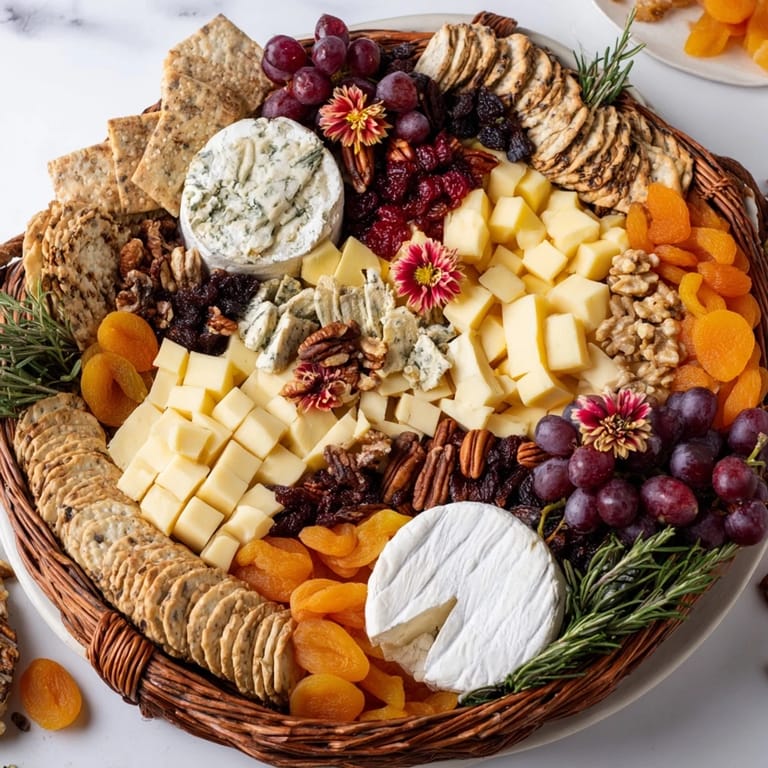
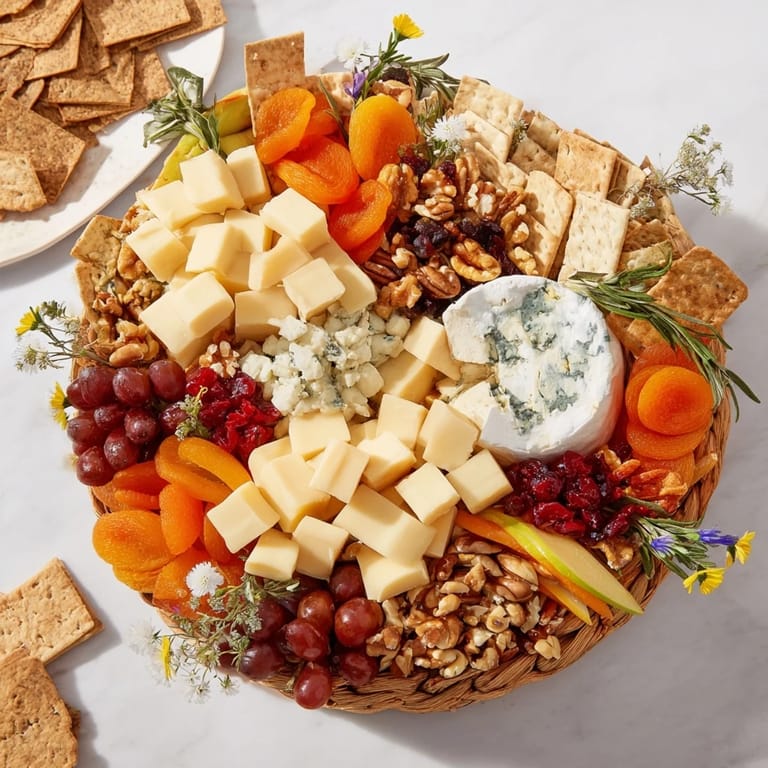
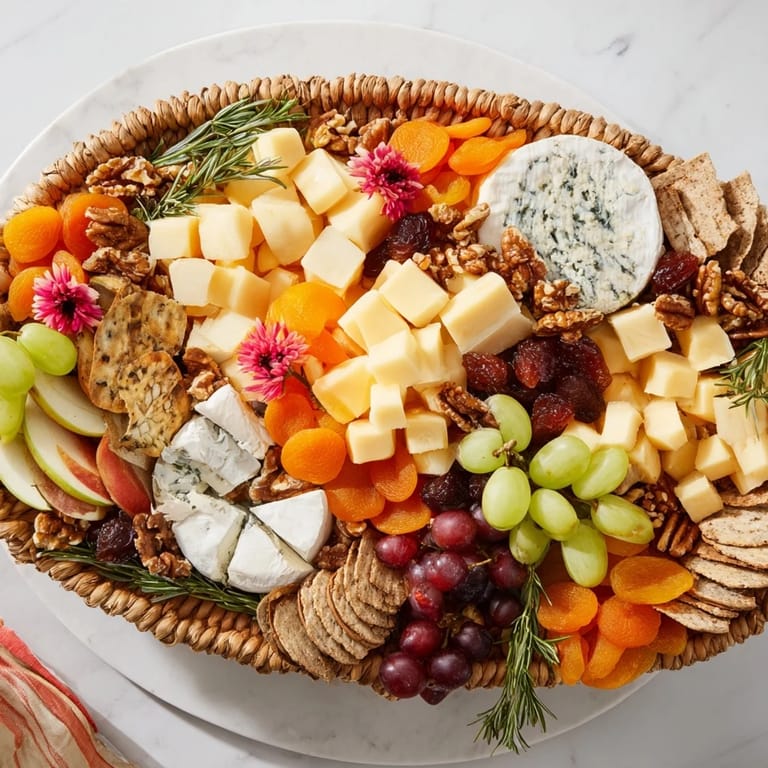
- Start by arranging your cheeses inside the opening of the horn. Layer them so some pieces tumble gracefully outward, as if the horn is so full it simply cannot contain them all. This is where you create visual drama—place the brilliant yellow cheddar where the eye naturally falls, nestle the creamy goat cheese nearby, and scatter the blue cheese crumbles throughout. Think of abundance, not neatness.
- Build the fruit and nut foundation:
- Now comes the meditative part. Layer your dried fruits and nuts, mixing colors and textures as you go. Apricots next to cranberries, figs near the nuts, walnuts scattered across the top. Work in sections if it helps—perhaps start with fruits on one side and nuts on the other, then blend them together. There's no wrong way here; trust your eye.
- Integrate the crackers and bread:
- Tuck your rustic crackers and baguette slices along the sides and in small bunches among the fruits and nuts. They're not meant to be neatly stacked—think of them as finding their natural places in the landscape you've created, peeking out here and there, inviting guests to grab them.
- Add the final flourish:
- Tuck fresh rosemary sprigs and thyme throughout, breaking them gently to awaken their fragrance. If you're using edible flowers, add them last, placing them where they catch the light. Step back and admire your work. This is what the table is going to remember.
- Serve with intention:
- Bring it out when you're ready to welcome everyone. Keep it at room temperature—all those flavors sing better when they're warm. Let guests pick and choose, exploring the arrangement like it's a treasure hunt. That's the whole point: abundance, choice, and the joy of discovery.
 Save
Save What makes this recipe truly special isn't the ingredients themselves—it's the moment when someone leans over the table, eyes widening at the sheer abundance, and reaches for something they've never tried before. I've watched strangers become friends over a shared bite of fig and goat cheese, seen children discover that dried fruit can be just as delightful as candy. That's when food becomes memory.
Making It Your Own
This recipe is a framework, not a rulebook. I've made it with whatever cheeses my local market had on sale, swapped pecans for hazelnuts when I had them, and once used candied citrus peel instead of dried apples. The beauty of the cornucopia is that it celebrates what you have and what you love. If you adore cranberries, use more. If blue cheese isn't your thing, replace it with something creamy or mild. The arrangement itself—that generous, spilling-over aesthetic—is what makes it work, no matter what you fill it with.
Preparing Components Ahead
The magical thing about this recipe is that almost everything can be done in advance, leaving you free to handle other Thanksgiving tasks. You can cut your cheeses the morning of and keep them wrapped in the refrigerator. Toast and cool your baguette slices hours ahead. Even arrange the entire horn early in the day if your kitchen is cool enough—just cover it loosely with plastic wrap and keep it out of direct sunlight. Bring it out 30 minutes before serving so everything reaches room temperature and the flavors fully open up.
Pairing and Presentation
I've found that this cornucopia works best as a pre-dinner centerpiece rather than an after-dinner cheese course, because it encourages grazing and conversation right when everyone first arrives. Pair it with a medium-bodied red wine—a Pinot Noir feels particularly appropriate—or sparkling cider for a non-alcoholic option that echoes the harvest theme. If you want to go further, set out small bowls of fig jam or apple butter alongside; a guest dipping a cheese cube in fig jam will find something transcendent.
- Always include at least one blue cheese or bold flavor to keep the palate interested throughout the meal
- Arrange taller items (nuts, upright fruit) near the middle and shorter items (cheese, crackers) around the edges so everything is visible and reachable
- Trust the asymmetry—the most beautiful cornucopias look abundant because they're slightly chaotic, not perfectly arranged
 Save
Save This cornucopia is my love letter to autumn and to the people I gather around my table. It says, without words, that there is enough, and that we are grateful. Make it, and let it become yours.
Common recipe questions
- → What types of cheeses work best in this centerpiece?
Aged cheddar, creamy goat cheese, rustic blue cheese, and aged gouda provide a balanced range of textures and flavors that complement the dried fruits and nuts.
- → Can I substitute nuts for dietary reasons?
Yes, you can swap out nuts with seeds or other crunchy ingredients that fit your dietary needs while maintaining texture variety.
- → How can I make the cornucopia base edible?
Shape bread dough around a foil-covered cone, bake until golden, and let it cool before filling with fruits, nuts, and cheeses.
- → What garnishes enhance the presentation?
Fresh rosemary and thyme sprigs alongside edible flowers or seasonal leaves add a festive and aromatic touch.
- → Is this centerpiece suitable for gluten-free diets?
Yes, by choosing gluten-free crackers and bread alternatives, it can accommodate gluten sensitivities.
- → What beverages pair well with this spread?
Medium-bodied red wines or sparkling ciders complement the flavors and textures beautifully.