 Save
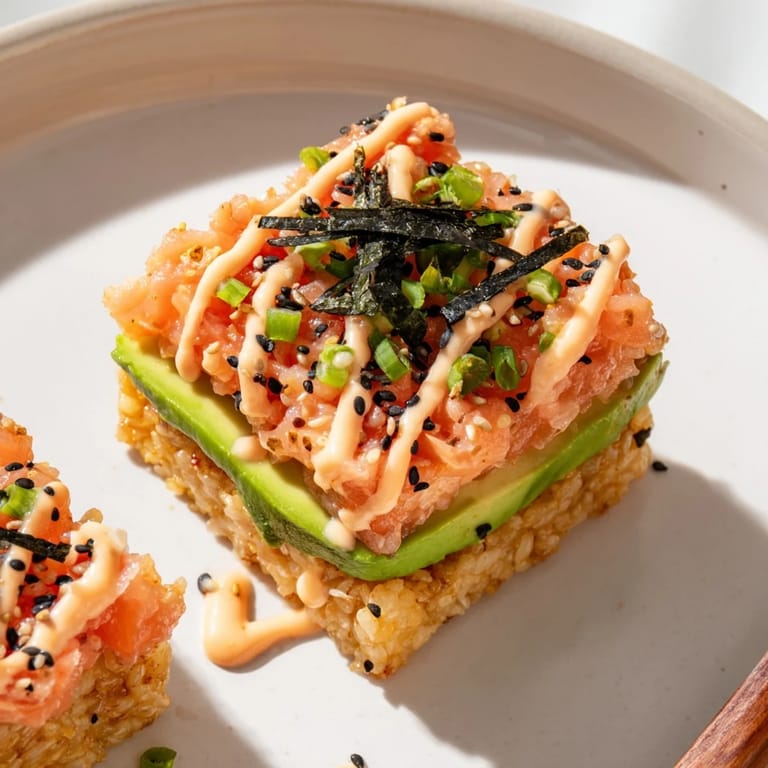
Save I discovered this dish during a late evening in my kitchen, surrounded by leftover sushi rice and a pristine piece of salmon I wasn't sure how to use. Instead of rolling it into traditional nigiri, I had the impulse to fry the rice until it turned golden and crispy, then stack everything together like edible architecture. The first bite—warm crunchy rice giving way to silky salmon and cool avocado—felt like a small revelation, a dish that honored sushi traditions while being entirely its own thing.
I remember making this for a small dinner party where someone mentioned being tired of the same old appetizers, and watching their face light up when they took that first bite was worth every minute of prep. The salmon had been sitting in my fridge, and the avocado was perfectly ripe—one of those rare moments when ingredients align just right and something magical happens on the plate.
Ingredients
- Sushi Rice: This is the foundation, and rinsing it thoroughly removes excess starch so each grain stays separate and crisps beautifully when fried.
- Rice Vinegar, Sugar, and Salt: These three seasonings are what transform plain rice into something with actual personality—don't skip this step or your rice will taste flat.
- Vegetable Oil: Use a neutral oil with a high smoke point so the rice squares turn golden without burning or absorbing grease.
- Sushi-Grade Salmon: Raw, diced, and treated like a precious ingredient—the quality here matters because you're eating it uncooked.
- Sesame Oil: Just a teaspoon adds an incredible depth that regular oil simply can't match, so toasted sesame oil is worth seeking out.
- Sriracha: Optional but seriously worth including, though you can control the heat level to your taste.
- Avocado: Choose one that yields slightly to gentle pressure; overripe avocado becomes mushy and ruins the whole effect.
- Spicy Mayo: This simple blend of mayonnaise and sriracha becomes the glue that holds the whole stack together.
- Sesame Seeds and Chives: These aren't just garnish—they add textural complexity and a fresh bite that elevates the whole dish.
Tired of Takeout? 🥡
Get 10 meals you can make faster than delivery arrives. Seriously.
One email. No spam. Unsubscribe anytime.
Instructions
- Cook the Rice the Right Way:
- Rinse your sushi rice thoroughly until the water runs clear—this removes starch that would make it gummy. Combine with water, bring to a boil, then cover and simmer gently for 15 minutes before letting it rest covered for another 10 minutes; this rest period is crucial and often forgotten.
- Season While It's Warm:
- Warm rice absorbs the vinegar mixture far better than cool rice, so fold in your vinegar-sugar-salt blend right after cooking. Use a gentle hand and a wooden spoon to avoid crushing the grains.
- Chill and Press:
- Spread the cooled rice into a parchment-lined square pan and press gently to an even thickness, then refrigerate for 20 minutes. This chilling step helps the rice hold together when you cut and fry it.
- Prepare Your Salmon Mixture:
- Dice your salmon into small, uniform pieces and combine with soy sauce, sesame oil, sriracha, lime juice, and green onion, stirring gently so you don't break up the delicate salmon. Chill this until you're ready to assemble.
- Make Spicy Mayo:
- Whisk together mayonnaise and sriracha until smooth and well combined; this takes less than a minute but transforms the final stack into something with real personality.
- Cut and Fry with Care:
- Once chilled, remove the rice block from the pan, cut into 2-inch squares with a sharp, damp knife, and fry in hot oil for 2 to 3 minutes per side until golden brown and crispy. Work in batches so you don't crowd the pan, and drain immediately on paper towels.
- Assemble Just Before Serving:
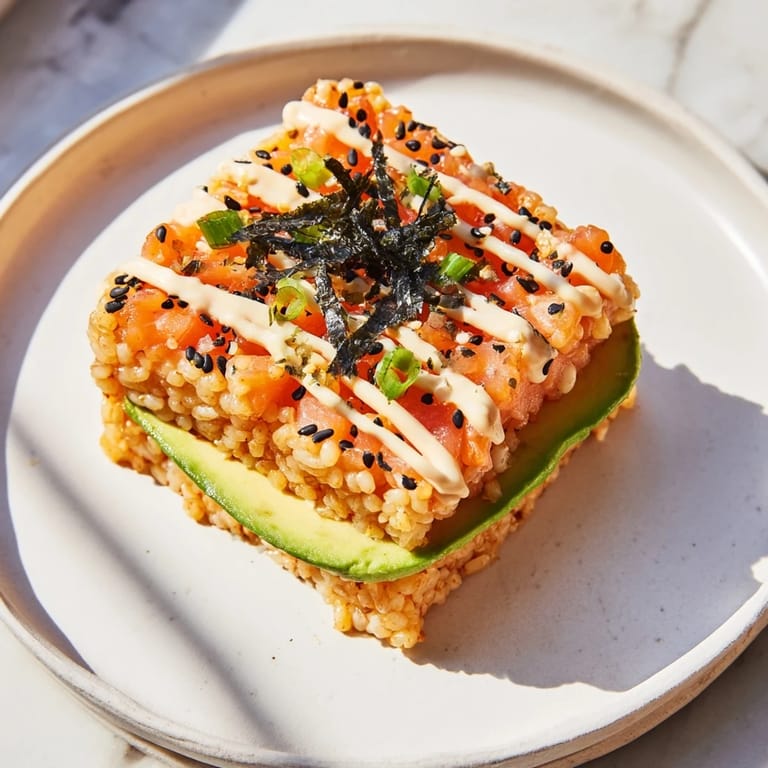
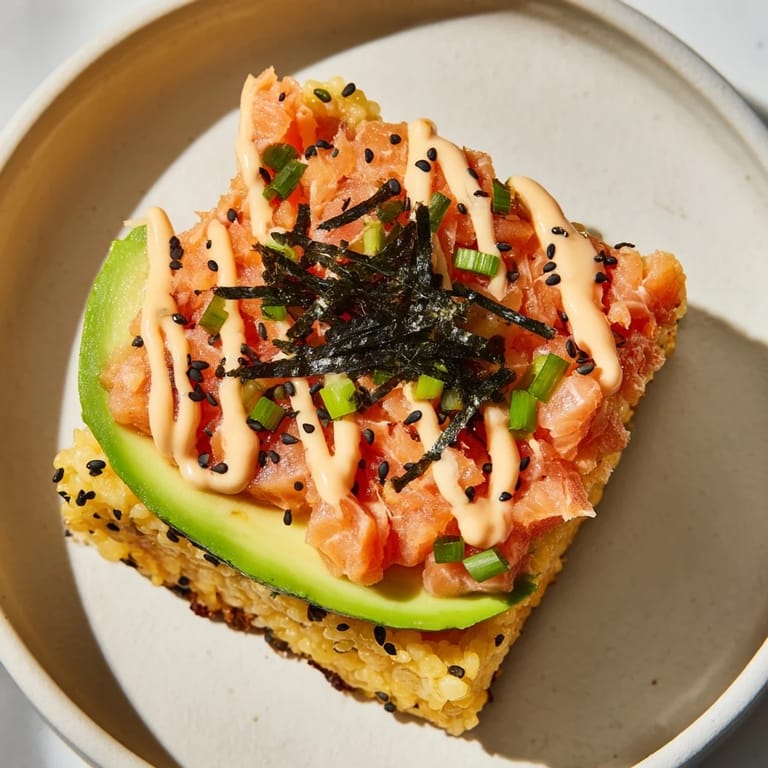
- Layer avocado, salmon mixture, and spicy mayo on each warm crispy rice square, then finish with sesame seeds, chives, and nori strips. The warmth of the rice matters here, so don't let these sit around before serving.
 Save
Save There's a moment when everything comes together—when you place that first assembled stack on a plate and the warm rice is still crackling under the cool, silky salmon—where this stops being just an appetizer and becomes something you want to make again and again. That's when I knew this dish had found its permanent place in my rotation.
The Art of the Crispy Rice Foundation
The crispy rice squares are really the star here, not just a vehicle for toppings. I learned this the hard way by making the rice too thin on my first attempt, which meant it didn't crisp properly and just turned chewy. Now I press it to exactly half an inch and always chill it beforehand—this gives the rice structure so it holds together beautifully when it hits the hot oil. The sound of those squares frying, that gentle sizzle and pop, is honestly therapeutic.
Building Flavor Through Balance
What makes this dish work is the careful balance between salty, tangy, spicy, and creamy elements. The sesame oil in the salmon mixture might seem like a small detail, but it adds a toasted depth that mayonnaise alone never could. Lime juice brightens everything, sriracha provides controlled heat, and the spicy mayo ties it all together. This is a dish where each component has a job, and when they all show up on time, magic happens.
Customization Without Compromise
One of the reasons I keep making this is because it invites creativity without demanding it. Use cooked salmon instead of raw if that makes you more comfortable, add pickled ginger for extra tartness, or swap in thin cucumber slices for a lighter version. I've even experimented with crab, and while it changes the flavor profile, it works just as well. The foundation is solid enough to support your own variations.
- If you can't find sushi-grade salmon, high-quality cooked salmon or even quality canned salmon will work beautifully.
- Prepare everything except the assembly ahead of time, which makes this a surprisingly dinner-party-friendly dish.
- Serve these immediately after assembly while the rice is still warm and crispy—timing is the only real secret here.
 Save
Save This dish has become one of those recipes I reach for when I want to feel like I've accomplished something in the kitchen without exhausting myself. It's elegant enough for guests but approachable enough for a quiet dinner at home.
Common recipe questions
- → How is the crispy texture achieved in the rice?
The rice is pressed into squares, chilled, then fried in vegetable oil until golden and crunchy on all sides.
- → Can cooked salmon be used instead of raw?
Yes, canned or cooked salmon works well as a substitute, maintaining the flavor and texture balance.
- → What gives the salmon its flavor in this dish?
The diced salmon is seasoned with soy sauce, toasted sesame oil, lime juice, and a touch of sriracha for heat.
- → What role does the spicy mayo play in this stack?
Spicy mayo adds a creamy, tangy, and mildly spicy layer that complements the richness of the avocado and salmon.
- → Are there any suggested garnishes for added freshness?
Pickled ginger, thin cucumber slices, chives, and nori strips can be added to elevate freshness and texture.