 Save
Save I'll never forget the first time I created this platter on a chilly November evening, huddled around a crackling fireplace with friends who'd driven hours through cold rain. Someone had brought a bottle of port, and I scrambled to put together something that felt intentional and luxurious without fussing over a hot stove. That's when I discovered the magic of pairing dark chocolate with aged cheeses and a steaming mug of cocoa—it transformed a simple gathering into something that felt like coming home.
My sister tasted the aged gouda that night and closed her eyes like she was hearing music. That's when I realized this platter wasn't really about following a recipe—it was about creating a moment where people could slow down and actually taste their food, really taste it, the way you're supposed to when there's nowhere to be and the fire is warm.
Ingredients
- Aged cheddar, 200 g cut into large irregular chunks: The sharpness balances the sweetness of chocolate beautifully, and cutting them rustic rather than neat makes the whole board feel more generous and less fussy
- Aged gouda, 150 g broken into wedges: This one tastes almost caramel-like when it's properly aged, especially when you bite it alongside a piece of dark chocolate—it's genuinely magical
- Blue cheese, 150 g crumbled or chunked: The funkiness might seem bold next to chocolate, but trust me, the saltiness becomes the bridge that makes every other flavor pop
- Dark chocolate, 120 g (70% cocoa or higher) broken into pieces: Don't cheap out here—the quality of this chocolate will be tasted in every bite, and aged cheese deserves chocolate that stands up to it
- Chocolate-covered almonds, 100 g: These add both texture and a hint of nuttiness that echoes the roasted nuts you'll serve separately
- Chocolate-dipped dried figs, 80 g: The figgy sweetness beneath dark chocolate coating is like a secret that makes people lean in closer to the board
- Chocolate truffles, 60 g: Buy the good ones, or make them yourself if you're feeling fancy—they're the jewels of this platter
- Baguette, 1 small one sliced: Day-old bread works better than fresh because it won't fall apart under the weight of cheese, and the crust provides structure
- Roasted walnuts or pecans, 80 g: Roasting them yourself, even in a dry pan for five minutes, deepens their flavor in a way that matters here
- Pear, 1 sliced: The juicy sweetness provides a palate cleanser and brightness that cuts through all that richness
- Apple, 1 sliced: A tart variety works best—Granny Smith brings enough acidity to make you want another bite
- Honey, 2 tbsp: Drizzle it into a small bowl so people can dip bread or cheese into it, rather than drizzling directly on the board where it'll get lost
- Whole milk, 500 ml for the cocoa: Whole milk makes the hot cocoa taste like comfort in a mug—don't use low-fat if you can help it
- Dark chocolate for cocoa, 100 g chopped: Use the same quality chocolate as in the platter so the flavors feel intentional and connected
- Unsweetened cocoa powder, 1 tbsp: This adds depth that you won't get from chocolate alone—it's essential, not optional
- Sugar, 1 tbsp (adjust to taste): Add less if you want to taste the cocoa itself, add more if you prefer something sweeter—this is your recipe
- Salt, a pinch: This tiny amount brings out the chocolate flavor in a way that feels like a whispered secret
- Vanilla extract, 1/2 tsp: The vanilla rounds everything out and makes the cocoa taste richer than it has any right to be
- Whipped cream for serving, optional: But honestly, don't skip it—the contrast between hot and cold, bitter and sweet, is where the magic happens
- Shaved chocolate for garnish, optional: A vegetable peeler dragged across a chocolate bar creates shards that catch the firelight beautifully
Tired of Takeout? 🥡
Get 10 meals you can make faster than delivery arrives. Seriously.
One email. No spam. Unsubscribe anytime.
Instructions
- Gather your board and arrange the cheeses first:
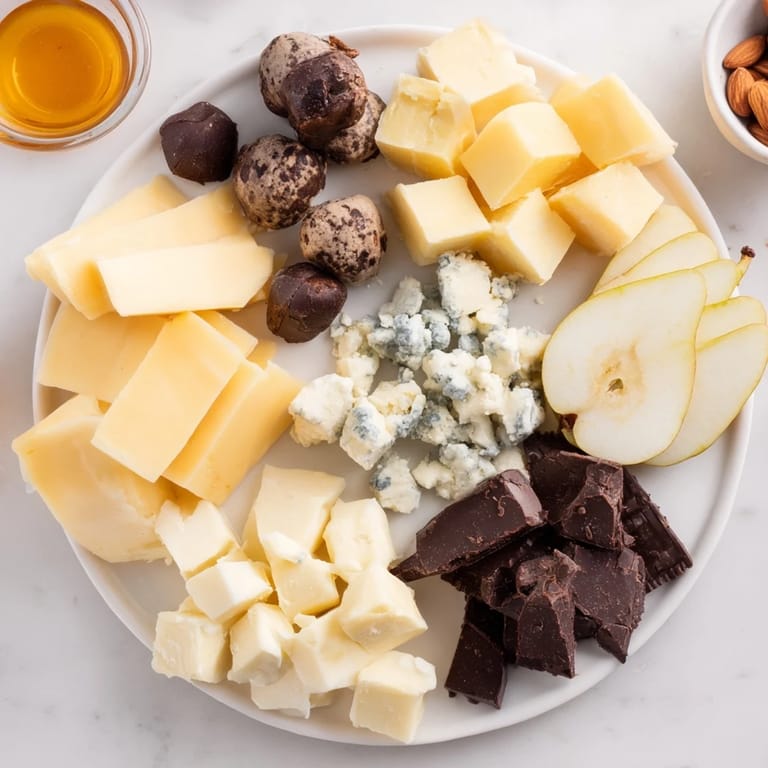
- Place a large wooden board in front of you—it should feel substantial and inviting. Break the aged cheddar into chunks that look rough and generous, not perfectly even. Arrange them in clusters of one type so people can see the differences in color and texture. Leave space between groups because you'll be filling in around them, and part of the beauty is negative space.
- Add the chocolates like you're placing jewels:
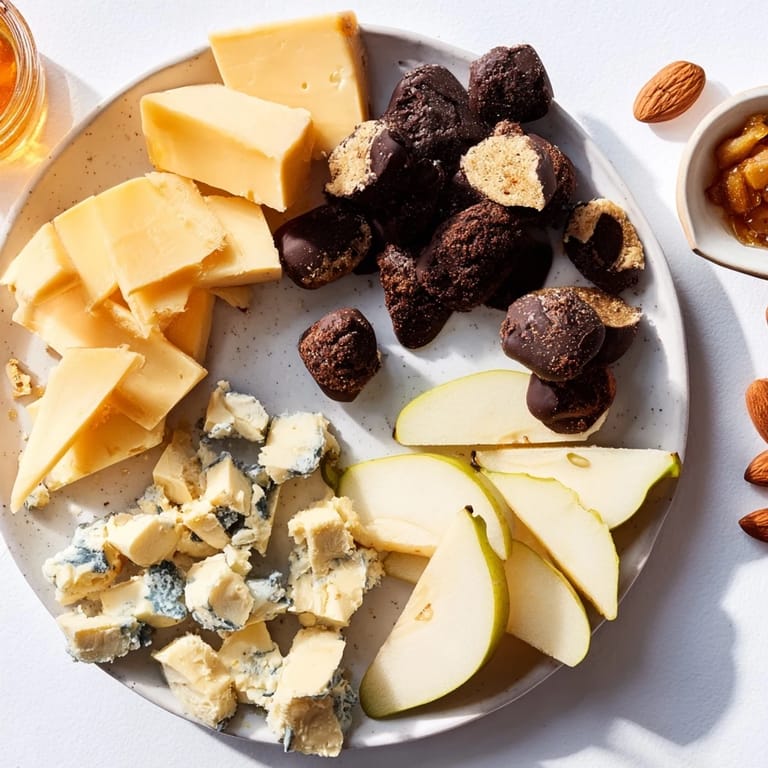
- Now scatter your dark chocolate pieces, chocolate-covered almonds, dipped figs, and truffles around the cheeses in little clusters. Group the same items together rather than spreading them out evenly—it creates visual interest and makes it easier for people to grab what calls to them. Step back and look at the board. Does it feel balanced? Does your eye know where to go next?
- Fill in the gaps with fruit, bread, and nuts:
- Arrange the baguette slices in a casual pile—they don't need to be fanned out perfectly. Scatter the roasted nuts nearby. Fan out your pear and apple slices so the color and shine are visible, and do this close to serving time so they don't brown. Pour the honey into a small bowl and nestle it somewhere that looks intentional, maybe near the softer cheeses where people might want to dip.
- Heat the milk gently for the cocoa:
- Pour your whole milk into a saucepan and place it over medium heat. Watch it carefully—you want to see steam rising and tiny bubbles forming around the edges, but you don't want it to boil or a skin to form on top. This takes patience, which is exactly the right energy for what you're about to serve.
- Melt the chocolate into the milk and whisk smooth:
- Add your chopped dark chocolate, cocoa powder, sugar, and that pinch of salt all at once. It'll look lumpy and wrong for a moment, but trust the process. Whisk constantly until everything melts and combines into something silky and dark and gorgeous. The whisking is meditative—it gives you something to do while the kitchen fills with the smell of cocoa.
- Finish with vanilla and taste as you go:
- Take the saucepan off the heat and stir in the vanilla extract. Take a sip from a small spoon. Does it taste rich enough? Chocolatey enough? Add a tiny pinch more salt if you want to deepen the chocolate flavor, or a touch more sugar if you want sweetness. This cocoa is made for tasting and adjusting.
- Pour into mugs and crown with toppings:
- Ladle the hot cocoa into your warmest mugs—there's something about drinking from a warm mug that makes the whole thing feel more intentional. Top each one with a generous dollop of whipped cream so it melts into the hot chocolate beneath, then scatter shaved chocolate on top. Serve everything together, the platter and the mugs, so people can move between savory and sweet.
 Save
Save I remember my nephew, who's usually glued to his phone, setting it down completely that evening and asking for the recipe. Not to make it himself, but because he wanted to remember how it tasted, wanted to be able to close his eyes later and go back to that moment by the fire. That's when I understood that this platter isn't food—it's a way of saying 'slow down' and 'you matter' without having to say anything at all.
The Philosophy of Composing a Cheese and Chocolate Board
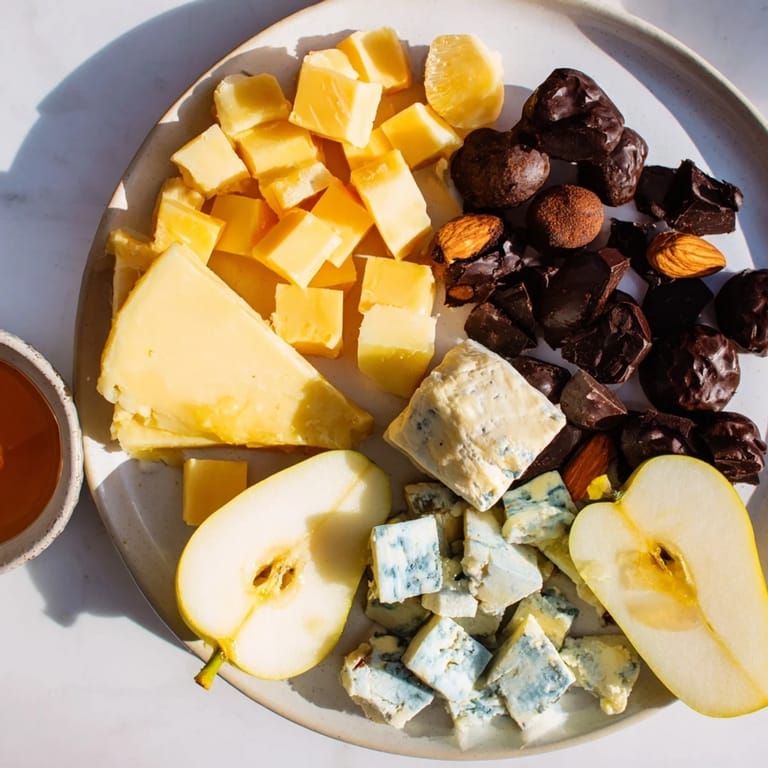
There's an art to arranging a board that goes beyond just putting things on wood. You're creating a landscape, really—a invitation to explore. The rule I've learned through trial and error is that people eat with their eyes first, so think about color contrast: the white of blue cheese against dark chocolate, the golden warmth of aged cheddar, the deep burgundy of fig. Think about texture too—smooth chocolate next to craggy cheese, soft bread beside crunchy nuts. Every choice should feel intentional, like you spent time thinking about who would be eating this and what would make them happy.
Building a Hot Cocoa Worth Savoring
Most hot cocoa recipes treat the drink like an afterthought, something you can make from a packet. But this cocoa is meant to be sipped slowly, noticed, contemplated. The cocoa powder does something that melted chocolate alone can't—it adds a dryness, a depth, a reminder that you're drinking something made from a real plant that grew somewhere. The salt is equally essential because it makes the chocolate flavor louder, more present. This isn't about being complicated; it's about understanding that each tiny ingredient plays a role in creating something that tastes made with love.
Customizing Your Platter for Your People
The board I'm describing is just a starting point, really. If someone in your gathering doesn't eat blue cheese, don't force it—substitute a creamy brie or a sharp aged gruyère. If you find incredible white chocolate covered cranberries at your market, absolutely add them. If dried apricots speak to you more than figs, listen to that instinct. The magic isn't in following a recipe exactly; it's in understanding the principles—contrast, color, texture, balance—and then making choices that feel right for your moment, your people, your fire.
- Swap cheeses based on what you love and what your guests can eat—there's no wrong combination as long as you have variety
- Add nuts you roast yourself, or dried fruits from the bulk section, or even a scattered handful of candied ginger if that calls to you
- Don't forget one element that's pure luxury just for you—maybe it's exceptional sea salt, or a particular truffle style, or expensive dark chocolate you'd never normally buy
 Save
Save This platter is my answer to the question 'how do we slow down?' Build it when you want an evening to feel like something more than just another night, and watch how people respond when given permission to linger over flavors and conversation.
Common recipe questions
- → What cheeses work best for this platter?
Aged cheddar, gouda, and blue cheese bring a mix of sharp, creamy, and tangy flavors that complement the chocolate and fruit.
- → How can I make the hot cocoa richer?
Use full-fat milk and high-quality dark chocolate with at least 70% cocoa for a deep, creamy texture and robust flavor.
- → Are there suitable alternatives for nuts in this platter?
Roasted walnuts or pecans add crunch and earthiness, but you can substitute with almonds or omit if necessary due to allergies.
- → Can the platter be adapted for gluten-free diets?
Yes, simply replace the baguette with gluten-free bread or crackers to keep it accessible without sacrificing flavor.
- → What pairings enhance this spread?
A full-bodied red wine or a sweet port pairs beautifully, balancing the richness of cheese and the chocolate’s depth.
- → How should the platter be arranged for best presentation?
Arrange cheeses in rustic, irregular chunks, cluster chocolates and nuts nearby, and surround with fresh fruit and sliced bread for contrast.