 Save
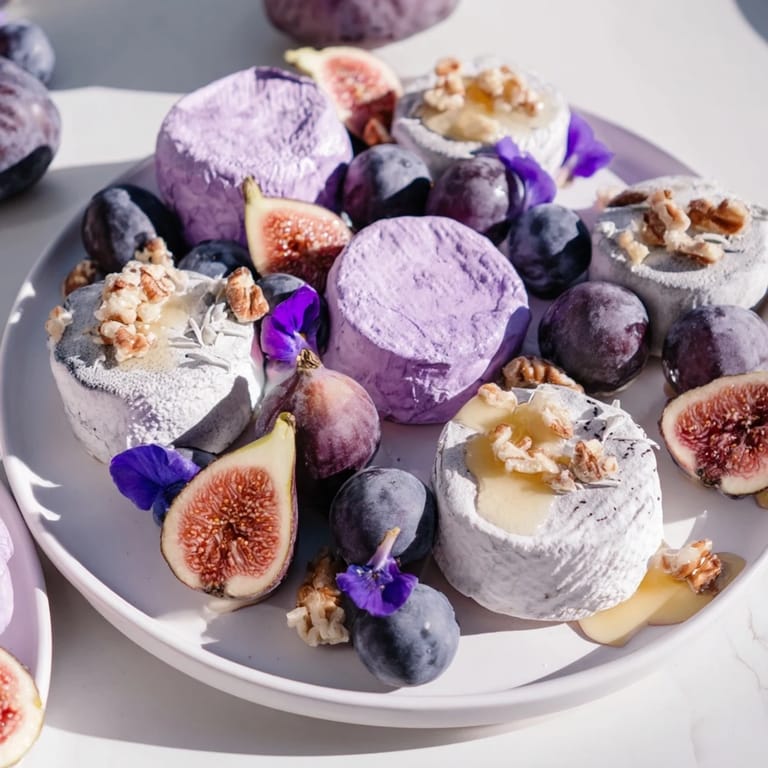
Save I discovered this board by accident during a late-afternoon wander through a French market, where a vendor was arranging cheeses in shades of lavender and grey like they were painting a picture. The soft goat cheese dusted in culinary lavender caught my eye, and beside it sat this gorgeous ash-rinded brie that looked almost edible before you even tasted it. That evening, I decided to build a whole experience around those two cheeses, pulling together things that felt natural alongside them—honeyed walnuts, fresh figs, grapes that could hold their own against something so elegant. What started as a casual assembly became something I kept recreating, each time learning how the right arrangement and pairing makes people slow down and actually taste what they're eating.
I remember bringing a version of this to a dinner party where someone had just come back from Provence, and they gasped a little when they saw it—not because it was perfect, but because it transported them back. That's when I understood that a cheese board isn't really about technique, it's about creating a mood you can eat.
Ingredients
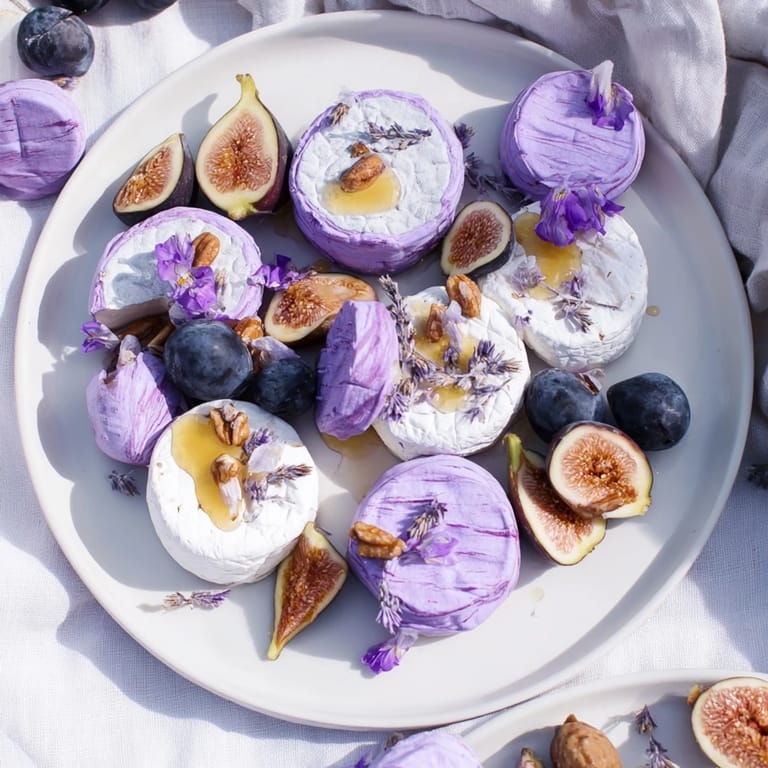
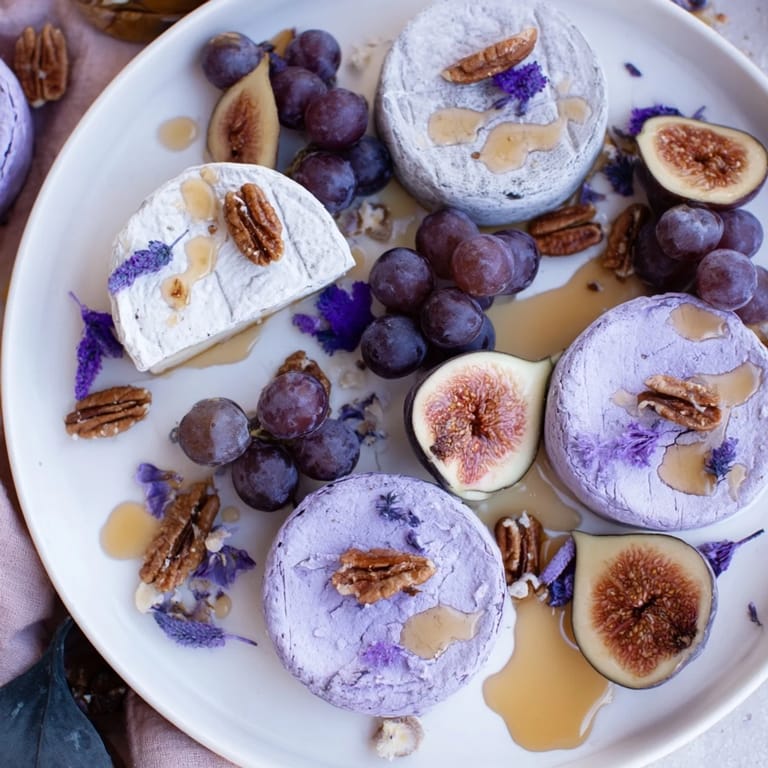
- Lavender-coated goat cheese (150g): The star that ties everything together—the floral coating isn't just decoration, it actually flavors each bite and warns your guests that this is going to be a little different in the best way.
- Ash-rinded brie (200g): This cheese has a soft interior that contrasts beautifully with the goat cheese's tanginess, and the grey exterior picks up visually on the lavender theme.
- Seedless red or black grapes (1 cup, halved): They provide bursts of natural sweetness and juiciness that clean your palate between bites—they're your guests' best friend.
- Fresh figs (1/2 cup, quartered): Use fresh if you can find them, but dried figs work too and add a deeper, more concentrated sweetness that plays nicely with soft cheese.
- Candied walnuts or pecans (1/4 cup): These add crunch and a hint of sweetness that bridges the gap between savory cheese and sweet fruit.
- Lavender honey or regular honey (2 tbsp): A drizzle over the goat cheese amplifies the whole aesthetic and adds a subtle floral note that ties the board together.
- Edible flowers like violets or pansies (1/2 cup): These are purely for beauty and aroma—source them from food-safe suppliers and scatter them just before serving so they stay perky.
- Fresh thyme sprigs: A handful of these adds green color, subtle herbal fragrance, and breaks up the visual weight of the darker cheeses.
- Toasted baguette slices or charcoal crackers: Your vehicle for piling on cheese, fruit, and honey—toasting the baguette adds crunch and warmth.
Tired of Takeout? 🥡
Get 10 meals you can make faster than delivery arrives. Seriously.
One email. No spam. Unsubscribe anytime.
Instructions
- Set your stage:
- Choose a large board or platter that gives you room to breathe—this board thrives on space and arrangement. Start by placing your cheeses toward opposite sides so people can reach both without crowding each other.
- Build your clusters:
- Group grapes and figs in small piles around the cheese, creating visual rhythm and making it obvious where people should start reaching. Think of it like you're painting with food—odd numbers look better than even ones.
- Add the crunch and shine:
- Scatter candied nuts between the fruit and cheese, then drizzle that lavender honey over the goat cheese with a light hand—you want threads of honey, not puddles.
- Finish with color and aroma:
- Lay down edible flowers and fresh thyme sprigs right before serving, focusing them around the cheeses so they catch the light and smell wonderful when people lean in.
- Complete the picture:
- Arrange your toasted baguette slices and charcoal crackers along the edges, leaving them slightly separate so they stay crispy and don't get buried.
- Serve and watch:
- Put the board down and step back—let people build their own bites, choosing their own combinations of cheese, fruit, and spread.
 Save
Save What surprised me most was realizing that a cheese board is a social object—people gathered differently around this one, moving slower, actually talking to each other instead of just eating and moving on. That's when I started paying attention to arrangement as something that matters.
Why Lavender and Cheese Work Together
Lavender has this delicate floral perfume that could easily overpower, but goat cheese's tanginess and slight earthiness seem to meet it halfway, creating something that tastes more interesting than either ingredient alone. The ash brie acts as a neutral bridge, its creaminess and subtle earthiness giving your palate a place to rest between the more assertive flavors. Once you taste this combination, you start seeing lavender differently in the kitchen—it's not just a pretty garnish, it's actually a flavor ingredient with real potential.
The Art of Building a Cheese Board
The best boards aren't perfectly symmetrical or overly styled—they feel abundant and slightly loose, like you found all these things and wanted to share them. Think about three textures: something creamy (your cheeses), something crispy (crackers and nuts), and something juicy (fruit). Balance colors so you're not staring at a brown and beige board—the purple and grey of the lavender haze theme does that work for you here, but even darker purple grapes or red ones add visual interest.
Wine Pairing and Serving Moments
A chilled Provence rosé is almost mandatory with this board—its slight sweetness and delicate fruit flavors echo the lavender and honey without fighting them. If you want white wine, Gewürztraminer has that floral quality that makes the whole experience feel cohesive, like you planned everything to taste like one beautiful thought. Serve this board when you want people to linger, to taste, to have a real conversation instead of just eating fast.
- Pour the wine about 15 minutes before guests arrive so it's properly chilled, and open it as people are gathering—the anticipation matters.
- If you're making this for someone with gluten sensitivity, swap regular crackers for gluten-free ones without apology—it tastes just as good.
- Leftover honey can be drizzled on yogurt tomorrow, and any remaining nuts work beautifully in salads, so nothing goes to waste.
 Save
Save There's something peaceful about standing back and looking at a finished board, knowing that what comes next is people enjoying something you made with care. This one feels like a small celebration every time.
Common recipe questions
- → What cheeses are featured in the Lavender Haze platter?
It highlights lavender-coated goat cheese and ash-rinded brie, balancing floral and creamy textures.
- → Can I substitute the bread or crackers for dietary needs?
Yes, gluten-free crackers work well as a substitute for the baguette to accommodate gluten-sensitive guests.
- → How does lavender honey affect the flavor?
Lavender honey adds subtle floral sweetness, complementing the goat cheese's herbal notes.
- → What garnishes enhance the platter's presentation?
Edible flowers like violets or pansies and fresh thyme sprigs add both vibrant color and aromatic appeal.
- → What pairing suggestions suit this cheese board?
Chilled Provence rosé or floral white wines such as Gewürztraminer pair beautifully with these delicate flavors.