 Save
Save There's something about the first spoonful of this pudding that takes me back to a humid afternoon on someone's patio, the kind where your hair sticks to your neck and everything moves a little slower. My friend had just returned from Thailand and showed up with this obsession with chia seeds and fresh mangoes. She served it in these tiny glasses, and I remember being skeptical at first—it looked almost too simple—but then the cool creaminess hit, followed by that bright mango tang, and suddenly two hours had vanished and I'd eaten more than my share.
I made this for a potluck last summer when I was desperate to bring something that wouldn't wilt in the heat. Everyone assumed I'd bought it from some fancy health food place—I didn't correct them. What I loved most was watching people's faces when they realized it was vegan. One person asked for the recipe three times before I finally wrote it down.
Ingredients
- Coconut milk (400 ml): The full-fat kind makes this silky and rich; light versions work but lose some of that decadent mouthfeel that makes people ask for seconds.
- Chia seeds (6 tbsp): These tiny seeds absorb liquid and create that pudding texture—don't skimp, and definitely don't use old ones sitting in the back of your pantry.
- Maple syrup or honey (3 tbsp for base, 1-2 tbsp optional for mango): Taste your mangoes first; if they're already sweet, you might not need much sweetener at all.
- Vanilla extract (1 tsp): Optional but worth it—adds a whisper of warmth that rounds everything out.
- Ripe mangoes (2 large): The ripeness matters here; soft mangoes blend smoother and taste naturally sweeter than firm ones.
- Lime juice (1 tbsp): This brightens the mango and prevents that one-note sweetness.
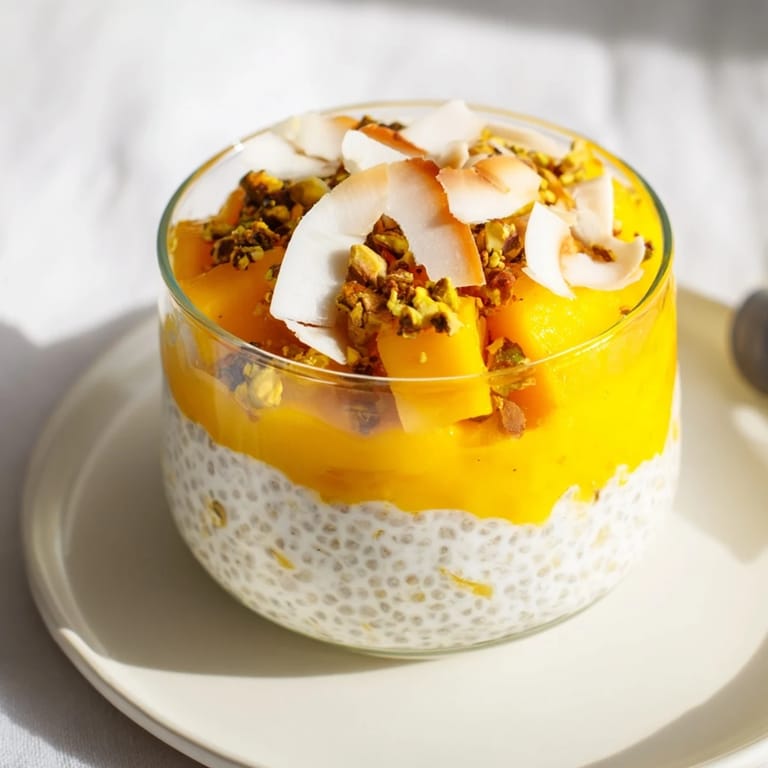
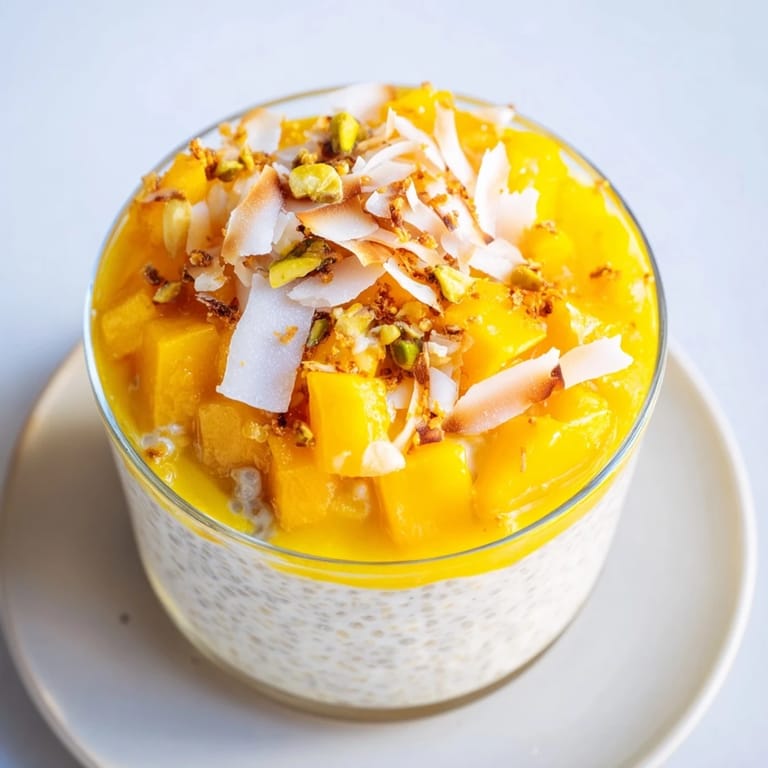
- Toasted coconut flakes, pistachios, and fresh mint (for topping): These aren't just decoration—they add texture and a second layer of flavor that keeps the spoon moving toward your mouth.
Tired of Takeout? 🥡
Get 10 meals you can make faster than delivery arrives. Seriously.
One email. No spam. Unsubscribe anytime.
Instructions
- Whisk your creamy base:
- Pour the coconut milk into a bowl with the maple syrup and vanilla, then whisk it together until smooth. You want the sweetener fully dissolved so you don't get gritty pudding later.
- Add the chia seeds:
- Stir them in thoroughly, breaking up any clumps that form as they absorb the liquid. This takes about a minute of actual attention.
- Let it sit and thicken:
- Cover and refrigerate for at least two hours, but give it a stir after thirty minutes—this prevents the chia seeds from settling into a dense layer at the bottom. I usually forget this step and the result is still fine, but the texture is slightly better when you remember.
- Prepare your mango layer:
- Peel and dice your mangoes, then blend them with lime juice and sweetener until completely smooth. Taste it and adjust—you're looking for that balance between sweet and tart.
- Assemble with intention:
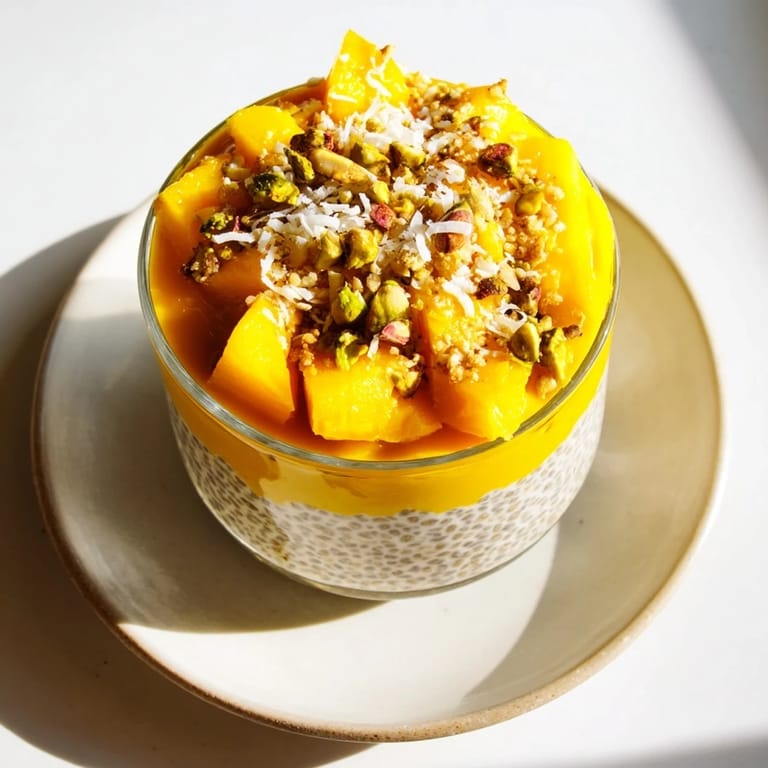
- Spoon half the chia pudding into your serving glasses, then top with a generous layer of mango puree. You can stop there or keep layering if you want a more dramatic effect.
- Finish and chill:
- Scatter your toasted coconut and nuts on top, add fresh mango or mint if you have it, then serve cold. The pudding stays good in the fridge for two days, though the toppings soften if you make it too far ahead.
 Save
Save What I didn't expect was how often this would become my go-to when friends texted asking what to bring to a beach day. Something about it being vegan and naturally sweet and tropical made people feel like they were getting a tiny vacation in a glass, which I suppose they were.
The Beauty of Chia Seeds
Chia seeds used to feel trendy to me, the kind of thing food magazines pushed when they ran out of ideas. But they're genuinely clever—they absorb liquid and swell into this gel that creates creaminess without any dairy. The slight nuttiness they contribute adds depth that's easy to miss if you're not paying attention. Once you understand that, you start seeing them everywhere.
When Mangoes Aren't Perfect
Not every mango is a masterpiece, and that's something I learned the hard way. Underripe ones blend grainy and taste sharp; overripe ones lose their structure but at least taste sweet. The sweet spot is when they yield slightly to pressure and smell fragrant. If you end up with a mediocre mango, lean harder on the maple syrup and lime juice to compensate.
Variations That Work
Once you understand how this works, the variations become obvious. I've made it with passion fruit, with pineapple, even with a berry compote layered underneath. The formula stays the same: creamy base, fruit layer, something crispy on top. Some versions I've experimented with included granola instead of nuts, or a drizzle of coconut yogurt for extra tang, and they've all felt like home.
- Substitute almond or oat milk if you want something lighter, though the flavor shift is noticeable.
- Layer in granola or toasted coconut chips for a different kind of texture contrast.
- Make it the night before and just add toppings when you're ready to eat.
 Save
Save This pudding has quietly become one of those recipes I reach for when I want to feel like I'm taking care of myself without feeling like I'm on a diet. It's the kind of dessert that sneaks vegetables and seeds past your brain while tasting like pure indulgence.
Common recipe questions
- → Can I substitute coconut milk for another milk?
Yes, almond or oat milk can be used for a lighter variation, though texture and flavor will slightly differ.
- → How long should the chia mixture chill?
Refrigerate for at least 2 hours to allow the chia seeds to absorb liquid and form a creamy consistency.
- → What sweeteners work best?
Maple syrup and honey are both suitable; adjust amounts to taste based on mango ripeness.
- → Can I prepare it in advance?
Absolutely, it can be made the night before and chilled for a convenient, ready-to-serve option.
- → What toppings complement the layers?
Toasted coconut flakes, chopped pistachios or almonds, and fresh mango cubes add crunch and freshness.