 Save
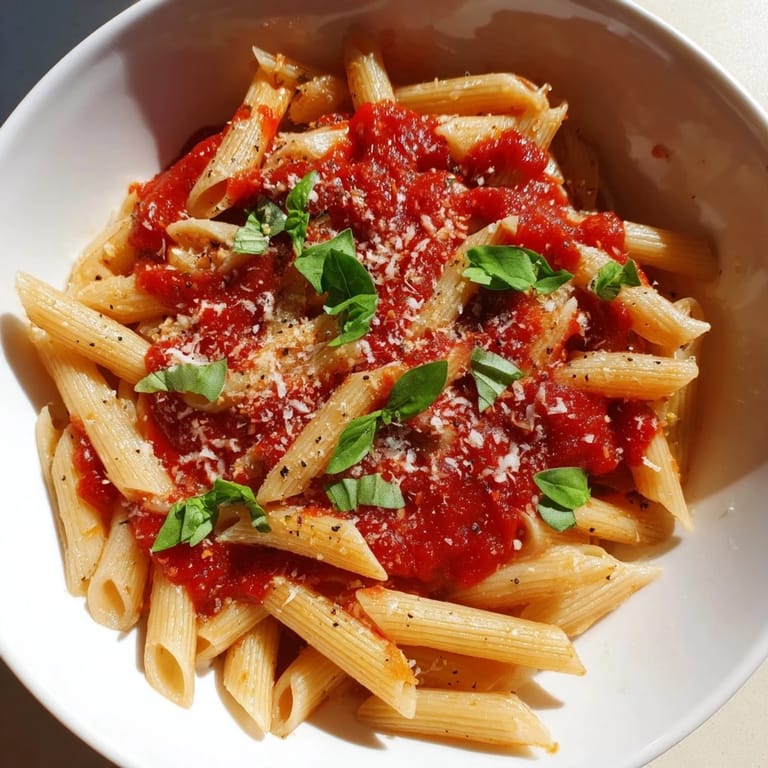
Save There's a particular kind of magic that happens when you're stuck in a dorm room at midnight, stomach rumbling, and you realize you don't need a pot or a stove—just a bowl, some pasta, and a microwave. I discovered this method during a chaotic semester when my roommate had commandeered the kitchen, and I needed something hot and satisfying in minutes. What started as improvisation became my go-to ritual: the gentle hum of the microwave, steam rising from a ceramic bowl, and the smell of pasta softening into something unexpectedly comforting.
I made this for a friend who was recovering from a broken wrist and couldn't manage her usual kitchen routine—watching her face light up when I handed her a warm, perfectly sauced bowl of pasta without her having to stand at a stove reminded me that sometimes the simplest solutions feel like the kindest ones.
Ingredients
- Dried pasta (75 g): Penne, fusilli, or elbow macaroni work beautifully because their shapes trap sauce and cook evenly in the microwave environment.
- Water (500 ml): This is your cooking liquid and becomes part of the magic—it carries starch that emulsifies with your sauce.
- Salt (1/2 tsp): Season generously here; it's the only chance to season the pasta itself.
- Sauce (100 ml): Marinara, pesto, or Alfredo—whatever you have in your pantry or make fresh, it becomes the soul of the dish.
- Parmesan cheese and fresh herbs (optional): These finish the dish with brightness and depth that transforms it from rushed meal to something you actually wanted.
Tired of Takeout? 🥡
Get 10 meals you can make faster than delivery arrives. Seriously.
One email. No spam. Unsubscribe anytime.
Instructions
- Combine and submerge:
- Pour your dried pasta into the bowl and cover it completely with water—this matters because unsubmerged pasta cooks unevenly and can stick. Add your salt and give it a stir so nothing clings to the bottom.
- First microwave burst:
- Microwave on high for 4 minutes uncovered. You'll see the water start to bubble and the pasta begin to soften; don't cover it or it'll boil over.
- Stir and continue:
- Pull it out carefully—the bowl will be hot—and stir thoroughly to break up any clumps. This interruption is crucial; it prevents sticking and ensures even cooking.
- Finish cooking in increments:
- Microwave in 2–3 minute bursts, stirring after each one, until the pasta is al dente with just a gentle firmness to it. Most microwaves need 8–12 minutes total, but yours might vary.
- Drain strategically:
- Carefully pour off excess water using a fine-mesh sieve held over the bowl, or tilt the bowl while using a fork to hold back the pasta—this keeps your pasta in the bowl where you need it.
- Sauce immediately:
- While the pasta is still hot, add your sauce and toss quickly so it coats every piece. The residual heat brings everything together.
- Finish and serve:
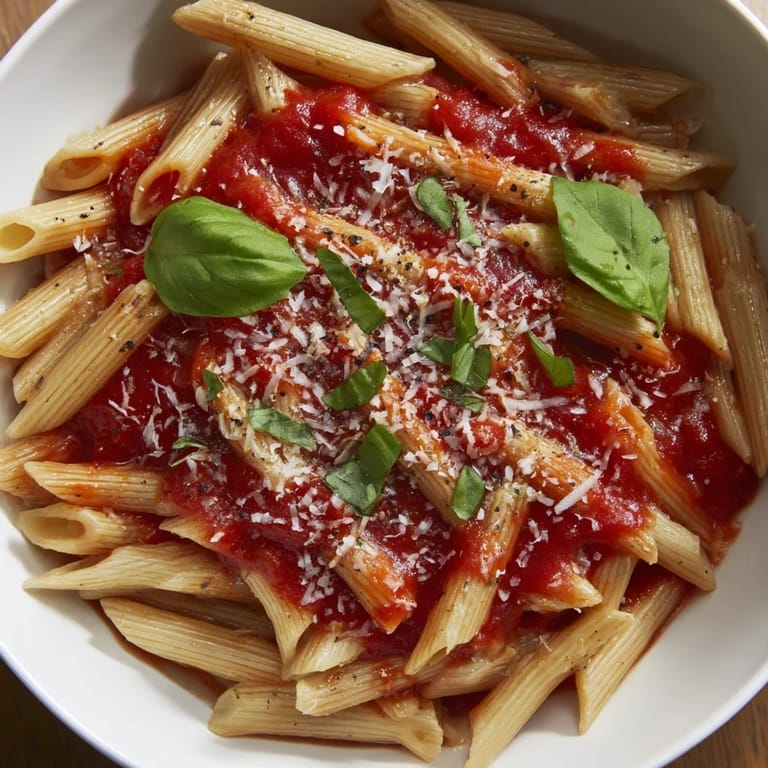
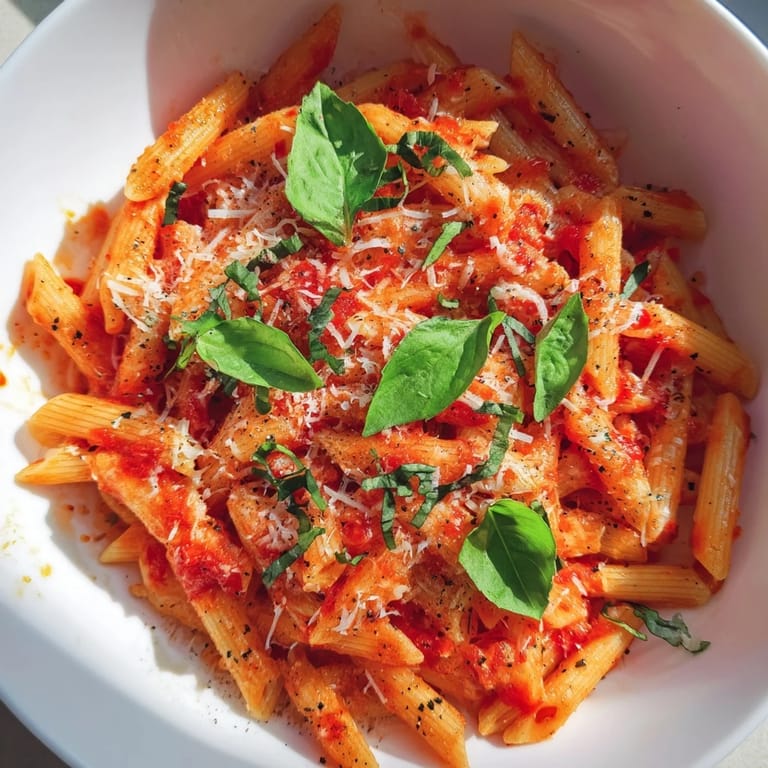
- Sprinkle with Parmesan and whatever fresh herbs you have, taste for salt and pepper, and eat while it's warm.
 Save
Save A colleague once told me she made this in her office break room at 2 p.m. when she hit an energy slump, and something about eating hot, properly sauced pasta at her desk at an odd hour made her feel cared for—by herself, which matters.
Timing Matters More Than You Think
Every microwave cooks differently based on wattage and interior space, so don't panic if your first attempt isn't perfect. My microwave does 75 grams of pasta in exactly 10 minutes, but a friend's takes 12. The stirring intervals are your friend here—each one gives you a chance to check and adjust. This flexibility is actually the recipe's greatest strength; once you know your machine, you'll make this with your eyes closed.
Sauce Is Your Wildcard
Store-bought sauce is completely legitimate, but a quick homemade marinara from canned tomatoes, garlic, and olive oil takes just as long to simmer as your pasta does to cook if you start it in a small pan simultaneously. Pesto comes together in minutes with a blender or food processor, and even a simple Alfredo—butter, cream, Parmesan, black pepper—is faster than most delivery options. The sauce you choose determines whether this tastes like something you threw together or something you actually made.
Make It More Than Pasta
The beauty of a single-bowl meal is that it invites improvisation. Frozen spinach or peas can go in during the last 2 minutes of cooking, softening gently in the residual heat. Shredded cooked chicken, canned chickpeas, or even crumbled feta add substance without requiring extra cooking. Fresh garlic minced into your sauce, a red pepper flake kick, or a squeeze of lemon changes everything about how the dish tastes. This is the place where your pantry becomes your creativity.
- Don't skip seasoning the pasta water itself—it's your only chance to flavor the pasta from within.
- Fresh herbs scattered on top right before eating make an enormous difference compared to cooking them in.
- Keep your sauce separate until the very last moment so you can adjust the consistency with the starchy water if needed.
 Save
Save This recipe exists because sometimes convenience and care don't have to be at odds. Whether you're in a dorm, at an office desk, or just too tired to think about cooking, a hot bowl of properly sauced pasta reminds you that you deserve something warm and delicious right now.
Common recipe questions
- → How long does it take to cook pasta in the microwave bowl?
Cooking times vary by microwave but generally range from 8 to 12 minutes. Stir after initial 4 minutes, then microwave in 2–3 minute increments until pasta reaches desired tenderness.
- → Can I use different pasta shapes with this method?
Yes, shapes like penne, fusilli, or elbow macaroni work well since they cook evenly in water and fit comfortably in the bowl.
- → How do I drain the pasta after microwaving?
Use a fine-mesh sieve or carefully tilt the bowl while holding back pasta with a fork or spoon to pour out excess water.
- → What sauces pair best with microwave-cooked pasta?
Popular options include marinara, pesto, Alfredo, or other store-bought and homemade sauces that coat the pasta nicely.
- → Are there tips for adding extra nutrition?
Add frozen peas or spinach during the last two minutes of cooking to include more vegetables and nutrients.