 Save
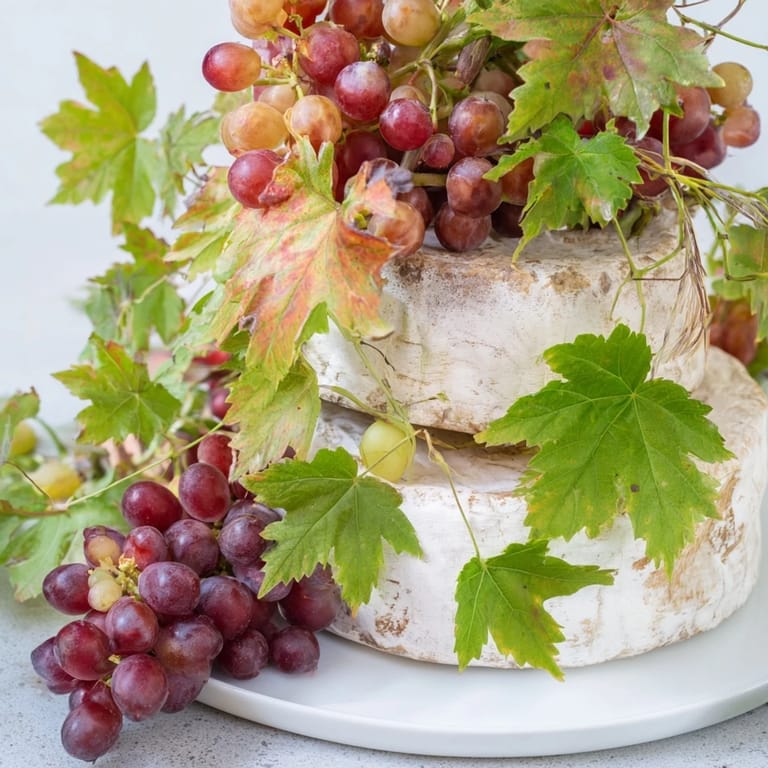
Save There's something about the way late afternoon light catches on grape leaves that makes you want to gather people around a table. I discovered this dish not through a recipe, but through a visit to a small vineyard in Tuscany where the cheesemaker and vine grower were neighbors. They'd casually drape grapevines over fresh cheese wheels for their own gatherings, and it hit me then—why hide beautiful ingredients when they could tell their own story? This isn't about technique; it's about letting rustic cheese and living vines become the conversation piece.
I made this for a surprise dinner at my apartment one autumn, and my neighbor—who'd been skeptical about my cooking—walked in and just stopped. She thought a professional had catered it. The truth? I'd picked up those two cheese wheels that morning, grabbed grapevines from a farmer's market stall on a whim, and arranged them an hour before guests arrived. Her shocked expression taught me something valuable about food: presentation and confidence can transform the simplest ingredients into something that feels impossibly special.
Ingredients
- Young, rustic cheese wheels (2 large, about 1.5 kg each): Look for tomme, young pecorino, or farmhouse varieties that have texture but haven't aged into hardness—they should yield slightly to your knife and have that fresh, tangy edge that plays beautifully against sweet grapes.
- Untreated grapevine branches (3–4 long branches): These must be organic and pesticide-free because they'll drape directly over food. Rinse and dry them thoroughly; they should feel supple enough to arrange without snapping.
- Fresh grapes (500 g, red, green, or mixed): Leave them clustered on stems whenever possible—they stay fresher and look infinitely more elegant than individual grapes scattered about.
- Rustic country bread or baguette (1, sliced): Use yesterday's bread if you have it; slightly stale slices hold up better under cheese and won't disintegrate when people layer everything together.
- Assorted nuts (100 g—walnuts, almonds): Toast them lightly if you want to deepen their flavor, but raw works beautifully too and keeps prep minimal.
- Dried fruits (100 g—figs, apricots): Choose pieces that still feel pliable; hard, brittle dried fruit won't balance the creaminess of fresh cheese the way it should.
Tired of Takeout? 🥡
Get 10 meals you can make faster than delivery arrives. Seriously.
One email. No spam. Unsubscribe anytime.
Instructions
- Prepare your canvas:
- Set your large wooden board in front of you like you're about to paint. This is your moment to think about balance and flow before anything gets placed down.
- Drape the vines:
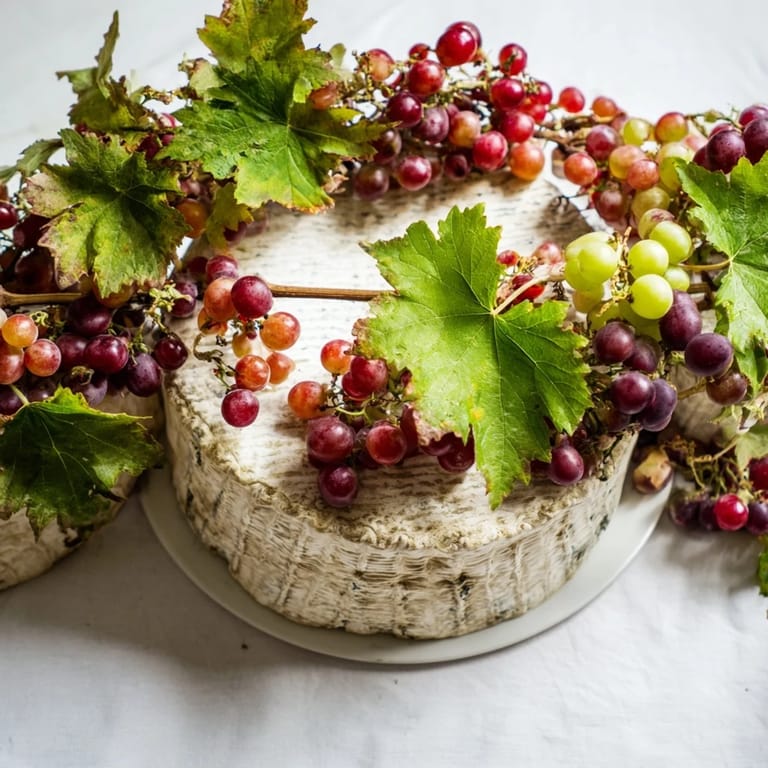
- Lay the grapevine branches across the board, letting them curve naturally around where your cheese wheels will sit. Don't overthink this—the more organic the arrangement, the more stunning it looks.
- Position the cheese:
- Nestle your two cheese wheels into the vine arrangement, letting some vines drape over their tops and edges. You're creating depth and movement, not symmetry.
- Tuck and scatter grapes:
- Tuck grape clusters among the vines and around the cheese wheels where there are gaps. Every cluster should feel like it naturally found its spot.
- Arrange bread and extras:
- Make small, casual piles of bread slices and optional accompaniments—nuts and dried fruits—around the board. Think of these as supporting players, not the main event.
- Finish and serve:
- Step back and look. If something feels crowded, remove it. Step back again. Once it feels right, bring it to the table at room temperature and let people serve themselves with a sharp cheese knife.
 Save
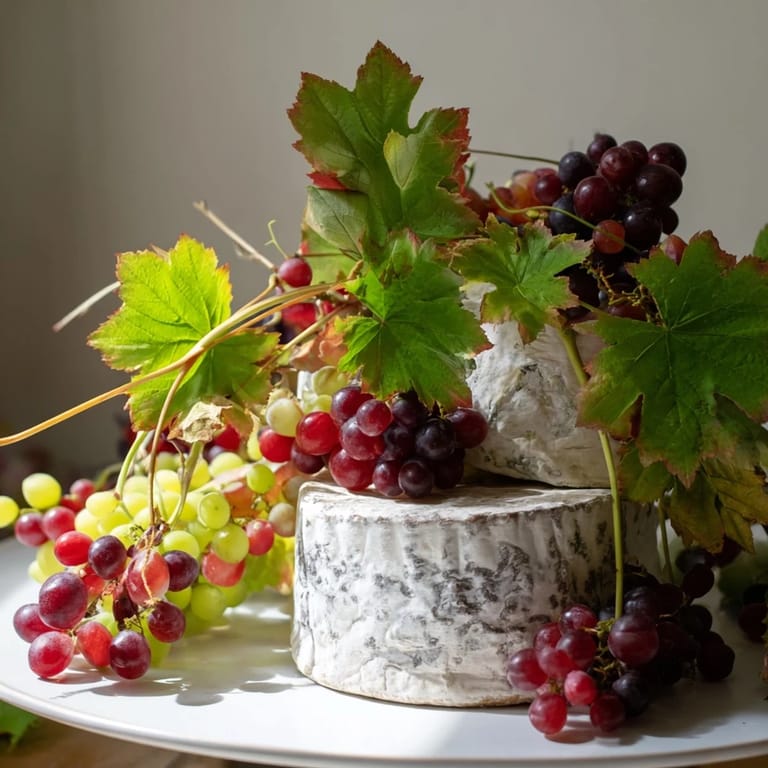
Save What surprised me most about this dish wasn't how easy it was, but how it changed the energy of a gathering. People stopped checking their phones. They talked longer. Someone even asked where the "restaurant" was because surely I hadn't made this. That's when I realized this wasn't really about cheese and grapes at all—it was about giving people permission to slow down and enjoy something beautiful and tactile together.
The Art of Imperfect Arrangement
There's real power in asymmetry. One of my early attempts had everything lined up too perfectly—geometric, symmetrical, dead. It looked like a grocery display. I rearranged everything in the dark (honest mistake, forgot to turn on the kitchen light) and ended up with something that looked like it had grown on the board naturally. Now I deliberately aim for that wild, unforced feel. The vines shouldn't mirror each other; the cheese wheels should sit at slightly different heights; grapes should cluster in unexpected places. That's what makes people lean in.
Pairing and Timing
I've learned that timing this dish around a meal matters differently than other recipes. Bring it out when people are relaxed, not ravenous. Pair it with crisp white wines (a Sauvignon Blanc is my instinct) or light reds that won't overpower the delicate cheese. Some nights I add a quiet drizzle of local honey over one of the cheese wheels or a thin stream of excellent olive oil, letting people discover these extras as they eat.
Creating Your Own Vineyard Moment
This dish thrives on sourcing. Spend fifteen minutes at a farmer's market instead of a supermarket. Talk to the person selling cheese—they'll steer you toward wheels that are in their prime right now. Ask about the grapevines. Build relationships with the ingredients, and the presentation becomes less about technique and more about storytelling. When a guest asks where everything came from, you have real answers. That authenticity travels further than any plating trick ever could.
- If fresh grapevines aren't available, grape leaves work beautifully as a fallback and create almost the same effect.
- Make this in seasons when grapes are in their prime—late summer through fall tastes completely different than any other time.
- Remember that this is a living arrangement; vines will gradually wilt, and that's not a failure—it's part of the experience.
 Save
Save This is the kind of dish that whispers instead of shouts. It asks your guests to notice textures, taste the difference between cheese and grapes, and participate in building their own bites. That's something worth making.
Common recipe questions
- → What type of cheese works best for this dish?
Young, rustic cheeses like tomme, young pecorino, or farmhouse cheese are ideal due to their texture and flavor that pair well with fresh grapes.
- → Can grape leaves be used instead of whole grapevines?
Yes, grape leaves can be substituted if full grapevine branches are not available, maintaining the visual and fresh element.
- → How should the grapevine branches be prepared?
Use untreated, organic grapevine branches that are washed and dried to ensure safety and preserve natural aroma.
- → What accompaniments pair well with this cheese and grape display?
Rustic country bread, assorted nuts like walnuts or almonds, and dried fruits such as figs or apricots complement the dish beautifully.
- → What is the best way to serve this arrangement?
Serve at room temperature on a large wooden board or platter, allowing guests to slice the cheese and combine flavors with grapes and accompaniments as desired.