 Save
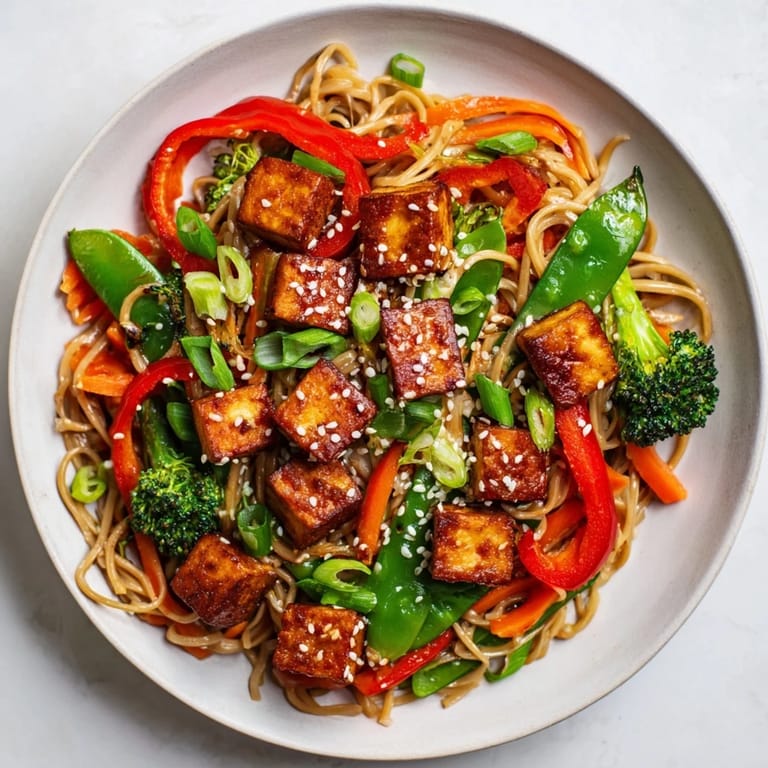
Save There's something magical about the sizzle of tofu hitting hot oil—that exact moment when you know the next twenty minutes are going to smell incredible. I stumbled into making this sesame ginger stir-fry on a Tuesday night when I had a block of tofu staring at me from the fridge and absolutely no plan. What started as me throwing together whatever vegetables looked promising turned into a dish so good my roommate asked for the recipe before she'd even finished eating.
I made this for a friend who'd just gone vegetarian and wasn't convinced it would actually taste good. Watching her go back for seconds while still talking about how she thought tofu was boring—that's when I knew this recipe was a keeper. The whole meal came together so fast that we were sitting down to eat before she'd even finished telling me about her day.
Ingredients
- Firm tofu (400g), drained and pressed: Pressing the tofu matters more than you'd think—it draws out moisture so it can actually crisp up instead of steaming itself into mush.
- Cornstarch (1 tbsp): This is the secret to that golden, crunchy exterior; regular flour gets soggy too quickly.
- Vegetable oil (2 tbsp, plus more for cooking): Use something neutral with a high smoke point so it doesn't burn while you're building that tofu crust.
- Red bell pepper (1, thinly sliced): The sweetness plays beautifully against the tangy sauce and keeps everything from tasting one-dimensional.
- Carrot (1 medium, julienned): Thin cuts mean they'll soften to just the right texture without getting mushy.
- Sugar snap peas (100g, trimmed): These stay crisp and add a little pop of natural sweetness that balances the ginger.
- Broccoli florets (100g): Cut them smaller than you think you need to—they'll soak up that sauce even better.
- Spring onions (2, sliced): Save these for the very end so they stay fresh and bright, not wilted into the pan.
- Wheat or rice noodles (250g): Honestly, either works; choose whatever you have or what fits your diet, just don't skip the cold rinse after cooking.
- Soy sauce (3 tbsp): The backbone of the sauce—taste as you go if you're salt-sensitive because a little goes a long way.
- Toasted sesame oil (1 tbsp): Use the toasted kind, not the light version; the difference in flavor is everything.
- Rice vinegar (2 tbsp): This adds tang without sharpness, and it keeps the sauce from being too heavy.
- Honey or maple syrup (1 tbsp): A touch of sweetness rounds out the flavors and keeps the sauce glossy.
- Fresh ginger (2 tbsp, grated): This is not a background flavor—ginger is the main character here, so don't hold back.
- Garlic (2 cloves, minced): Mince it fine so it distributes evenly throughout the sauce and doesn't overpower anything.
- Sesame seeds (1 tbsp for sauce, more for garnish): They add nuttiness and a little crunch that makes each bite feel special.
Tired of Takeout? 🥡
Get 10 meals you can make faster than delivery arrives. Seriously.
One email. No spam. Unsubscribe anytime.
Instructions
- Get your noodles ready:
- Start by cooking the noodles according to the package since they need time to cool. Drain them well, give them a quick rinse under cold water to stop them cooking and separate them, then set them aside.
- Cube and coat the tofu:
- Cut your pressed tofu into bite-sized pieces—about the size of dice—then toss them gently in a bowl with the cornstarch until every piece is lightly dusted. This coating is what creates that magic crispy exterior.
- Crisp the tofu:
- Heat vegetable oil in your wok or large skillet over medium-high heat until it shimmers slightly. Working in batches if needed, arrange tofu cubes in a single layer and let them sit undisturbed for 2-3 minutes before stirring—this is how they get that golden crust. Keep cooking and turning gently until all sides are crispy and golden, about 6-8 minutes total. Transfer to a plate.
- Stir-fry the vegetables:
- Add another splash of oil to the pan if it looks dry. Toss in the bell pepper, carrot, sugar snap peas, and broccoli, stirring constantly so they cook evenly but stay bright and crisp. You're aiming for 3-4 minutes—they should still have a bit of firmness.
- Make the sauce:
- While the vegetables are cooking, whisk together soy sauce, sesame oil, rice vinegar, honey, grated ginger, minced garlic, and 1 tablespoon of sesame seeds in a small bowl. Taste it and adjust—if it needs more ginger warmth, add a tiny bit more; if it's too salty, a splash of water helps.
- Bring it all together:
- Return the crispy tofu to the pan with the vegetables, add your cooked noodles, and pour the sauce over everything. Toss gently but thoroughly until the sauce coats every strand and piece, and everything is heated through—about 2-3 minutes of tossing.
- Finish and serve:
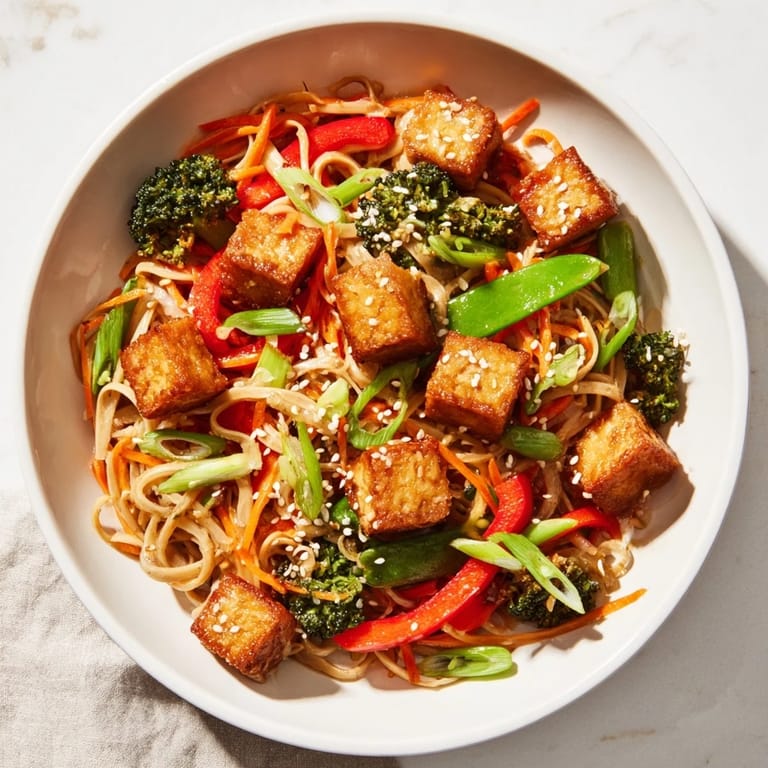
- Transfer to a serving bowl or plates and top with sliced spring onions, extra sesame seeds, and fresh coriander if you have it. Serve with lime wedges on the side so people can add brightness as they eat.
 Save
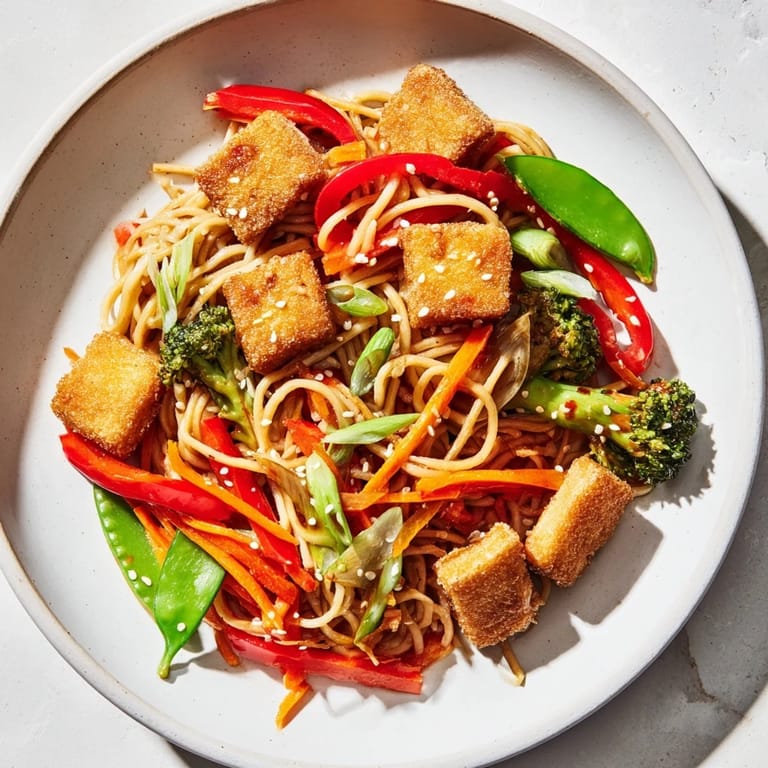
Save What I love most about this dish is that it somehow tastes like you spent hours on it, when really you were done cooking in under twenty minutes. There's something satisfying about how the warm noodles and crispy tofu catch that glossy, aromatic sauce and hold onto it—it's comfort and brightness all at once.
The Secret to Crispy Tofu Every Time
The biggest shift in my tofu game came when I stopped being gentle with it. People always say you have to be careful, but what I learned is that once it's coated in cornstarch and the oil is hot enough, tofu actually wants to get crispy—you just have to let it sit without moving it around. I used to fidget constantly, flipping and stirring, and it would break apart into a sad, soft mess. Now I press it properly, coat it, get the pan really hot, and then trust it to do its thing. The cornstarch creates this incredible barrier that lets the exterior brown while the inside stays silky, and that contrast is what makes you actually want to eat tofu.
Building Layers of Flavor
The sauce is where the personality lives in this dish, and it works because each ingredient has a specific job. The soy sauce brings umami depth, the rice vinegar cuts through richness with tang, the honey adds a subtle sweetness that rounds everything out, and then the ginger—oh, the ginger—it wakes up your palate with warmth and brightness. I used to make stir-fry sauces by dumping everything together and hoping for the best, but once I understood what each component was supposed to do, I could actually taste when something was missing or out of balance. If you ever feel like the sauce isn't quite right, it's usually because one of these elements is too quiet or too loud; taste and adjust as you go.
Making It Your Own
This recipe is flexible in the best way, and that's actually why I keep coming back to it. I've made it with mushrooms when I didn't have broccoli, swapped in bok choy in the cooler months, and once threw in some water chestnuts because I was out of snap peas. The vegetables aren't sacred—it's really just about whatever looks good and needs to be used up in your kitchen.
- For heat, add chili flakes or sriracha directly to the sauce and let it sit for a minute so the spice infuses throughout.
- If you're gluten-free, swap the soy sauce for tamari and use rice noodles instead of wheat—the flavor stays the same and it's equally satisfying.
- Leftover sauce keeps in the fridge for at least three days, so if you make extra, you'll have the start of another meal waiting for you.
 Save
Save This stir-fry is the kind of meal that proves you don't need complicated techniques or expensive ingredients to make something really good. It's become one of those dishes I make when I'm hungry and want something that feels indulgent but comes together faster than ordering takeout.
Common recipe questions
- → How do I achieve crispy tofu in the stir-fry?
Press tofu to remove excess moisture, coat with cornstarch, and fry over medium-high heat in vegetable oil until golden and crispy on all sides.
- → Can I substitute the noodles with a gluten-free option?
Yes, using rice noodles or certified gluten-free noodles works well without compromising texture or flavor.
- → What vegetables work best for this stir-fry?
Bell peppers, carrots, sugar snap peas, broccoli, and spring onions create vibrant colors and a crunchy texture.
- → How is the sesame-ginger sauce prepared?
The sauce combines soy sauce, toasted sesame oil, rice vinegar, honey, fresh ginger, garlic, and sesame seeds whisked together for a balanced tangy and savory taste.
- → Can I add heat to the dish?
Absolutely, a pinch of chili flakes or a dash of sriracha can be incorporated into the sauce for extra spice.
- → What garnishes enhance the final dish?
Sesame seeds, fresh coriander or cilantro leaves, and lime wedges add freshness and texture, lifting the overall flavor.