 Save
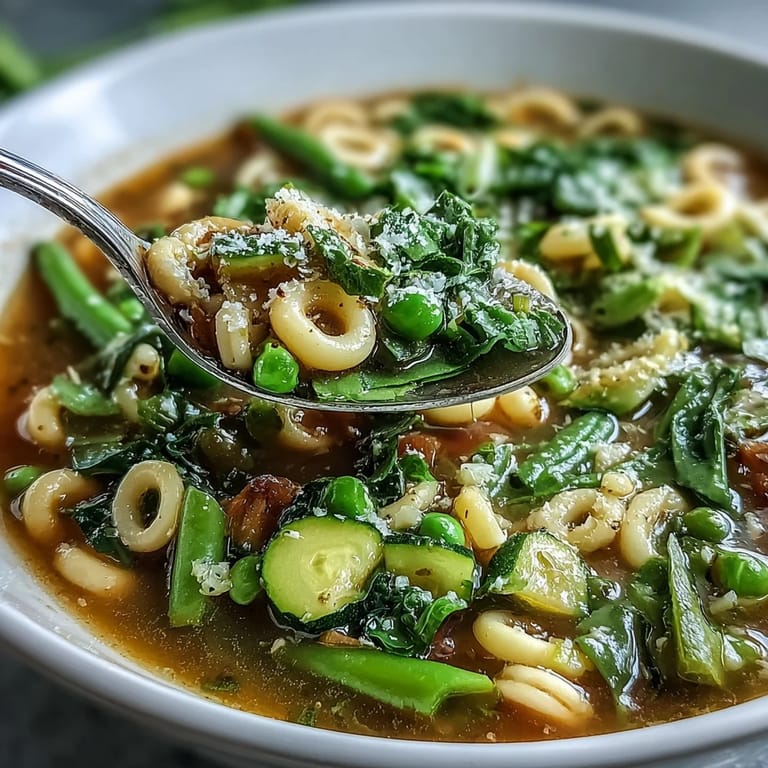
Save When the windows are open and you can almost smell the gardens waking up outside, I find myself craving something as lively as spring itself. That&aposs how Spring Minestrone snuck into my kitchen, bringing its chorus of green vegetables and soft herbs. The sizzle of onion hitting olive oil, the delicate steam clouding my glasses as broth meets vegetables—suddenly, this dish turns an ordinary evening into something bright and uplifting. Its color and aroma are their own invitation to linger by the stove. Some recipes just belong to a certain season, and this one tastes like the start of something new.
I first made this Spring Minestrone on a rainy April afternoon when friends dropped by unexpectedly—each of us trailing umbrellas and hungry stories. There was a lot of laughter as we swapped kitchen duties, with someone inevitably dropping a pea or two trying to help. By the time we sat down, the soup had become the centerpiece of a cozy, impromptu gathering, steam rising and hearts warmed in tandem. Moments like that remind me how good food can turn any day into a celebration. Ever since, the sound of a wooden spoon clinking against a soup pot means something lovely is about to happen.
Ingredients
- Olive oil: Choose a fruity, good-quality olive oil—it lifts all the flavors and helps the vegetables shimmer as they soften.
- Onion: Finely chopping the onion helps it melt into the broth, lending gentle sweetness.
- Garlic: Mince it fresh and don&apost let it brown—sharp but smooth is what you want.
- Carrots: Their crisp sweetness is best when diced small for even cooking and bites in every spoonful.
- Celery: Adds a refreshing crunch—don&apost skip it!
- Zucchini: Fold it in just before boiling so it stays tender, not mushy.
- Peas: Fresh or frozen both work well; I toss them in straight from the freezer when I am in a hurry.
- Baby spinach leaves: They wilt quickly and add a pop of color right at the end.
- Green beans: Snip them into bite-size pieces; they add a satisfying snap.
- Vegetable broth: A low-sodium version is best, so the veggies get to shine without being overpowered.
- Bay leaf: Just one infuses the soup with an almost floral earthy note—don&apost forget to fish it out!
- Small pasta shapes: Ditalini or orzo soak up the broth while still giving chew; cook just until al dente.
- Parsley: Chopped fresh at the end, for grassy brightness.
- Salt and black pepper: Season boldly at the finish—but always taste first.
- Grated Parmesan: A classic garnish for creaminess and depth (skip or sub for vegan needs).
- Fresh basil leaves: Tear and sprinkle for incredible aroma right before serving.
- Extra olive oil for drizzling: A flourish that makes each bowl taste restaurant-worthy.
Tired of Takeout? 🥡
Get 10 meals you can make faster than delivery arrives. Seriously.
One email. No spam. Unsubscribe anytime.
Instructions
- Soften the aromatics:
- Warm the olive oil in a large soup pot over medium heat; toss in the onion and stir, listening for that gentle sizzle while the air fills with sweetness.
- Build the base:
- Add the garlic, carrots, and celery, letting them sweat and mingle; the colors should brighten, and the scent will deepen after a few minutes.
- Add the green:
- Stir in zucchini, green beans, and peas, mixing and listening for the way veggies pop as they hit the heat—just a couple of minutes to lock in color.
- Simmer the broth:
- Pour in vegetable broth, slip in the bay leaf, and bring everything to a gentle boil—then drop the heat and let it bubble away softly, filling the kitchen with comfort.
- Cook the pasta:
- Tip in the small pasta, stirring so nothing sticks; simmer until they&aposre just tender, testing a piece between your teeth.
- Finish with greens and herbs:
- With a minute or two left, shower the pot with spinach and parsley; they&aposll wilt gracefully and the soup will take on its final jewel-green hue.
- Final seasoning:
- Scoop out the bay leaf, then taste for salt and pepper, adjusting until the flavors sing together.
- Serve and garnish:
- Ladle into bowls; let everyone add Parmesan, fresh basil, and a drizzle of extra olive oil—the aroma is impossible to resist.
 Save
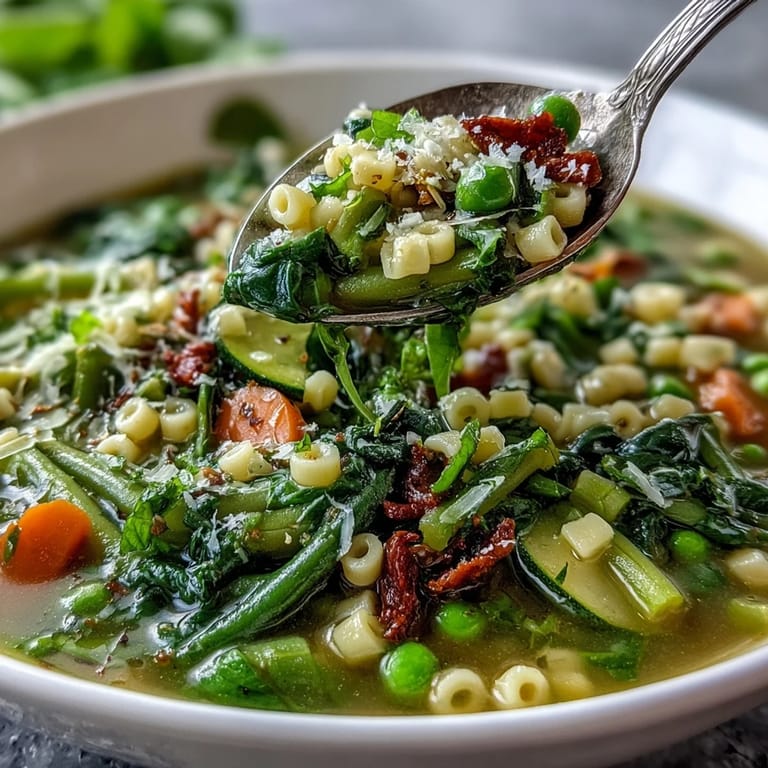
Save The first time I served this soup to my family, a quiet hush fell over the table with the first bites—a rare moment of silence in our lively household. It felt like we weren&apost just sharing soup, but the simple joy of the season itself.
Choosing and Prepping Your Spring Vegetables
Pick the vegetables that look happiest at the market; the fresher they are, the brighter your soup will taste. On rushed days, pre-chopped produce is a lifesaver—no shame in shortcuts when the reward is a colorful bowl in minutes. Cut everything the same size so each spoonful feels harmonious and inviting. If you spot asparagus or fava beans, chop them in and let the soup evolve with the season.
Making It Hearty: Bread and Beyond
Sometimes I&aposs hungry enough to need a little more substance, so I set out a loaf of chewy sourdough or crusty Italian bread to dip into the soup. It soaks up all that delicate broth, turning the meal into something extra satisfying. Leftover minestrone makes the best quick lunch if you stir in a scoop of cooked white beans or chickpeas—total comfort. You can even freeze a portion for an easy win on a busy weeknight.
Customizing Your Minestrone Like a Pro
This soup loves a personal twist: switch the pasta, swap in kale for spinach, or try lemon zest for sparkle—there&aposs no wrong turn. Make it spicy with a pinch of chili flakes if you&aposre feeling bold.
- If you need it gluten-free, just grab your favorite alternative pasta.
- Leftover veggies in the fridge? Dice them in and let nothing go to waste.
- Always taste and tweak the seasoning at the end; a squeeze of lemon perks everything up.
 Save
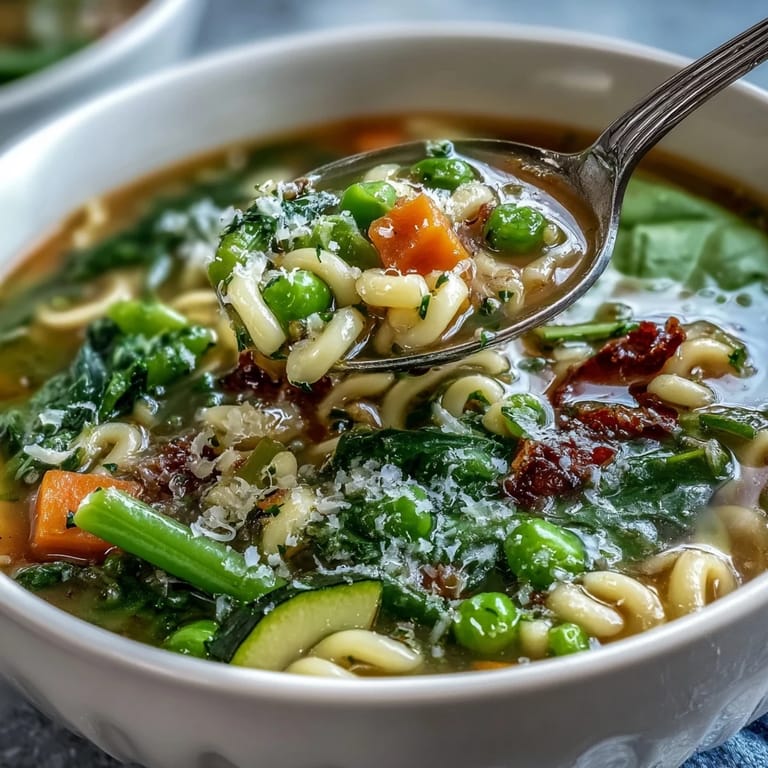
Save This Spring Minestrone reminds me that the simplest meals can feel like the most generous. I hope your kitchen feels just as lively and welcoming with each bowlful you serve.
Common recipe questions
- → Can I make this ahead and reheat?
Yes. Cool the soup quickly, refrigerate in an airtight container and reheat gently on the stove. Add a splash of broth if it tightens; stir in fresh greens just before serving to retain texture.
- → What pasta works best here?
Small shapes like ditalini, orzo or small shells are ideal because they cook evenly in the broth and complement the vegetables without overpowering the spoonful.
- → How can I keep it vegan?
Omit the Parmesan or use a plant-based alternative and choose a vegetable broth with no animal ingredients. Finish with extra-virgin olive oil and fresh herbs for brightness.
- → Can I use frozen vegetables?
Yes. Frozen peas, green beans and spinach work well; add them toward the end of cooking to avoid over-softening and preserve color and flavor.
- → How do I make it gluten-free?
Use a gluten-free short pasta or swap in cooked gluten-free grains like rice or quinoa. Ensure the broth and any packaged ingredients are labeled gluten-free.
- → Any tips for seasoning and texture?
Adjust salt at the end, remove the bay leaf before serving, and finish with a drizzle of olive oil and fresh herbs. Cook pasta until just al dente so it keeps its bite in the hot broth.