 Save
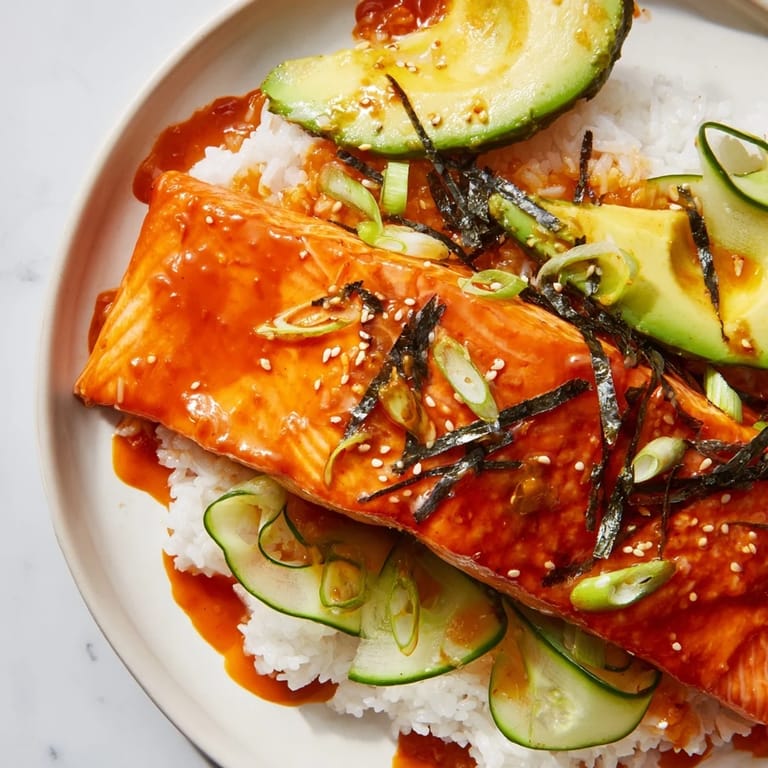
Save I was recovering from a long week and scrolling through food videos when Emilys salmon bowl stopped me cold. Something about that flaky fish with the sticky red glaze just looked like comfort. I messaged my sister immediately: we are making this tomorrow. She came over with wine and we accidentally broiled the glaze too long on the first try but the edges got all caramelized and we ate standing up right from the baking sheet.
Last month my friend who claims she hates fish tried one bite and went back for seconds. The sauce does something magical where it turns almost candylike in the oven but the inside stays tender. Now she texts me every Tuesday asking if its salmon bowl night again.
Ingredients
- Salmon fillets: Skinless is easier here so the glaze can really coat the fish and those thinner sections cook through before the thick parts dry out
- Gochujang: This Korean chili paste brings depth not just heat and the fermented funk balances the honey and orange
- Orange juice: Fresh squeezed makes a noticeable difference because bottled juice can taste flat or overly sweet
- Soy sauce: Use a good quality one since it is half the salty umami base of the whole glaze
- Honey: The glaze needs something viscous to help it cling and coat the salmon as it bakes
- Rice vinegar: Just enough brightness to keep the sauce from feeling too heavy
- Sesame oil: Toasted not raw gives that nutty aroma you smell before you even taste it
- Ginger and garlic: Fresh grated ginger hits different than paste and minced garlic blooms better than powdered
- Shortgrain rice: It clings together in those sticky spoonfuls that balance the soft flaky fish
- Cucumber: Thin sliced means you get crunch without big watery bites
- Avocado: Room temperature or slightly warm is better than cold from the fridge
- Nori: Cut into strips not crumbled so you get those salty little ribbons throughout
- Sesame seeds: Toast them in a dry pan for two minutes and the whole bowl smells like a restaurant
- Scallions: Both white and green parts add different kinds of sharpness
Tired of Takeout? 🥡
Get 10 meals you can make faster than delivery arrives. Seriously.
One email. No spam. Unsubscribe anytime.
Instructions
- Heat the oven:
- Preheat to 200°C 400°F and line a baking tray with parchment paper so cleanup is zero effort later
- Season the fish:
- Sprinkle salt and pepper on both sides of the salmon fillets and place them on the tray with space between each piece
- Whisk the glaze:
- Stir gochujang orange juice soy sauce honey rice vinegar sesame oil ginger and garlic until completely smooth and thick enough to coat a spoon
- First glaze:
- Brush half the sauce over the salmon making sure to get the edges and any nooks where the glaze can pool
- Bake:
- Cook for 12 to 14 minutes until the salmon flakes easily but still looks slightly underdone in the very center because it will keep cooking
- Prep while it bakes:
- Slice your cucumber and avocado cut the nori into strips and make sure your rice is warm and ready to go
- Second glaze:
- Brush the remaining sauce over the cooked salmon and switch to broil for 1 to 2 minutes watching closely so it bubbles and darkens without burning
- Assemble:
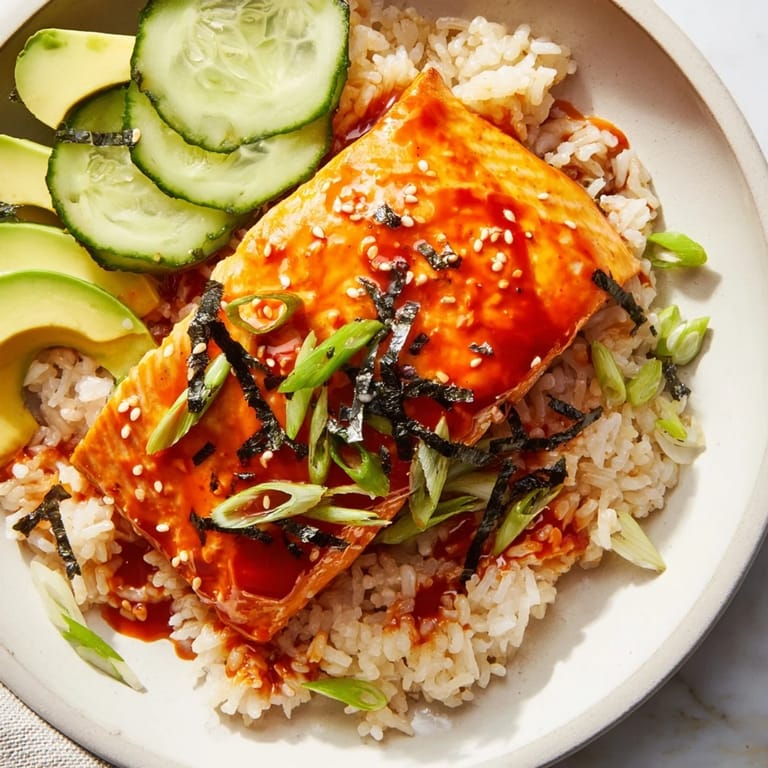
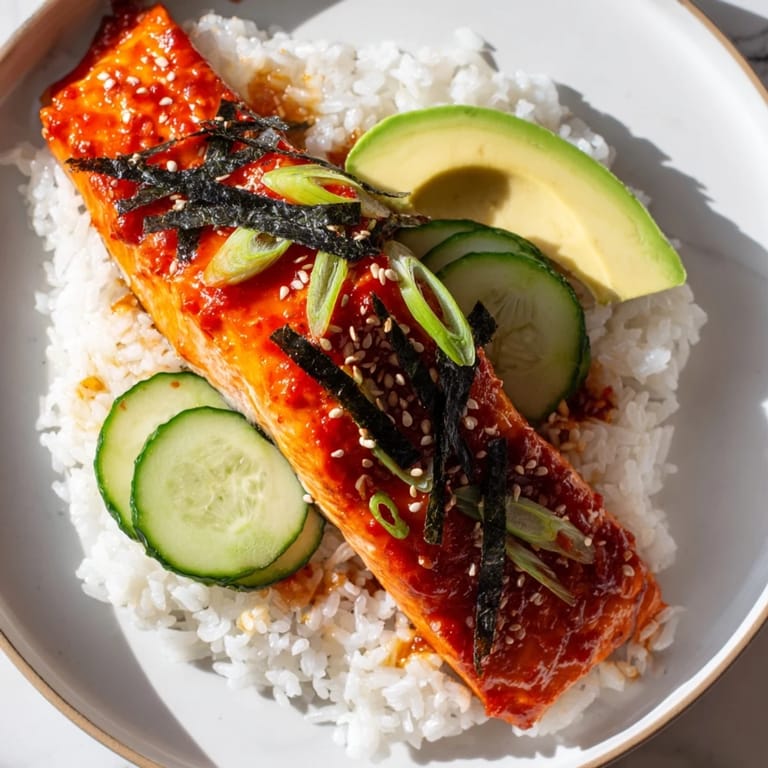
- Divide rice between two bowls top with salmon and arrange cucumber avocado nori sesame seeds and scallions however looks pretty to you
 Save
Save This showed up on my table during a month when I was too busy to cook anything real and suddenly I had something that felt fancy but took zero brainpower. My roommate started requesting it every Sunday and now it is the thing we make when we need to feel like adults who have our lives together.
Making It Vegetarian
Extra firm tofu pressed for at least 20 minutes works beautifully here and actually soaks up the glaze even better than salmon. Cut it into slabs instead of cubes so you get more surface area for the sauce to cling to and bake for the same amount of time flipping halfway through. The texture gets chewy and crisp at the edges in a way that makes you not miss the fish at all.
Rice That Actually Tastes Good
Short grain rice is non negotiable for that sticky clingy texture but rinsing it until the water runs clear before cooking makes the biggest difference. I cook mine with a little less water than the package calls for so each grain stays separate but still tender enough to scoop. Leftover rice warmed up with a splash of water works even better than freshly made because it is drier and holds its shape better in the bowl.
Toppings That Change Everything
Sesame seeds taste ten times better if you toast them yourself in a dry pan over medium heat until they smell nutty and start to golden. Pickled ginger adds a sharp acidic pop that cuts through the rich salmon and shredded carrots bring sweetness. Sometimes I add a soft boiled egg if I want this to feel like a full meal and the yolk mixing into the rice is not a bad thing.
- Keep the glaze slightly warm so it brushes on easily instead of thickening up as it cools
- Slice the avocado right before serving so it does not brown or oxidize
- Extra nori on the side never hurt anyone
 Save
Save This bowl became the thing I make when I want dinner to feel special but I am too tired to make an effort. Hope it finds its way into your regular rotation too.
Common recipe questions
- → What is gochujang and how does it affect the flavor?
Gochujang is a Korean chili paste that provides a rich, spicy, and slightly sweet depth to dishes. It adds heat and umami to the glaze, balancing the citrus notes.
- → Can I prepare the salmon without using an oven?
Yes, you can pan-sear the salmon over medium heat, then brush the glaze during cooking for a sticky finish without baking.
- → What alternatives exist for the rice base?
Other bases like quinoa, cauliflower rice, or mixed grains can be used to add texture and variety.
- → How can I add more crunch to the bowl?
Consider adding shredded carrots, edamame, or pickled ginger for extra texture and freshness.
- → Is this dish suitable for special diets?
It is pescatarian and dairy-free. For gluten-free, ensure the soy sauce and gochujang used are certified gluten-free.