 Save
Save There's something about assembling a mezze board on a lazy afternoon that feels less like cooking and more like creating an edible landscape. I discovered this particular arrangement one summer when I had friends dropping by unexpectedly, and all I had were scattered ingredients from a market trip that morning. Instead of scrambling to prepare something cooked, I decided to let the vegetables, cheeses, and dips speak for themselves, and what emerged was far more memorable than any hot dish could have been.
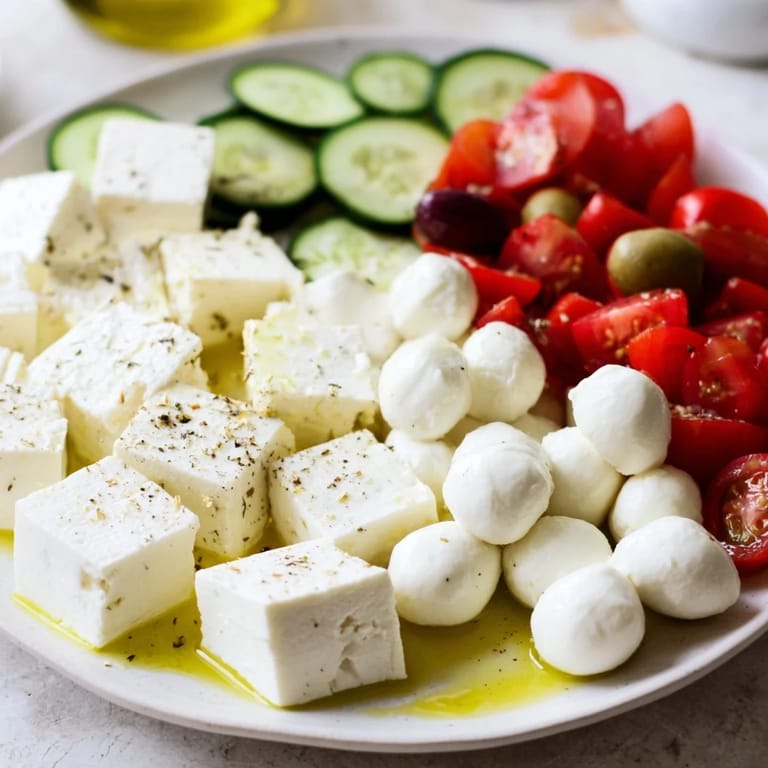
I remember setting this board on our patio table just as the sun hit that perfect angle where everything gleamed—the pale feta cubes caught the light like little stones, and the cherry tomatoes looked jewel-like against the pale wood. My neighbor peeked over the fence, and within ten minutes she was sitting with us, wine in hand, declaring it the most inviting thing she'd seen all week. That's when I realized this dish isn't really about the ingredients at all; it's about how you arrange them.
Ingredients
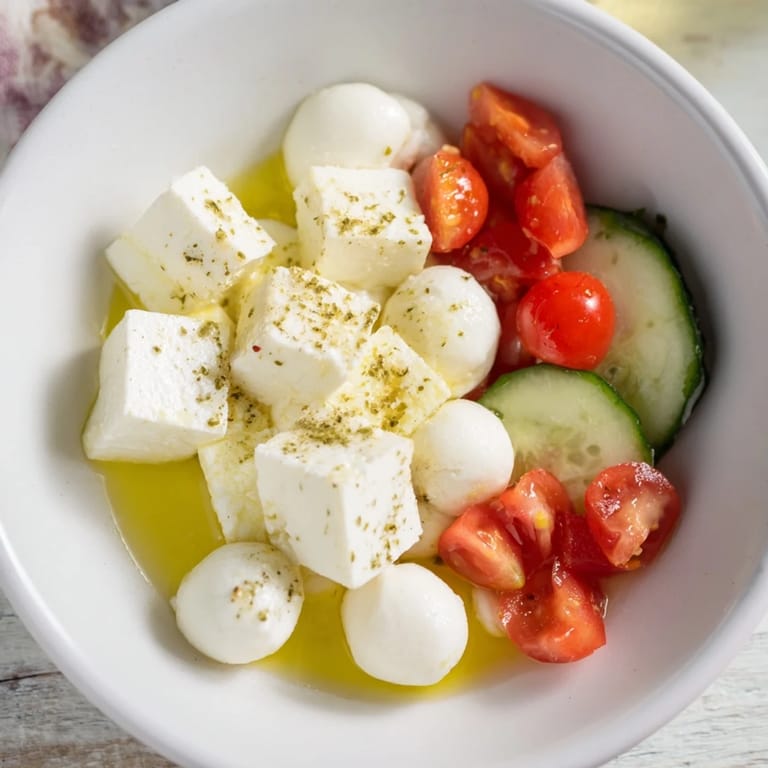
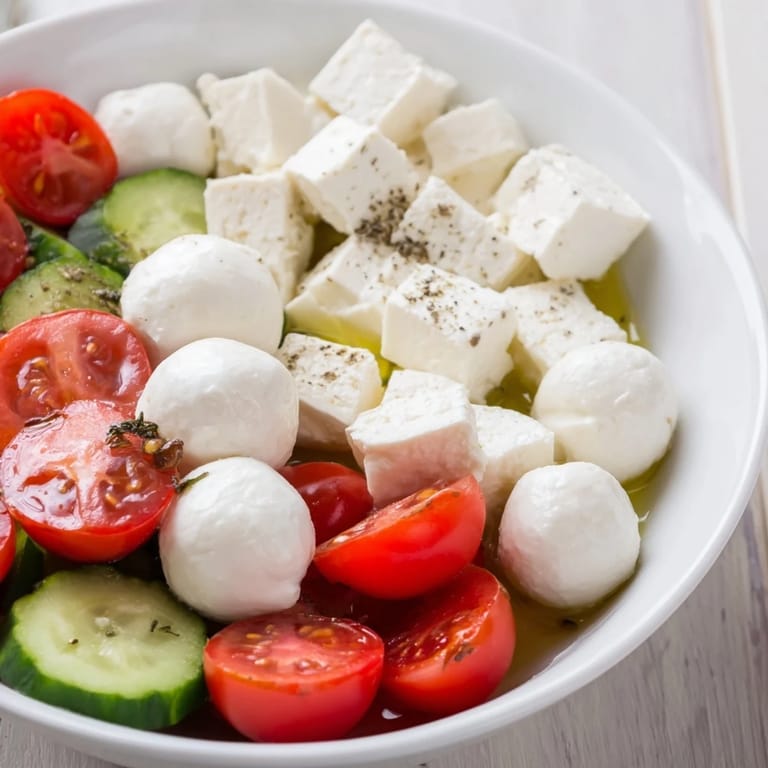
- Feta cheese: Cube it generously and keep it at room temperature for a few minutes before serving so it's creamy rather than cold and crumbly.
- Fresh mozzarella balls: Drain them well and pat dry, otherwise they'll weep moisture across your board and things get soggy.
- Cucumber: Slice it just before serving and you'll keep that satisfying crunch; the fresher the cut, the better it tastes.
- Cherry tomatoes: Halving them instead of leaving them whole makes them easier to grab and gives you twice as many flavor bursts across the board.
- Bell pepper: Choose a bright yellow or orange one for visual warmth; red works too but the lighter colors photograph better and feel more summery.
- Red onion: Keep the slices thin and soak them in ice water for five minutes if you find them too sharp; it mellows them without losing their bite.
- Radishes: Their peppery crunch is what keeps people coming back to the board even when they're full, so don't skip them.
- Kalamata olives: Pit them if you can; it shows respect for your guests' teeth and makes mindless snacking actually mindless.
- Hummus and tzatziki: Buy good quality versions or make them yourself; these dips are the bridges between the vegetables and cheese, so they matter.
- Extra virgin olive oil: Use the good stuff here since it's barely heated and tastes exactly like itself; this is not a place to cut corners.
- Fresh herbs: Mint and dill add that finishing touch that makes everything look intentional rather than thrown together.
Tired of Takeout? 🥡
Get 10 meals you can make faster than delivery arrives. Seriously.
One email. No spam. Unsubscribe anytime.
Instructions
- Start with the foundation:
- Place your cheeses first, giving each one breathing room on the board. Think of them as anchors that everything else will arrange around, so leave good white space between them.
- Build your vegetable landscape:
- Arrange the cucumber, tomatoes, peppers, onion, and radishes in small clusters, allowing empty space between each group. This is the opposite of a crowded plate; emptiness is part of the design.
- Nestle in the olives:
- A small pile or bowl of olives adds height variation and gives people a destination when they're reaching for their fifth or sixth bite.
- Position your dips:
- Spoon hummus and tzatziki into small bowls and tuck them into strategic spots where they feel nestled rather than squeezed onto the board.
- Dress everything lightly:
- Drizzle olive oil over the cheeses and vegetables with a gentle hand, then scatter sea salt and cracked black pepper. You want to taste the ingredients, not the seasoning.
- Crown it with herbs:
- Scatter fresh mint and dill sprigs across the entire board as if you're painting with green; they should feel random and organic, not perfectly placed.
- Present immediately:
- Serve with crispbreads or pita wedges on the side while everything is still cool and crisp, and watch people's faces light up.
 Save
Save What I love most about this board is that it became the anchor for an entire evening of conversation. Nobody was rushed because there wasn't a main course coming, and somehow that emptiness on the plate matched the spaciousness we all felt. We talked until the sun was nearly gone, picking at things between sentences, and I realized that mezze isn't a type of food so much as it's a permission to linger.
The Art of White Space
Every instinct in your brain will tell you to fill every gap on that board, and you have to resist. The empty space is what makes people slow down and look. It's what keeps the board from feeling like an assault of flavors and colors. Those little pockets of breathing room between the cheese and vegetables are actually doing the heavy lifting in terms of how appetizing everything looks.
Playing with Color and Texture
The reason this board works so well is because every element offers something different to look at and bite into. The creamy cheese against the crunch of radish, the soft pita wedge beside the firm tomato, the smooth hummus next to the briny olives. If your market has both red and golden radishes, grab both; that little variation in color makes the whole arrangement feel more abundant than it actually is.
Variations and Occasions
Once you understand the basic architecture of this board, you can adapt it endlessly. In winter, I add roasted beets and hard cheeses; in fall, I include dried figs and candied nuts. The framework stays the same, but the personality changes with the season. What never changes is the principle: arrange with intention, leave generous space, and let the quality of each ingredient shine through. Here are some tweaks to keep in your back pocket:
- Add crispy chickpeas roasted with sumac for extra crunch and a sophisticated flavor note that guests always ask about.
- Include a small pile of labneh or thick Greek yogurt as another creamy element if you want more richness alongside the dips.
- Swap the regular olives for a mixture of green and black for visual interest and subtle flavor variation.
 Save
Save This sun-drenched patio board has become my go-to whenever I want to feed people without the performance of cooking. It tastes like summer, feels generous without being fussy, and somehow always turns a regular afternoon into something worth remembering.
Common recipe questions
- → How should the vegetables be arranged?
Slice and fan out the vegetables in small clusters with space in between to create an airy, light presentation on a large platter or wooden board.
- → Can I substitute the cheeses?
Yes, goat cheese can replace the feta, and vegan alternatives can be used to suit different dietary preferences.
- → What dips complement this platter?
Hummus and tzatziki add creamy textures and fresh flavors that pair well with the cheeses and vegetables on the board.
- → Is this suitable for gluten-free diets?
Yes, by choosing gluten-free crispbreads or pita wedges, the platter remains gluten-free while maintaining its delicious appeal.
- → How to enhance the flavor of the feta?
Sprinkle the feta with dried oregano or sumac for added aroma and a touch of spice before serving.
- → What drink pairing is recommended?
A chilled Sauvignon Blanc or a light rosé pairs beautifully, complementing the fresh Mediterranean flavors.