 Save
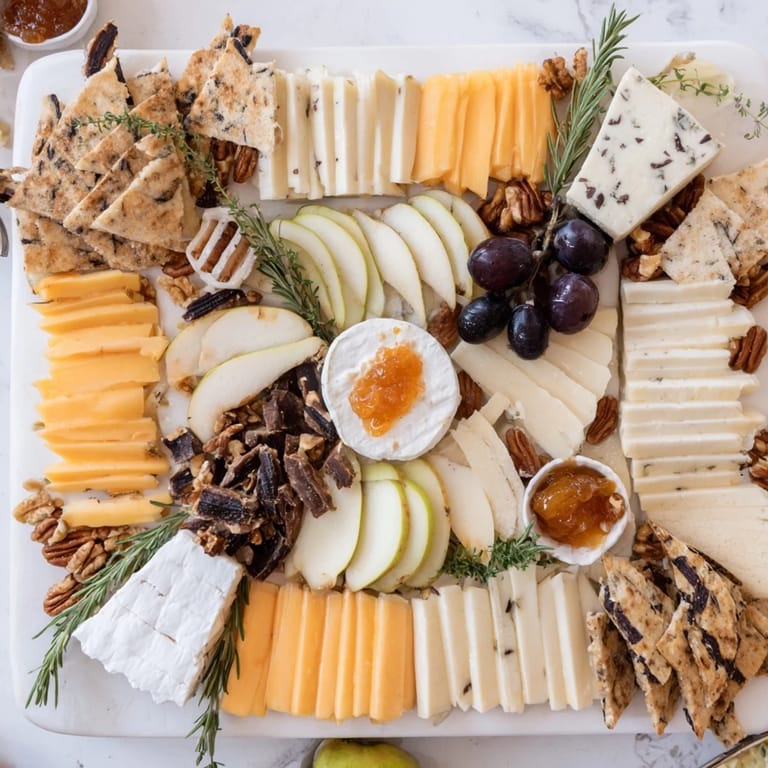
Save I'll never forget the holiday party where my friend Sarah unveiled a cheese board unlike anything I'd seen before. Instead of the usual scattered arrangement, she'd divided it into twelve distinct sections, each telling its own story with a different cheese and pairing. I was mesmerized watching guests move around the board like they were opening presents, discovering something new with each stop. That's when I realized a cheese board could be more than just food—it could be an experience, a conversation starter, a small edible adventure right there on the table.
I made this for my sister's engagement celebration, and what started as a casual appetizer became the centerpiece everyone gathered around. Watching my dad discover that Comté with grapes was his new favorite thing, or seeing my niece's face light up when she realized dark chocolate paired with smoked cheese—those small moments of joy made every minute of arrangement worth it.
Ingredients
- Brie: This creamy, buttery cheese with its soft rind is the elegant starting point. Serve it at room temperature so it becomes almost spreadable and luxurious
- Aged Cheddar: The sharpness cuts through sweetness beautifully. Look for a good aged version where you can actually taste the complexity
- Manchego: This Spanish sheep's milk cheese has a slightly nutty character that feels special and imported without being difficult to find
- Roquefort or Blue Cheese: Yes, it's bold and veiny, but paired thoughtfully it becomes the sophisticated moment on your board
- Goat Cheese: Tangy and slightly crumbly, it's the fresh note that balances richer cheeses beautifully
- Gruyère: Nutty and complex, this one teaches you that cheese can have actual depth of flavor
- Camembert: Similar to Brie but earthier, it's like tasting the same story with a different accent
- Gouda: Creamy and slightly sweet, it's the approachable one that makes everyone smile
- Comté: French excellence that tastes like mountains and time. Worth seeking out specifically
- Pecorino: Sharp and salty, this Italian cheese keeps your palate interested and engaged
- Havarti: Creamy Danish butter in cheese form. It shouldn't work but somehow it does
- Smoked Cheese: The unexpected twist that makes people say 'oh wow, I didn't know cheese could taste like that'
- Honey: Not just sweetness, but a bridge that makes certain pairings suddenly click
- Fig Jam: The sophisticated spread that elevates everything it touches with subtle complexity
- Whole Grain Mustard: A tangy counterpoint that brings balance and brightness to rich cheeses
- Dried Apricots: Concentrated fruit sweetness that complements aged cheeses in unexpected ways
- Fresh Herbs: Thyme and rosemary aren't just garnish, they're aromatics that make people lean in closer
Tired of Takeout? 🥡
Get 10 meals you can make faster than delivery arrives. Seriously.
One email. No spam. Unsubscribe anytime.
Instructions
- Prepare Your Canvas:
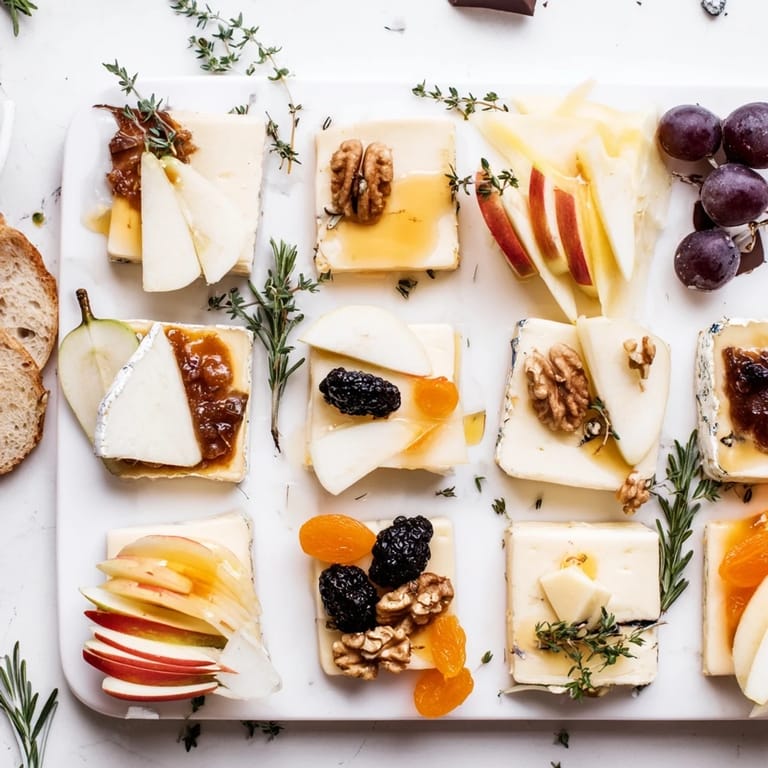
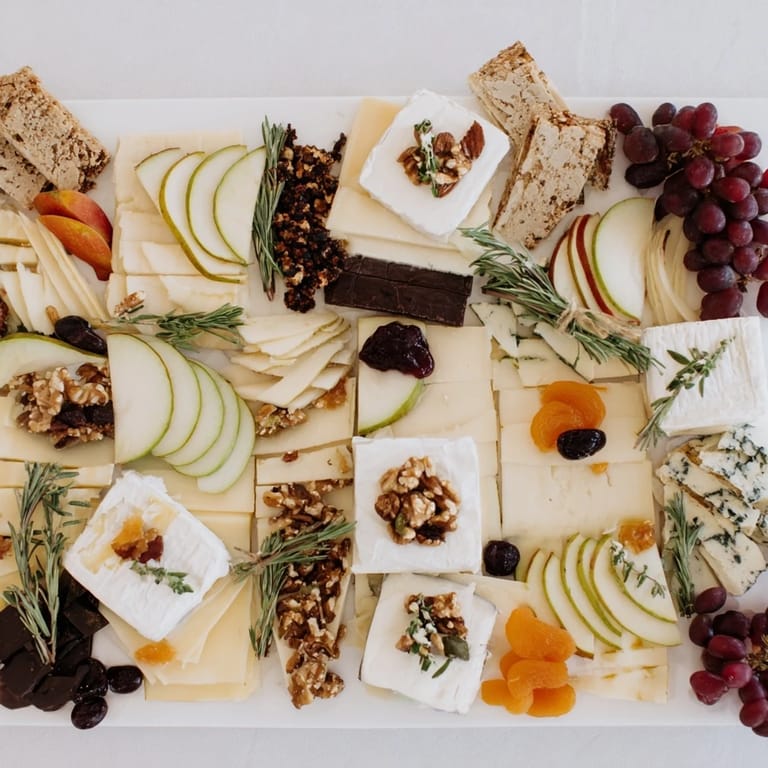
- Clear a large serving board and imagine it divided into twelve equal sections. This is where the magic begins. You're not just arranging food, you're creating a visual journey. Use small bowls, ramekins, or even draw lines with herbs if you want to delineate each section clearly
- Select and Portion Your Cheeses:
- Take each of your twelve cheeses and cut them into bite-sized pieces, each about the size of a plum. The act of cutting is meditative. Notice the different textures—how some crumble, some slice cleanly, some soften under the knife. This is your first hint of what each cheese will taste like
- Assign the Pairings:
- In your mind, walk through each section and consider its pairing. Brie wants honey and apple to showcase its creaminess. Aged Cheddar needs fig jam to play up its sharpness. Roquefort demands pear to soften its intensity. Blue cheese always wants something to lean against
- Arrange with Intention:
- Place one cheese in each section, then add its specific pairing beside it. Position the crackers and bread around the board's perimeter like a frame. There should be enough bread for each section so guests have choices, but not so much that it overwhelms the cheese
- Add the Finishing Touches:
- Now comes the artistry. Scatter fresh herbs—thyme sprigs, rosemary—across the board as garnish. It adds color, aroma, and signals that this board was made with love and thoughtfulness. Let it rest at room temperature for fifteen minutes so the cheeses wake up from the cold
- Present with Confidence:
- Serve this at room temperature where flavors truly shine. The board itself becomes part of the story you're telling your guests
 Save
Save The moment I realized this board had become something sacred was when my usually quiet uncle spent twenty minutes going around the board a second time, taking notes. He was comparing cheeses, thinking about flavors, genuinely curious. He left with a list of cheeses to buy for himself. That's when I understood—a good cheese board does more than feed people. It invites them to discover something about themselves.
The Art of Cheese Pairing
Creating these pairings taught me that cheese isn't meant to stand alone. It's a conversation partner looking for the right dialog. Soft, creamy cheeses want something sweet—honey, fruit, jam—to heighten their luxury. Hard, aged cheeses want something sharp or tangy to cut through their richness. Funky, veined cheeses need fruit with tannins or chocolate's bitter notes to make sense. When you understand this principle, you stop just arranging food and start composing flavor stories. Each section of this board is a tiny narrative with a beginning, middle, and satisfying ending.
Building Your Board Like a Storyteller
I learned that the arrangement matters as much as the selection. When you divide the board into twelve clear sections, you're giving each cheese its own spotlight. It says to guests: 'This matters enough to have its own space.' It also prevents flavors from muddling together and makes it easy for people to understand each pairing at a glance. The progression around the board can even tell a story—starting with mild, creamy cheeses, moving through the more challenging ones, and ending perhaps with something unexpected like smoked cheese with chocolate. It's a flavor journey that people can take at their own pace.
Sourcing, Serving, and the Joy of Sharing
The secret to making this board feel special isn't just the cheeses themselves, but treating the sourcing as an adventure. Visit a good cheese counter. Ask questions. Let them guide you. Tell them you're making a twelve-day celebration. Most cheesemongers love being part of that story and will give you recommendations that elevate the whole experience. When you serve this board, don't just set it down—tell people what they're about to experience. Point out that they're tasting flavors from France, Spain, Denmark, and Italy. Make it clear this is a passport in cheese form.
- Buy cheese as close to serving time as possible for maximum freshness and flavor intensity
- If you can't find a specific cheese, ask your cheesemonger for something with similar characteristics rather than just substituting randomly
- Consider pairing the board with wine or sparkling cider and turning the whole experience into an event worth remembering
 Save
Save A cheese board doesn't need to be complicated to be memorable. It just needs to be made with the understanding that you're not just feeding people, you're inviting them into a moment of discovery and joy. That's the real magic.
Common recipe questions
- → What cheeses are included in the twelve sections?
The board includes Brie, Aged Cheddar, Manchego, Roquefort or Blue Cheese, Goat Cheese, Gruyère, Camembert, Gouda, Comté, Pecorino, Havarti, and a smoked cheese like Smoked Provolone.
- → How should I pair each cheese on the board?
Each cheese pairs with a unique accompaniment such as honey, fig jam, mustard, fresh fruits like slices of apple or pear, nuts like walnuts and almonds, dark chocolate, or cornichons for a balanced flavor experience.
- → Can this board accommodate dietary preferences?
Yes, to suit vegetarian diets, opt for vegetarian cheeses. For vegan options, substitute with plant-based cheeses and gluten-free crackers where needed.
- → What drinks complement this cheese board?
Consider sparkling wine, light red wines, or cider. These beverages pair well with the variety of cheeses and accompaniments offered.
- → How should the board be served for best taste?
Serve at room temperature to allow the cheeses to release their full flavors and for the accompaniments to complement each bite perfectly.
- → Are there common allergens present in this board?
Yes, it contains milk, tree nuts (walnuts, almonds), gluten from bread or crackers, and possibly soy from some chocolates. Check labels for specifics.