 Save
Save The first time I understood what a proper fattoush should be, I was sitting on a small terrace in Beirut, watching a chef's hands move with barely contained impatience as he tossed greens with such force that some nearly flew off the plate. That tangy, citrus-forward dressing caught the afternoon sun, and the pita chips—still warm, still crackling—made a sound against the bowl that I've been chasing in my own kitchen ever since. It's funny how a salad can feel like a revelation, but this one did.
My partner came home one evening exhausted from work, and I threw this together in twenty minutes—mostly because we had vegetables that needed rescuing and a pack of pita bread. He sat at the counter, and by the third bite, he was asking if we could have it twice a week. That's when I knew it wasn't just me being nostalgic about that Beirut meal; this salad genuinely works.
Ingredients
- Mixed greens: Use whatever you have—romaine is sturdy and won't wilt immediately, but arugula or spinach add their own peppery personality.
- Cherry tomatoes: They should be soft enough to burst slightly when you bite them, not mealy or pale.
- Cucumber: A seedless one saves you the watery middle, but honestly, a regular cucumber diced works fine if you scoop out the watery core first.
- Bell pepper: Red or yellow for sweetness; green ones taste a bit grassy and won't balance the dressing the same way.
- Radishes: These are your crunch insurance, the thing that keeps the salad from feeling limp no matter how long it sits.
- Green onions: The white and light green parts especially—they give you a subtle onion bite without overpowering everything.
- Fresh parsley and mint: Don't skip these or use dried; they're not garnish here, they're actual flavor.
- Pita breads: Look for ones that are actually crispy when you tear them, not the ones that are barely cooked.
- Extra-virgin olive oil: This matters more here than in most salads because the oil is a main flavor, not a vehicle.
- Sumac: It's a dried spice that tastes like lemon without the juice—you can't really substitute it, but it's inexpensive and lasts forever in the pantry.
- Lemon juice and red wine vinegar: Together they create a dressing that's bright without being sharp or one-note.
Tired of Takeout? 🥡
Get 10 meals you can make faster than delivery arrives. Seriously.
One email. No spam. Unsubscribe anytime.
Instructions
- Toast the pita chips:
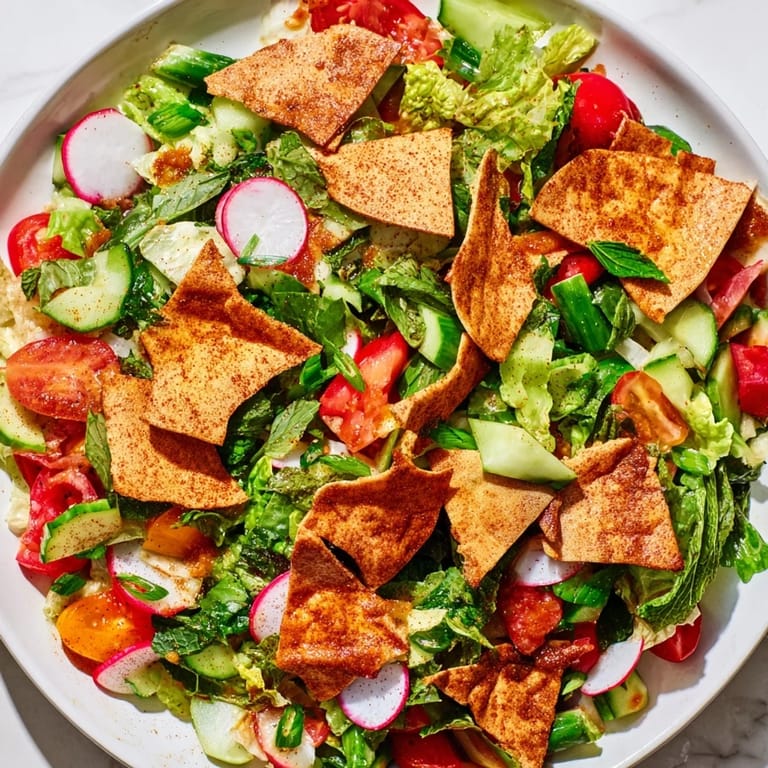
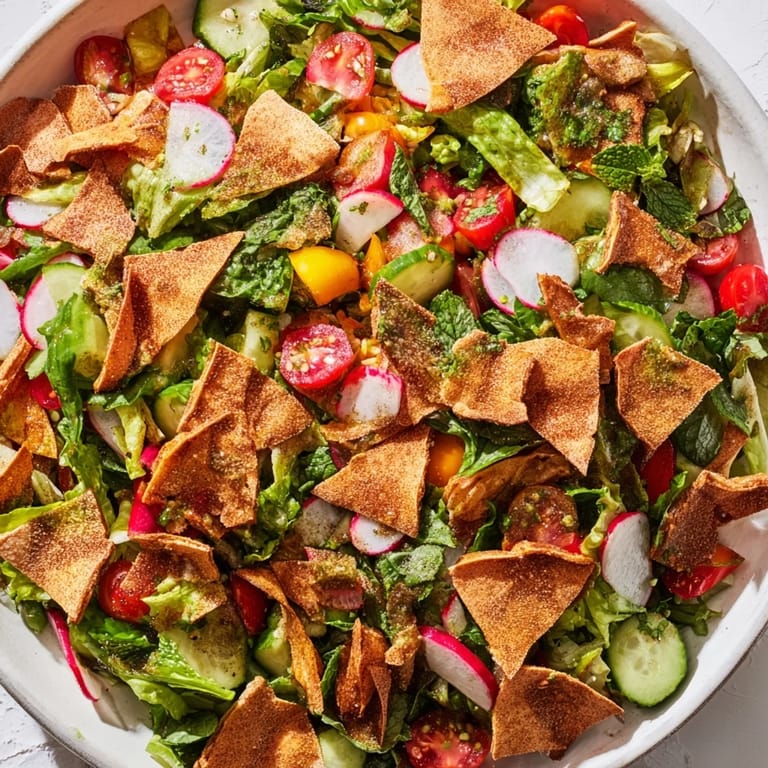
- Preheat your oven to 375°F and cut the pita breads into rough bite-sized pieces—they don't need to be perfect squares. Toss them with olive oil, sea salt, and sumac, then spread on a baking sheet and bake for 8 to 10 minutes, stirring halfway through, until they're golden and making little crackling sounds when you touch them.
- Whisk the dressing:
- While the chips are toasting, combine the olive oil, lemon juice, red wine vinegar, sumac, minced garlic, salt, and pepper in a small bowl and whisk until the salt dissolves and everything looks emulsified. Taste it before moving on—the dressing should taste assertive and tangy.
- Build the salad:
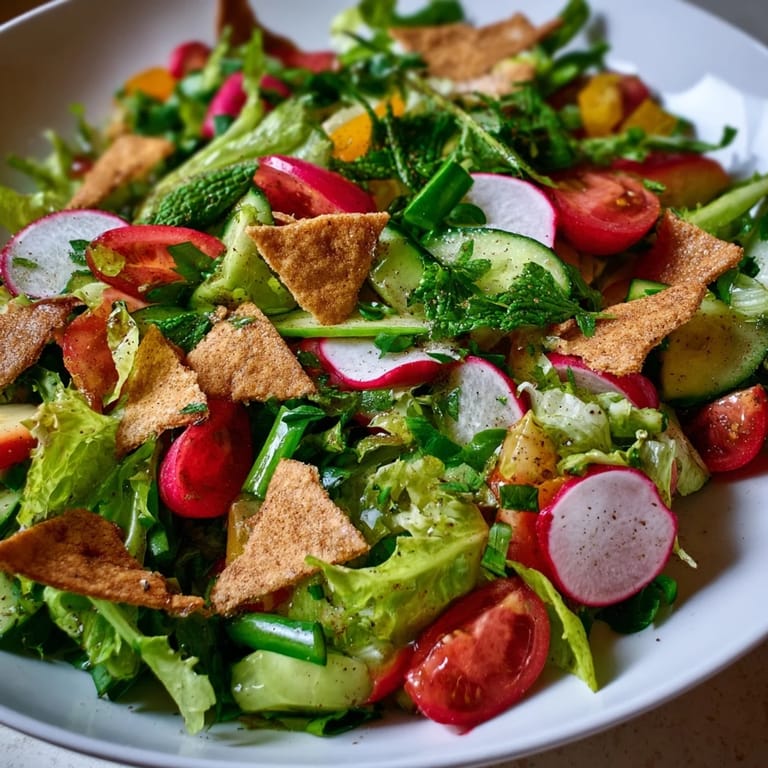
- In a large bowl, combine all the greens, tomatoes, cucumber, bell pepper, radishes, green onions, parsley, and mint, tossing gently so nothing bruises. This is actually the moment to do it if you're serving soon; if you do it too far ahead, the greens will start sweating.
- Dress and serve:
- Drizzle the dressing over the greens and toss until everything is lightly coated—you want every leaf to have some flavor, but you're not drowning the vegetables. Top the salad with the pita chips right at the moment you bring it to the table.
 Save
Save There was a dinner party where I made this salad and someone asked if I'd added something to the dressing—they couldn't place the flavor and kept trying to figure it out. When I told them it was sumac, they asked where you buy it and admitted they'd never heard of it before. It was one of those small moments where you realize that introducing someone to a new ingredient feels almost like a gift.
The Secret of Sumac
Sumac gets overlooked in most Western kitchens, but once you taste it, you start seeing it everywhere in Middle Eastern cooking. It's a dried spice made from the berries of the sumac plant, and it tastes like you took all the brightness of lemon and somehow made it drier, less acidic, but more layered. The first time I used it, I was skeptical—how much flavor could dried berries really have?—but it changed the way I think about dressing vegetables. Now I sprinkle it on roasted vegetables, rim glasses, add it to hummus.
How to Make It Less of a Production
The beauty of fattoush is that almost nothing requires actual cooking—there's no sweating, no boiling, no careful timing. The only real heat involved is toasting the pita chips, which takes ten minutes and can happen while you're prepping vegetables. I've made this salad in hotel kitchens with a single cutting board and a knife, in someone else's house after bringing the dressing in a jar, on picnics where I assembled it all in a large container and tossed it at the last second. It's flexible without being precious about it.
Variations and Additions
The bones of this salad are strong enough to handle additions without falling apart. Some people add crumbled feta, which brings a salty tang that plays against the sumac beautifully. Others add sliced olives, which adds depth. I've made it with grilled chickpeas stirred in when I wanted more protein, and once I added thinly sliced radish greens because they were attached to the radishes I'd bought and seemed like a waste to throw away. If you're serving it alongside grilled meat, the salad becomes almost a digestive aid—sharp, cooling, cutting through richness.
- Feta or goat cheese makes it feel more luxurious without changing the basic flavor profile.
- Grilled or fried chickpeas turn it into a complete vegetarian main course.
- A handful of pomegranate seeds in season adds tartness and a jewel-like look that never fails to impress.
 Save
Save This salad is the kind of thing you make again and again once it clicks for you, sometimes forgetting it's supposed to be special because it becomes so ordinary in the best way. It's been my answer to the question of what to bring to someone else's table too many times to count.
Common recipe questions
- → What is sumac and how does it affect the flavor?
Sumac is a tangy, lemony spice from dried berries popular in Middle Eastern cooking. It adds a bright, acidic note balancing the salad’s freshness.
- → How can I make the pita chips crispier?
Bake pita pieces at 375°F for 8–10 minutes, turning once, until golden and crunchy. Let them cool completely for best crunch.
- → Can I adjust the level of acidity in the dressing?
Yes, you can modify lemon juice or vinegar amounts to suit your taste for a milder or tangier dressing.
- → Are there good substitutes for pita chips?
Gluten-free crackers or toasted nuts can add crunch while keeping gluten sensitivities in mind.
- → How do fresh herbs enhance this dish?
Parsley and mint bring fresh, aromatic notes that brighten and lift the flavors of the mixed vegetables.