 Save
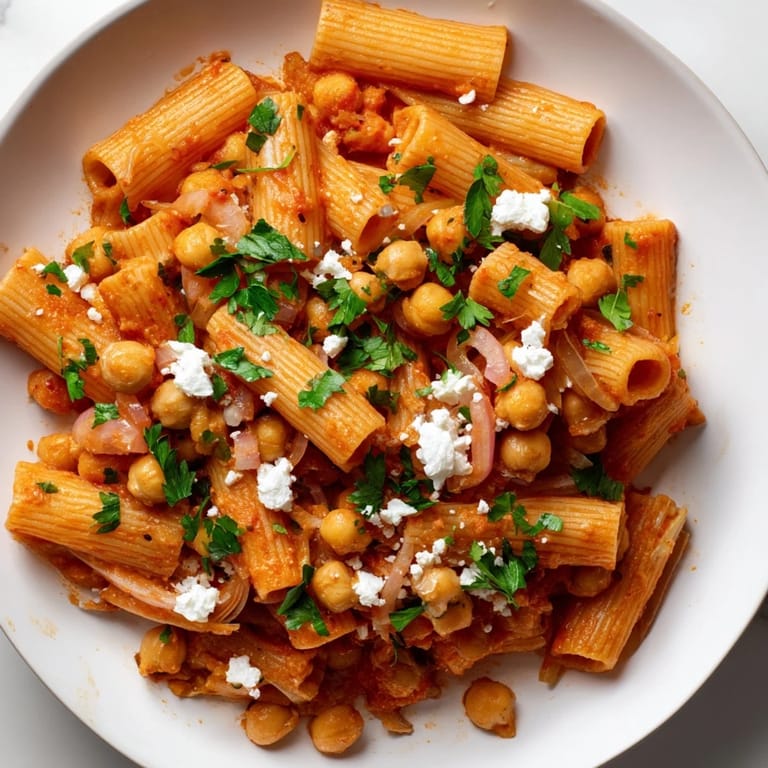
Save The first time I made harissa pasta on a weeknight, I wasn't expecting much—just a quick way to use up a can of chickpeas and some harissa I'd been curious about. But the moment that spice hit the hot oil with the garlic, the whole kitchen transformed into something warm and alive. My partner wandered in from another room asking what smelled so good, and suddenly we were both standing there watching the sauce bubble away, anticipating dinner together. That's when I realized this wasn't just a recipe, it was a mood changer.
I made this for friends who'd mentioned being tired of the same vegetarian rotation, and watching them go back for seconds told me something important—this dish has that rare quality of feeling both comforting and exciting at the same time. The spice is present but not aggressive, and the lemon at the end lifts everything so it never feels heavy.
Ingredients
- Pasta (350 g): Short shapes like penne or rigatoni work best because they trap the sauce, but fusilli is gorgeous too—pick whatever you have on hand.
- Olive oil (2 tbsp): This is your base, so use something you'd actually taste on its own; cheap oil will make itself known.
- Onion (1 medium): Chopped finely so it melts into the sauce and disappears, adding sweetness and body without texture.
- Garlic (3 cloves): Minced fresh, not powder—you need that sharp, raw edge that mellows as it cooks.
- Harissa paste (2 tbsp): The star of the show; it brings heat, depth, and a smoky complexity that makes people ask what your secret ingredient is.
- Ground cumin (1 tsp): A quiet earthy note that lets the harissa shine without overshadowing it.
- Smoked paprika (1/2 tsp): Adds color and a gentle smokiness that rounds out the flavor profile beautifully.
- Diced tomatoes (1 can, 400 g): Canned is better here than fresh because you want the concentrated sweetness and acidity that comes from being in that can.
- Chickpeas (2 cans, 400 g each): Drained and rinsed thoroughly to remove the starchy liquid; they should be clean and ready to soak up sauce.
- Vegetable broth or water (1/2 cup): This adjusts the consistency so you get a sauce that clings rather than drowns the pasta.
- Lemon (1, zest and juice): The finishing touch that wakes everything up; never skip this step even if you're tired.
- Fresh parsley or cilantro (2 tbsp): A bright, herbaceous finish that contrasts beautifully with all that warmth underneath.
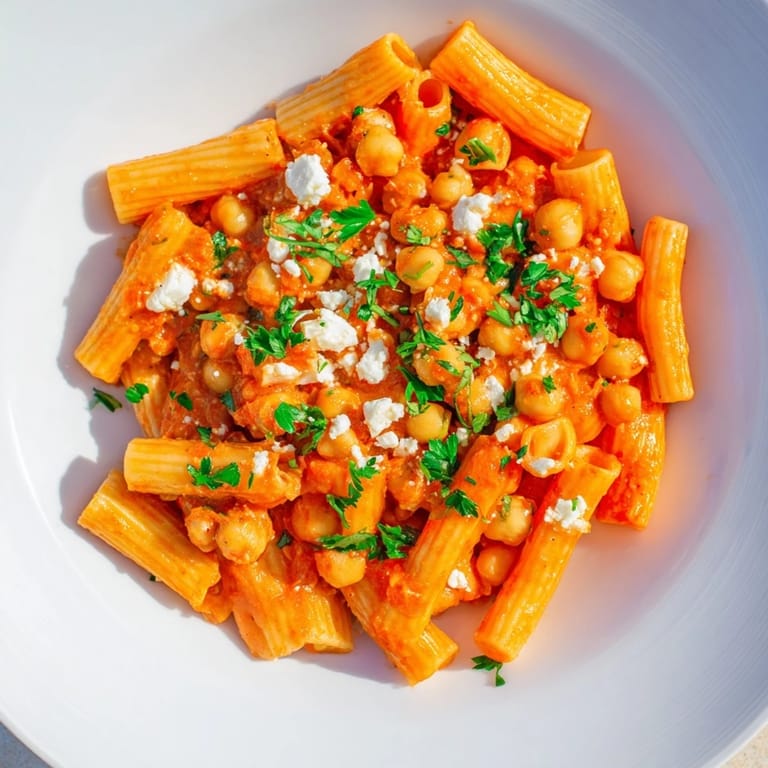
- Feta cheese (optional): Crumbly, salty, and cooling—it's not essential but it changes the dish into something special.
Tired of Takeout? 🥡
Get 10 meals you can make faster than delivery arrives. Seriously.
One email. No spam. Unsubscribe anytime.
Instructions
- Get the pasta water going:
- Fill a large pot with water, salt it generously like seawater, and bring it to a rolling boil. This is your insurance policy for sauce consistency later, so reserve that 1/2 cup before draining.
- Build the flavor base:
- Heat olive oil in a skillet over medium heat, then add your chopped onion and let it soften for about 4–5 minutes, stirring occasionally. You're looking for it to turn translucent and smell sweet, which means the natural sugars are waking up.
- Wake up the spices:
- Add minced garlic, harissa, cumin, and smoked paprika, stirring constantly for just one minute. This brief moment is crucial—you're blooming the spices in the hot oil so every flavor opens up instead of staying dormant in the sauce.
- Bring in the sauce:
- Pour in the canned tomatoes with their liquid, add the drained chickpeas and vegetable broth, and stir everything together. Taste and adjust salt and pepper now, before it simmers, so you know where you stand flavor-wise.
- Let it simmer:
- Cover the skillet, lower the heat slightly, and let everything bubble gently for 10–12 minutes. The sauce will thicken, the flavors will deepen, and you'll notice the oil beginning to pool slightly on top—that's how you know it's ready.
- Toss everything together:
- Add your drained pasta to the skillet and toss gently to coat every piece with sauce. If it looks too thick, splash in some reserved pasta water a little at a time until it flows like you want it to.
- Finish with brightness:
- Remove from heat, stir in the lemon zest, lemon juice, and fresh herbs. Taste and adjust seasoning one more time—this is where you fine-tune everything and make it yours.
 Save
Save The moment I understood this dish was special came when my sister, who's perpetually skeptical about chickpeas, asked for the recipe. She actually wrote it down while we were eating, which felt like a small victory for both of us.
The Harissa Question
Harissa can be intimidating if you've never used it, but think of it as paprika's spicy, confident cousin. It brings warmth and depth without being a one-note heat bomb, and it pairs beautifully with tomatoes and chickpeas because they're all Mediterranean ingredients that have been together for centuries. Start with 2 tablespoons and adjust upward if you like more kick—your kitchen will smell incredible either way.
Pasta Water Is Your Best Friend
I learned this the hard way after making pasta sauce too many times and watching it separate or become gummy. That starchy water from cooking pasta is liquid gold; it emulsifies the oil and tomato juice, creating a silky sauce that actually sticks to the noodles instead of sliding off. Save it without fail, even if you think you won't need it, because the confidence of knowing it's there changes how you cook.
Why This Works as a Weeknight Dinner
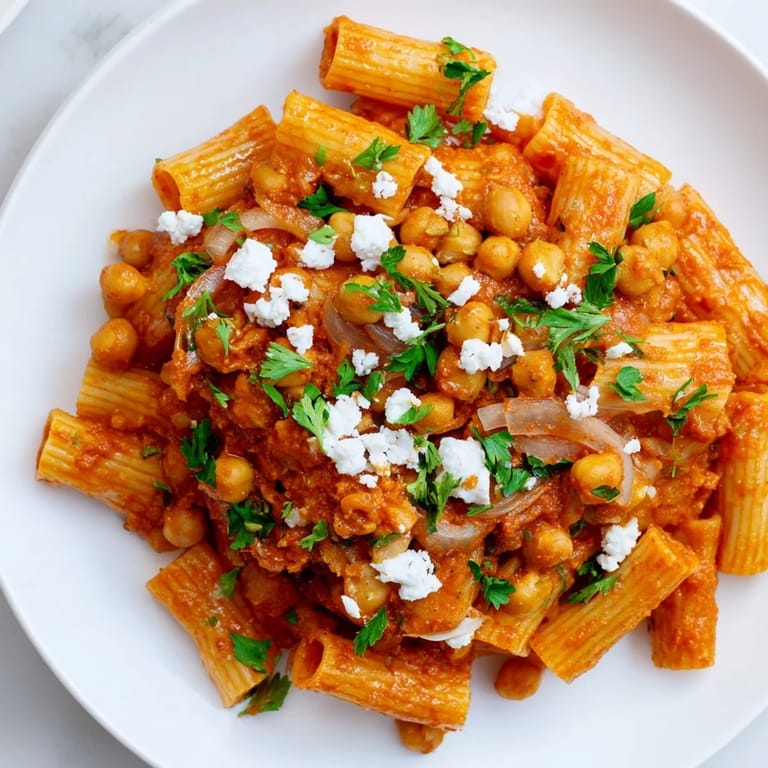
There's something liberating about a dish that tastes sophisticated but doesn't require fancy ingredients or timing choreography. You boil water, you sauté onions, you add things to a pan, and 25 minutes later you have restaurant-quality food on your table. This is exactly the kind of recipe I make when I want to feel accomplished without stressing.
- Double the sauce and freeze half for a frantic Tuesday night when cooking feels impossible.
- Swap in white beans or roasted vegetables if that's what's in your pantry—the sauce is forgiving and flexible.
- Pair it with a crisp white wine or chilled rosé to balance the spice and complete the moment.
 Save
Save This dish has become my go-to when I want to cook something that feels special but doesn't ask much of me. It's proof that sometimes the simplest meals, built on a foundation of good technique and a few quality ingredients, become the ones we return to again and again.
Common recipe questions
- → What type of pasta works best?
Short pasta shapes like penne, rigatoni, or fusilli hold the sauce well and complement the texture of the chickpeas.
- → Can I adjust the heat level?
Yes, increase harissa paste or add chili flakes to boost spiciness according to preference.
- → How do I make this dairy-free?
Simply omit the optional crumbled feta or use a plant-based cheese alternative for a dairy-free finish.
- → Can I substitute chickpeas with other ingredients?
White beans or roasted vegetables can be used as alternatives for a different texture and flavor.
- → What sides pair well with this dish?
A crisp white wine or chilled rosé complements the spicy and tangy flavors beautifully.