 Save
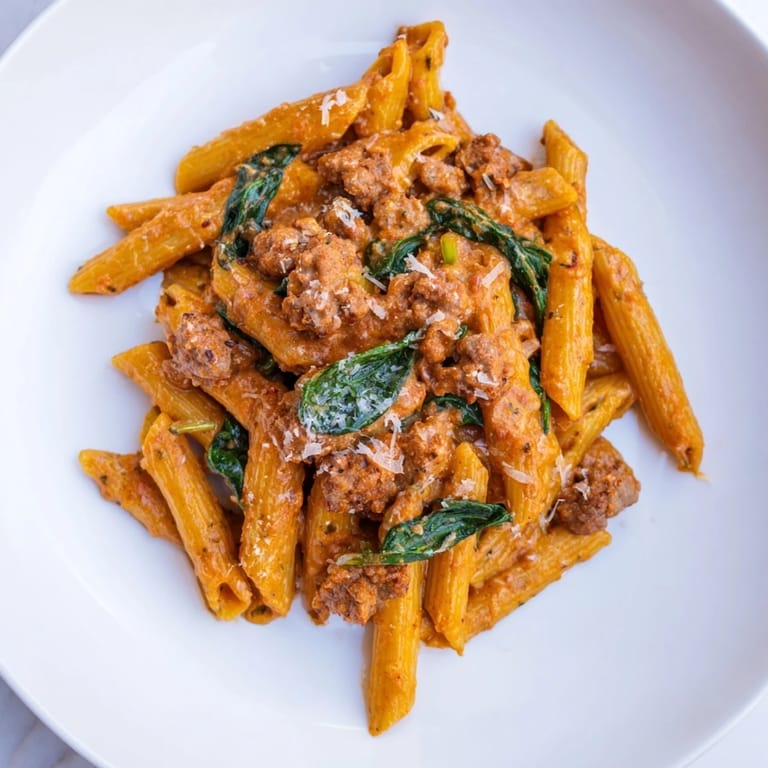
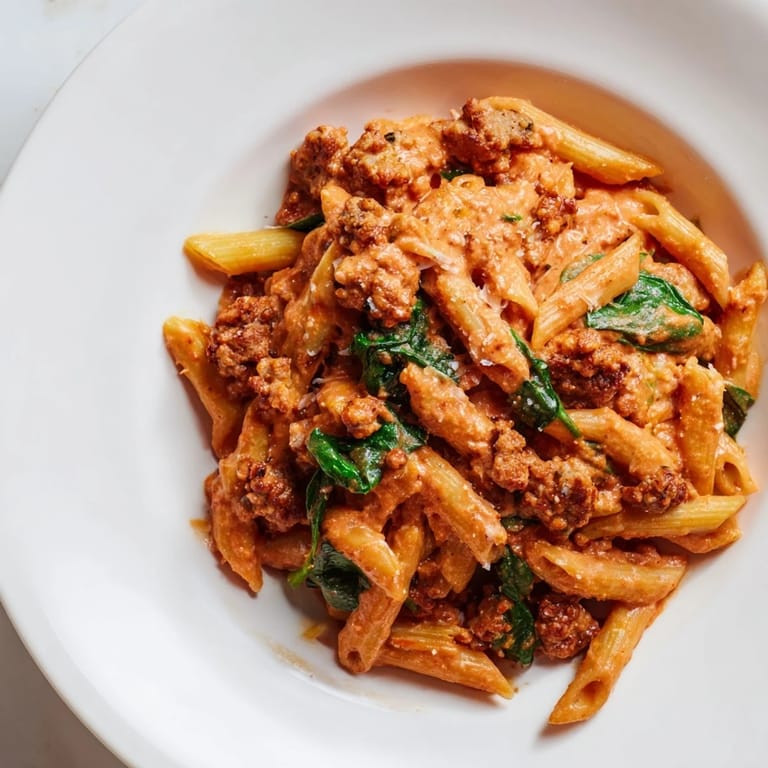
Save There's something about a weeknight when the kitchen smells like browning sausage and garlic that makes everything feel manageable. I stumbled into this one-pot pasta during one of those busy evenings when I needed something that tasted like I'd been cooking all day but wouldn't actually trap me at the stove. The beauty of throwing everything into one pot hit me immediately—no draining, no fussing, just honest comfort food that comes together while you're telling someone about your day.
I made this for friends on a chilly October evening, and I'll never forget how quickly the pot emptied and how everyone went quiet for a moment—not awkward quiet, just the kind where people are too busy eating to talk. Someone asked for the recipe before dessert even came out, which never happens in my kitchen.
Ingredients
- Italian sausage: The backbone of this dish—choose spicy if you like heat, mild if you prefer to control the warmth yourself.
- Yellow onion: Finely chopped so it melts into the sauce rather than sitting in chunks.
- Garlic: Three cloves minced, because this is where the soul of the dish lives.
- Canned diced tomatoes: The liquid gold that becomes your sauce—don't skip the juices in the can.
- Short pasta: Penne, rigatoni, or fusilli all work beautifully, cradling the sauce in their curves.
- Low-sodium chicken broth: Three cups becomes the cooking liquid that the pasta absorbs directly, saving you a step.
- Heavy cream: A quarter cup stirred in at the end transforms everything into something silky and luxurious.
- Parmesan cheese: Half a cup grated, plus more for the table—it's not optional, it's essential.
- Olive oil: Two tablespoons to start the browning process.
- Dried Italian herbs: One teaspoon ties everything together with familiar warmth.
- Red pepper flakes: Optional but honest—they add a gentle kick that makes people ask what's different.
- Baby spinach: Optional, but it adds color and nutrition without demanding extra cooking time.
- Salt and black pepper: Taste as you go; this is how you make it your own.
Tired of Takeout? 🥡
Get 10 meals you can make faster than delivery arrives. Seriously.
One email. No spam. Unsubscribe anytime.
Instructions
- Start the sausage:
- Heat olive oil in a large deep skillet over medium-high heat until it shimmers slightly. Add the sausage, breaking it into small pieces with a spoon, and cook for about 5 minutes until it's deeply browned and starting to crisp at the edges.
- Build the base:
- Stir in the chopped onion and let it soften for 3 to 4 minutes, stirring occasionally, until it becomes translucent. Add the minced garlic and cook for another minute until the raw edge disappears and the kitchen smells like something wonderful is happening.
- Create the sauce:
- Pour in the diced tomatoes with all their juices, then add the Italian herbs and red pepper flakes if you're using them. Stir everything together and let the flavors mingle for a minute.
- Combine everything:
- Add the uncooked pasta and chicken broth to the skillet, stirring well to distribute the pasta evenly and make sure nothing is sticking to the bottom. Bring the whole thing to a boil, which should take about 2 to 3 minutes.
- Cook gently:
- Lower the heat to a simmer, cover the skillet, and cook for 12 to 15 minutes, stirring occasionally so the pasta cooks evenly and absorbs the broth. The pasta will be tender and most of the liquid will have been absorbed, with just a little sauce coating the bottom.
- Finish with cream:
- Stir in the heavy cream and grated Parmesan cheese, and if you're using spinach, add it now. Cook uncovered for another 2 to 3 minutes until the spinach wilts and the sauce becomes silky.
- Season and serve:
- Taste it first, then add salt and pepper as needed. Serve hot, with extra Parmesan scattered on top and fresh basil if you have it.
 Save
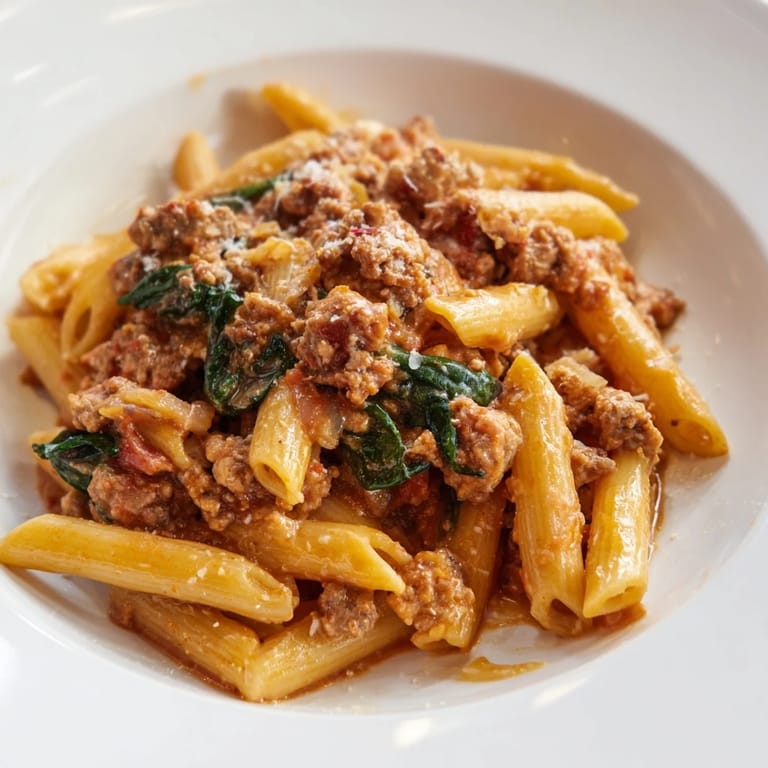
Save There's a moment, right before you add the cream, when the pasta is just tender and the sauce has reduced to this concentrated, rich coating. That's when you know you've done it right—when simple ingredients have become something that tastes like it took hours but only asked for your attention for thirty minutes.
Make It Your Own
This recipe thrives on small changes that make it feel yours. Swap the sausage for turkey if you want something lighter, or keep both for a deeper flavor. Mushrooms sliced thin and added with the onion become tender and earthy. Bell peppers add brightness and crunch if you add them early enough.
What Wine to Pair
A light Italian red wine like Chianti sits beside this dish perfectly—it doesn't compete with the cream and sausage, but instead feels like a natural companion. The slight tannins cut through the richness without being aggressive, and the acidity refreshes your palate between bites, making you want another forkful.
The One-Pot Magic
The genius of this recipe is that it forces nothing to wait. The pasta cooks directly in the broth, absorbing flavor instead of being drained and combined. You're not managing multiple pans or timing different components—everything finishes at the same moment, together. This is the kind of cooking that feels like you're ahead of schedule instead of always rushing to catch up.
- Use a deep skillet or Dutch oven so the liquid doesn't boil over and the pasta has room to move.
- Uncooked pasta added directly to liquid may seem strange at first, but trust the math—the broth becomes the cooking medium and the sauce simultaneously.
- If you forget to stir and something starts to stick, a splash of water and a quick stir fixes it without ruining the whole pot.
 Save
Save This is the kind of meal that reminds you why cooking at home matters. It asks for your hands but not your stress, and delivers something that tastes like you care.
Common recipe questions
- → Can I make this dish gluten-free?
Yes, substitute regular pasta with gluten-free varieties to suit dietary needs without sacrificing flavor or texture.
- → What type of sausage works best?
Italian sausage, either mild or spicy, adds authentic flavor. You can also use turkey sausage for a lighter option.
- → Can I add extra vegetables?
Absolutely, adding mushrooms or bell peppers alongside onions enhances nutrition and taste.
- → How do I prevent the pasta from sticking?
Stir occasionally while simmering to keep pasta from sticking and ensure even cooking.
- → Is it essential to use chicken broth?
Chicken broth deepens flavor, but vegetable broth can be used as a substitute for a different taste profile.
- → Can I prepare this in advance?
Yes, refrigerate leftovers and reheat gently, adding extra broth to maintain moisture if needed.