 Save
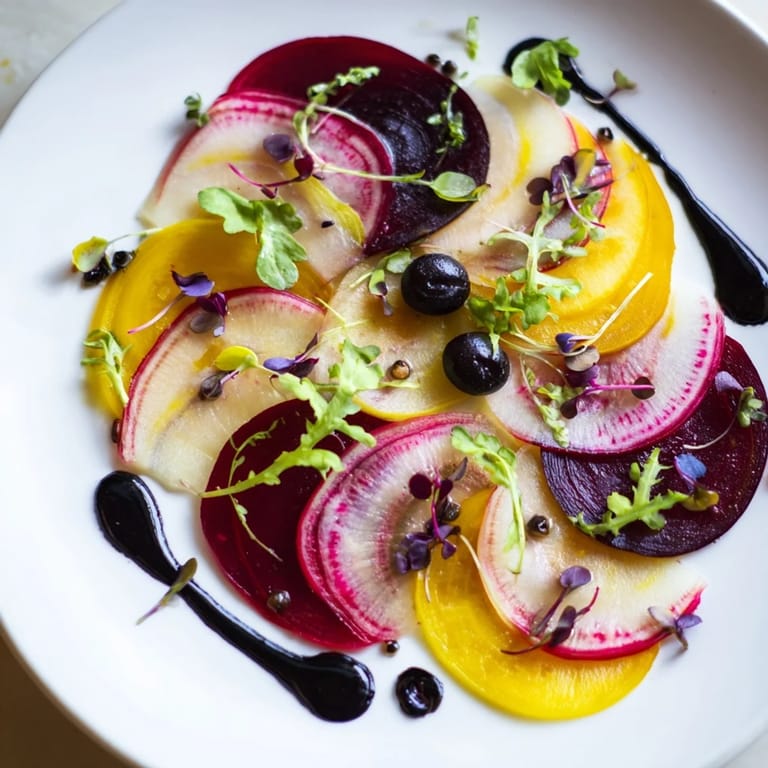
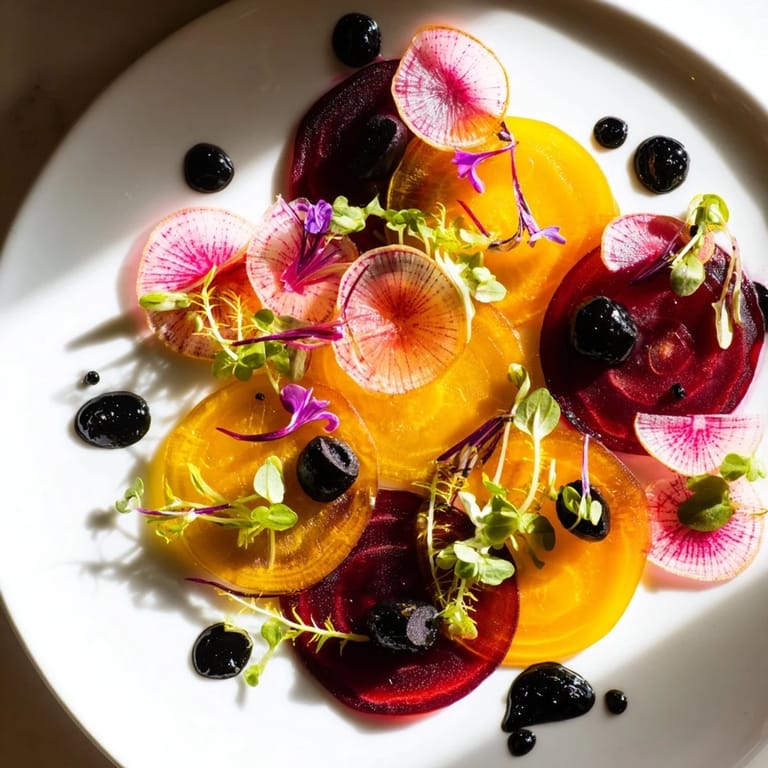
Save There's a moment when you're plating something and you step back, squint your eyes, and suddenly see the whole thing as a painting instead of food. That's when I first understood this dish. A friend had challenged me to make something that tasted as interesting as it looked, and I spent an afternoon arranging jewel-toned vegetables until the plate started telling a story of its own, all shadows and light dancing together.
I made this for a dinner party on a night when everything felt a bit too formal, and I needed something that would break the ice. When I set the platter down, someone actually gasped, which never happens at these things. By the end of the meal, everyone was talking about how the blackberries created this mysterious effect, like the vegetables were lit from within. That's when I knew it was more than just pretty food.
Ingredients
- Golden beet: The lighter half of your color story, with a sweeter, earthier flavor than red beets and a delicate texture when sliced thin on a mandoline.
- Red beet: Deep jewel tones and a slightly more mineral taste that grounds the whole composition.
- Baby arugula: Peppery and bright, it's the voice that keeps everything from feeling too heavy or precious.
- Watermelon radish: Those concentric pink and white rings are pure visual drama, and the crisp, mild flavor won't overpower the other players.
- Blackberries: They sit like dark stones at the base, creating that shadow effect while adding tartness and natural juiciness.
- Black olives: Your deeper anchor point, salty and rich, they ground the shadows and give the eye somewhere to rest.
- Black tahini: The secret weapon that ties everything together; if you can't find it, a tiny bit of squid ink stirred into regular tahini creates that dramatic darkness.
- Extra virgin olive oil: Use something you actually like tasting, because it's the backbone of your dressing and there's nowhere to hide.
- Lemon juice: Sharp and necessary, cutting through the richness and waking up every flavor on the plate.
- Honey: A whisper of sweetness that balances the acid and the pepper, making everything feel intentional.
- Microgreens: The final punctuation mark, adding texture and a tender edge that fresh vegetables bring.
Tired of Takeout? 🥡
Get 10 meals you can make faster than delivery arrives. Seriously.
One email. No spam. Unsubscribe anytime.
Instructions
- Slice your vegetables:
- Use a mandoline if you have one, because it creates those paper-thin, delicate slices that catch light differently than knife cuts. If you're using a knife, take your time and let the blade do the work rather than forcing it.
- Build your base layer:
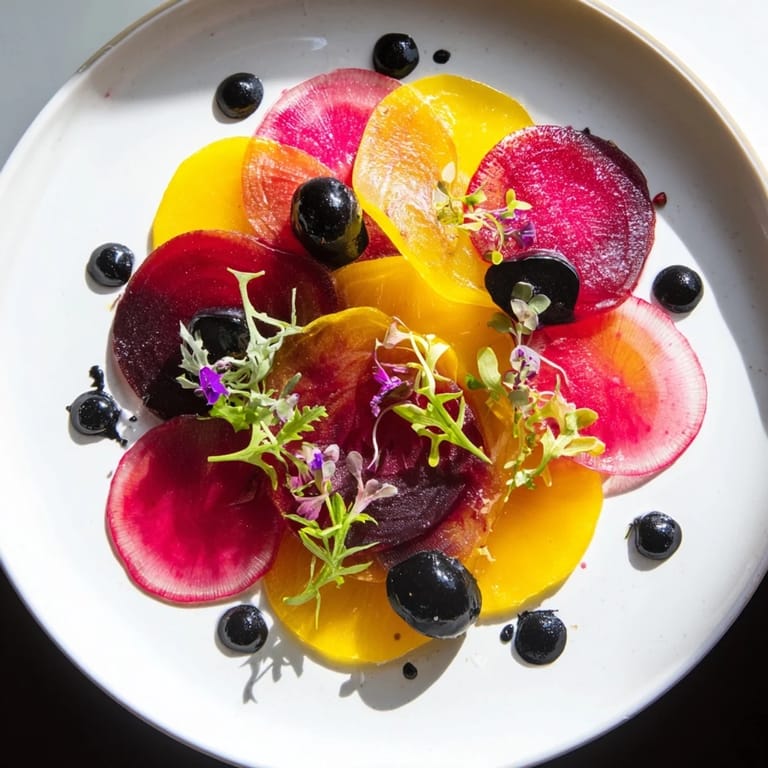
- Arrange the golden and red beets in overlapping semicircles on your largest, most beautiful plate, alternating colors like you're creating a pattern. The space between them matters as much as the vegetables do.
- Add the brightness:
- Fan the watermelon radish over the beets so those interior rings show, then scatter the arugula loosely so it looks like it just landed there.
- Create the shadow moment:
- This is where the magic happens, tuck blackberries and olives underneath and around the brighter ingredients, letting them peek out like they're emerging from darkness.
- Make your dressing:
- Whisk the olive oil, lemon juice, and honey together in a small bowl until it looks slightly emulsified, then taste it and adjust until you feel like you've found the right balance between bright and rich.
- Add the tahini shadow:
- Spoon small dots of black tahini around the plate, then use the back of the spoon to smear it just slightly, creating an almost abstract effect that looks less like sauce and more like intentional art.
- Final touches:
- Top everything with microgreens and edible flowers if you have them, then drizzle your dressing lightly over the whole composition. Serve immediately, before anything wilts.
 Save
Save There was this one moment when a guest asked if I'd trained as an artist before becoming a cook, and I realized that sometimes the most delicious things are the ones you're almost afraid to eat because they look too good. This dish taught me that a plate can be conversation and sustenance at the same time.
The Art of Contrast
This dish works because every element was chosen to play against something else. The bitter black against the sweet gold, the crunch of the watermelon radish against the softness of the beets, the peppery arugula cutting through the richness of the tahini. It's not just layering ingredients; it's orchestrating a conversation where each flavor and texture gets a moment to be heard.
Why This Works as an Appetizer
I've learned that the best starters are the ones that set a tone without filling you up, and this one does exactly that. It primes the palate with brightness and earthiness, makes people excited to keep eating, and leaves them with the sense that they're about to experience something thoughtful. The fact that it's vegetarian and gluten-free means almost everyone at the table can enjoy it without you having to explain or apologize.
Plating Without Overthinking
The first time I made this, I spent forty-five minutes getting every element exactly where I thought it should be, and it looked stiff and staged. The second time, I let myself work a little faster, trusting that the colors would do the talking, and somehow it looked ten times better. There's a sweet spot between intention and intuition where the plate breathes instead of feeling arranged.
- Step back and look at your plate from a distance, the way a dinner guest will see it first.
- Remember that negative space is as important as filled space, so don't feel like every inch needs something on it.
- If something feels wrong, it probably is, so trust that instinct and shift things around until it feels right in your gut.
 Save
Save This dish reminds me that cooking is partly about technique and precision, but mostly about the small moments of beauty we create for people we care about. Serve it with confidence and watch what happens.
Common recipe questions
- → What vegetables create the color contrast?
Golden and red beets provide vibrant hues, complemented by bright watermelon radish and fresh baby arugula.
- → How is the shadow effect achieved?
Dark ingredients like blackberries, black olives, and black tahini are layered strategically beneath the bright elements to form dramatic silhouettes.
- → Can this dish accommodate vegan preferences?
Yes, substitute honey with agave syrup in the dressing for a vegan-friendly option.
- → What tools are recommended for preparation?
Using a mandoline slicer or sharp knife ensures thin, even slices of the beets and radish for layering.
- → Which drinks pair well with this appetizer?
Sauvignon Blanc or light, earthy Pinot Noir enhance the dish's fresh and layered flavors.