 Save
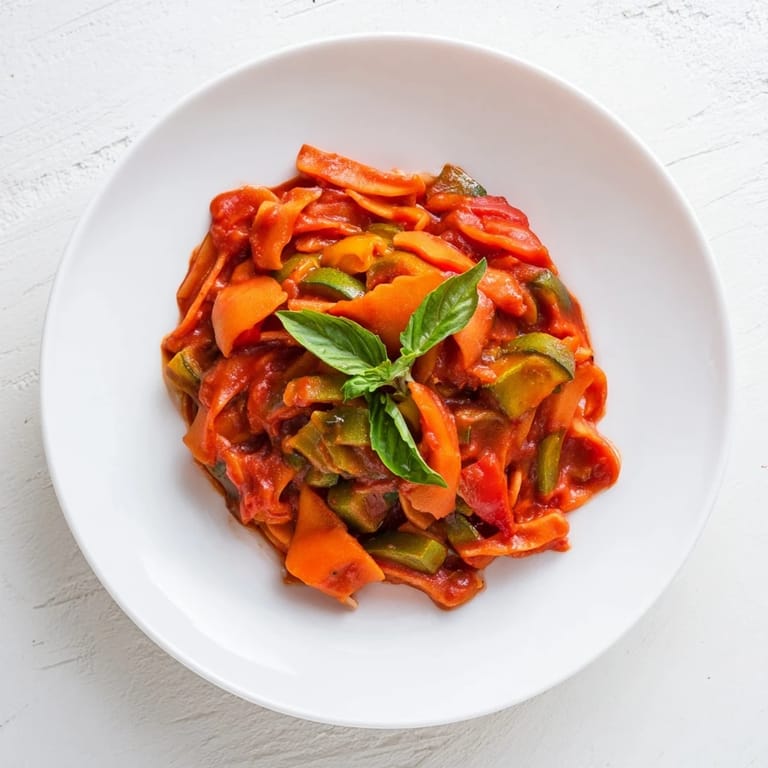
Save There was this Tuesday when my pasta water kept boiling over, my kitchen smelled like chaos, and I realized I'd been making the same basic tomato sauce for years—thin, one-dimensional, just tomatoes and garlic waved at a pot. That afternoon, I started chopping vegetables almost by accident, tossing them into the pan almost as a distraction from the mess, and something shifted. The carrots softened into sweetness, the zucchini disappeared into silk, and suddenly the sauce tasted like it had been cooked with intention. This is the sauce that made me understand why some Italian nonnas never write recipes down—they're too busy fixing what matters in the moment.
I made this for my neighbor last spring when she was dealing with one of those weeks where cooking felt impossible. She came over skeptical—canned tomatoes, she said, weren't real food—but when she tasted it, she went quiet in that way people do when flavors surprise them. She's made it every week since. That's when I realized this sauce isn't just nutritious; it's the kind of thing that reminds you why you cook in the first place.
Ingredients
- Carrot (1 medium, peeled and chopped): The secret MVP that brings natural sweetness and body without needing cream or butter; it's what makes people ask if there's honey in this sauce.
- Zucchini (1 small, chopped): This vegetable softens into the background so gracefully that it adds volume and creaminess without announcing itself.
- Bell pepper (red or orange, seeded and chopped): Choose red or orange over green—they're sweeter and dissolve into a silky texture rather than staying grassy and loud.
- Onion (1 small, chopped): The foundation flavor that rounds everything out; medium dice so it breaks down evenly.
- Garlic (2 cloves, minced): Added after the softer vegetables so it stays fragrant instead of turning bitter from the long cook.
- Celery stalk (1, chopped): Adds depth and a subtle minerality that you won't taste directly but will notice if it's missing.
- Crushed tomatoes (2 cans, 400 g each): The backbone of everything; choose canned over fresh because they're consistent and already concentrated with flavor.
- Tomato paste (2 tbsp): Concentrated tomato goodness that deepens the sauce and adds body that makes it cling to pasta.
- Olive oil (1 tbsp): Just enough to coat the pan and let vegetables release their moisture without adding unnecessary fat.
- Dried oregano (1 tsp): The Italian herb that makes tomato sauce taste like itself; dried works better here than fresh because the long cooking time mellows it perfectly.
- Dried basil (1 tsp): The gentler partner to oregano that arrives late in the party but makes everything feel more rounded and complete.
- Salt (1/2 tsp): Start here and adjust at the end; canned tomatoes have salt already, so underseasoning early prevents disaster.
- Black pepper (1/4 tsp): A whisper rather than a shout, added near the end so it stays sharp instead of cooking into the background.
- Sugar (1/2 tsp optional): The balancing act—a tiny pinch mellows acidity without making the sauce taste sweet; trust your taste buds over the recipe here.
- Red pepper flakes (pinch optional): For when you want the sauce to have a gentle warm finish rather than heat that overwhelms.
- Fresh basil (for garnish): Added at the end so it stays bright and alive instead of turning black from the heat.
Tired of Takeout? 🥡
Get 10 meals you can make faster than delivery arrives. Seriously.
One email. No spam. Unsubscribe anytime.
Instructions
- Build the flavor foundation:
- Heat the olive oil in a large saucepan over medium heat, then add the onion, carrot, celery, zucchini, and bell pepper all at once. Sauté for 8–10 minutes, stirring occasionally, until the vegetables soften and release their moisture; you'll know you're there when the pan smells sweet and the pieces have lost their sharp edges.
- Wake up the garlic:
- Add the minced garlic and cook for exactly 1 minute, stirring constantly so it becomes fragrant instead of burnt. You'll smell the difference immediately.
- Deepen with paste:
- Stir in the tomato paste and cook for 1 minute, letting it coat the vegetables and deepen into rust-colored richness. This step sounds small but changes everything.
- Bring the tomatoes in:
- Pour in the crushed tomatoes, then add oregano, basil, salt, pepper, and the sugar if you're using it. Stir until everything is combined, then let the mixture come to a gentle simmer where just a few bubbles break the surface.
- Low and slow:
- Cover the pan and let it cook for 20–25 minutes, stirring occasionally to prevent sticking. The vegetables will completely soften and the flavors will marry into something deeper than their individual parts.
- Make it silk:
- Remove from heat and use an immersion blender to purée the sauce until completely smooth, working in batches if needed. The moment the blender hits the sauce, you'll feel the transformation from chunky to velvety happen right in front of you.
- Final taste and rest:
- Return the pan to low heat and simmer uncovered for 5–10 minutes, stirring now and then. Taste it, adjust salt and pepper, and let yourself have a moment to appreciate what you've made before serving.
 Save
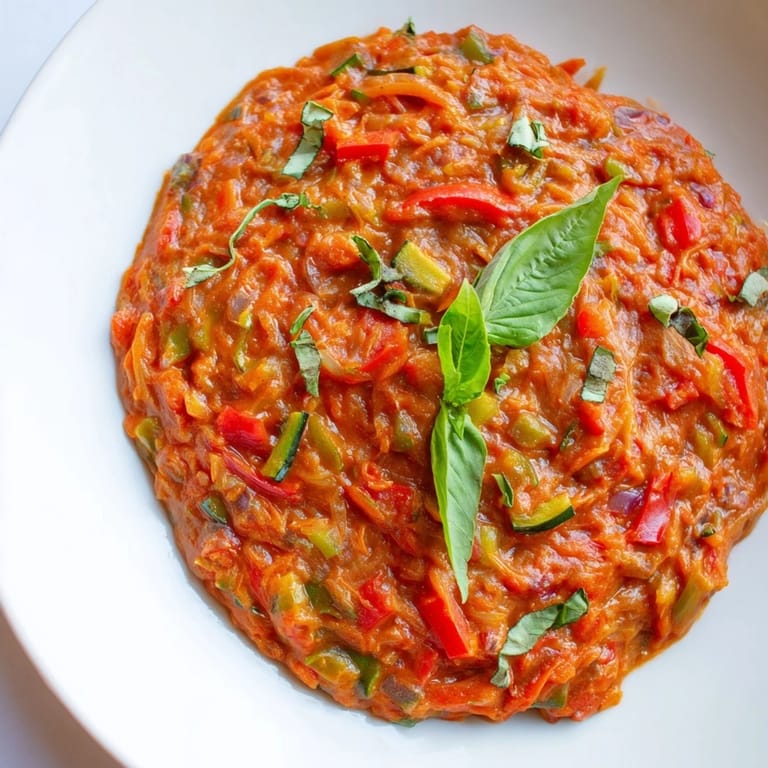
Save My daughter asked me once why I kept making this sauce when I could just open a jar, and I realized I didn't have a good answer except that something about standing at the stove while the kitchen fills with that warm, vegetable-sweet smell reminds me I'm taking care of people. That's when I understood this recipe isn't really about efficiency or nutrition or doing things the right way—it's about choosing to spend 50 minutes in your kitchen instead of 5 minutes at the store, and how that choice lands differently on the table.
Why This Sauce Changes Everything
This sauce works because it doesn't pretend vegetables are an afterthought hidden in the margins. Instead, it celebrates them by breaking them down so completely that they become the sauce itself rather than pieces floating in it. The carrot brings sweetness, the zucchini adds body, the bell pepper contributes color and mild flavor, and the celery deepens everything into something that tastes more intentional than it has any right to be. Once you taste it, store-bought vegetable sauces start tasting thin and one-note by comparison.
Making It Your Own
This recipe is a starting point that invites experimentation. Some weeks I add a small handful of spinach with the other vegetables, and it disappears so completely you'd never know it was there unless I told you. Other times, when I want the sauce heartier, I stir in cooked lentils or white beans after blending, and suddenly it's thick enough to be almost a meal rather than just an accompaniment. The foundation is strong enough to handle additions without breaking; treat it like a conversation you're contributing to rather than a script you have to follow exactly.
Storage and Freezing
This sauce is one of those recipes that improves your future life the moment you decide to make a double batch. It freezes beautifully for up to three months in airtight containers, and there's something almost luxurious about opening your freezer on a tired evening and discovering dinner is already waiting. Let it cool completely before freezing, and when you thaw it, reheat it gently over low heat so the flavors warm back up without anything separating or scorching. I've also learned to freeze it in smaller portions—enough for one pasta dinner—so you're not standing there defrosting more sauce than you need.
- Cool the sauce completely before freezing to prevent condensation and ice crystals from forming.
- Freeze in airtight containers or even in ice-cube trays if you want portion flexibility for future cooking.
- Thaw overnight in the refrigerator rather than on the counter so the sauce stays safe and the flavors reset properly.
 Save
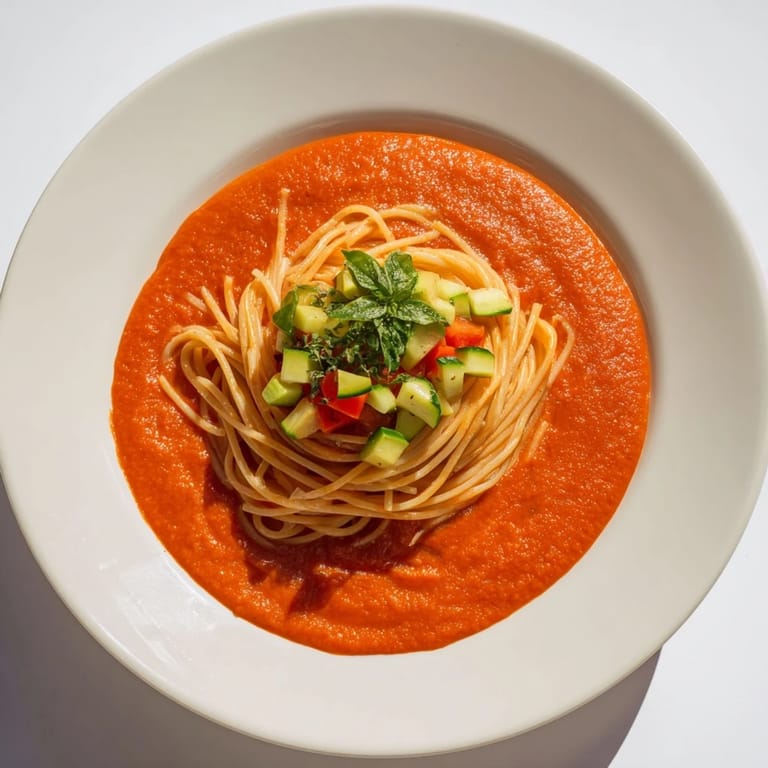
Save This sauce taught me that the best recipes are the ones that taste like they've been made a hundred times even the first time you make them. Serve it over any pasta you love, finish it with fresh basil, and let yourself have the small joy of knowing you made something good from scratch.
Common recipe questions
- → What vegetables are used in this sauce?
Carrot, zucchini, bell pepper, onion, celery, and garlic are sautéed and blended into the tomato base.
- → How do I achieve a smooth texture?
Use an immersion or countertop blender to purée the cooked vegetables and tomato mixture until completely smooth.
- → Can this sauce be frozen?
Yes, this sauce freezes well for up to 3 months, making it convenient for meal prep.
- → What herbs enhance the flavor?
Dried oregano and basil are added during cooking, with fresh basil used as a garnish to boost aroma and taste.
- → Is this sauce suitable for special diets?
It’s naturally vegetarian, vegan, and free from nuts, suitable for a variety of dietary needs.
- → How long does it take to prepare and cook?
Preparation takes about 15 minutes, and the sauce simmers for 35 minutes, totaling roughly 50 minutes.