 Save
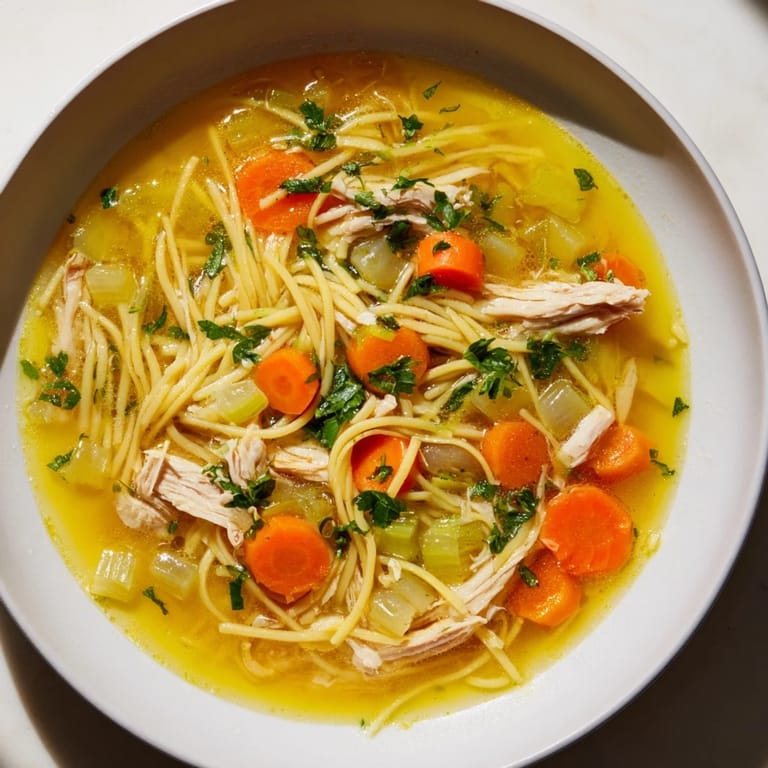
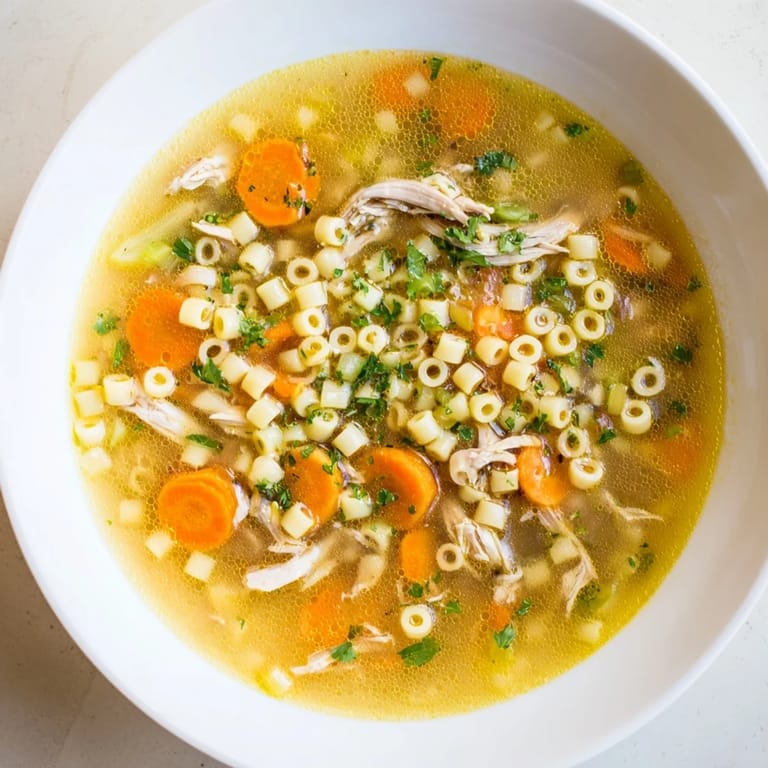
Save There's something about the smell of ginger hitting hot oil that stops me mid-thought. Years ago, when my roommate came home sick, I found myself in the kitchen at midnight, searching for something warm that felt like actually caring. This soup emerged from that impulse—the kind of dish that asks so little of you but gives back everything. Turmeric, ginger, and chicken in broth with tiny pasta shells that catch the spoon like little treasures. It's become my go-to when someone needs more than soup, they need hope in a bowl.
I made this for my neighbor last winter when she'd been knocked out for three days straight. She opened her door, took one breath, and actually cried a little at the smell. We sat at her kitchen counter while she ate, and she told me stories I'd never heard before, the kind that only come when someone's guard is down. That's when I realized this soup does something beyond nutrition—it creates space for people to be human again.
Ingredients
- Boneless, skinless chicken breasts: Two medium ones give you enough protein without overwhelming the broth; they cook fast and shred into tender strands that scatter through each spoonful.
- Olive oil: Just enough to build flavor from the sear, not to make this heavy.
- Onion, carrots, and celery: The holy trio that makes any soup feel intentional; dice the onion small so it almost disappears into sweetness.
- Fresh garlic and ginger: Not the jarred kind—fresh cloves and root ginger release oils that jar versions can't touch, and your kitchen will smell like medicine in the best way.
- Fresh turmeric: If you can find it at an Indian grocer or good produce section, it's worth the hunt; the flavor is earthier and less metallic than ground, but ground works fine if that's what you have.
- Low-sodium chicken broth: Read the label because some broths hide salt; you're building flavor here, not fighting it.
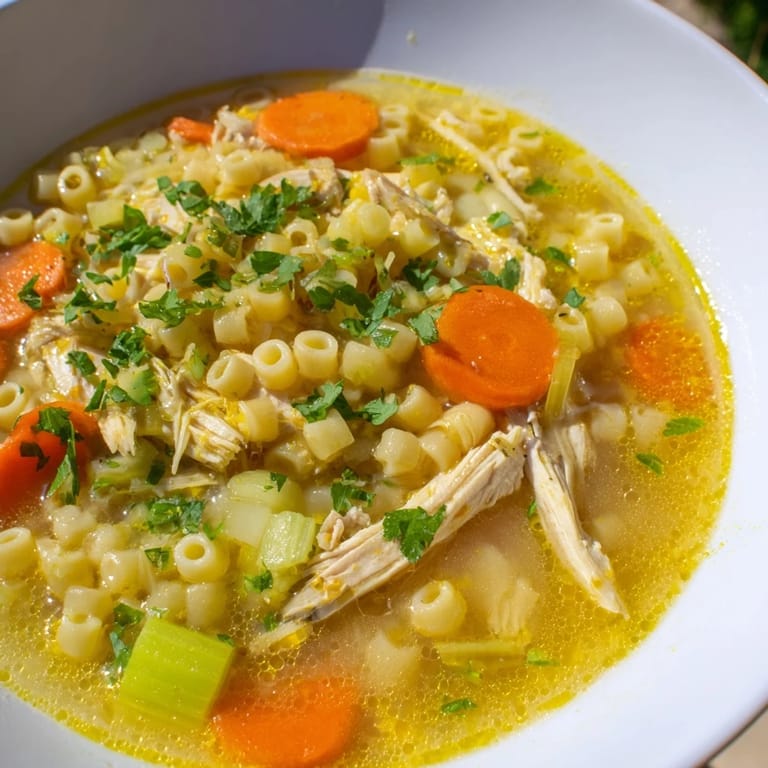
- Ditalini pasta: Those tiny tubes trap broth inside, but orzo or small shells work just as well if that's what's in your pantry.
- Bay leaf: One leaf, no more, or it becomes the only flavor you taste.
- Salt, pepper, fresh parsley, and lemon: Lemon is not optional—it brightens everything at the end and keeps the soup from tasting one-note.
Tired of Takeout? 🥡
Get 10 meals you can make faster than delivery arrives. Seriously.
One email. No spam. Unsubscribe anytime.
Instructions
- Sear the chicken:
- Heat olive oil in a large pot until it shimmers, then lay the chicken breasts in carefully. You're not cooking them through, just getting a golden face on each side that will seal in flavor. Two to three minutes per side is enough.
- Build your flavor base:
- Once the chicken's out, add onions, carrots, and celery to the same pot where that good brown stuff is stuck to the bottom. Let them soften over five minutes, stirring every so often. Don't rush this step—it's where the sweetness develops.
- Wake up the aromatics:
- Stir in minced garlic, grated ginger, and turmeric. The heat will release their oils in about one minute, and your kitchen will smell like a warm spice market. This is the moment you know you're doing something right.
- Simmer with the chicken:
- Return the chicken to the pot, add broth and a bay leaf, and bring everything to a boil. Then dial it back to a simmer, cover it, and let it bubble gently for twenty minutes. The chicken will cook through and the broth will turn a soft golden color.
- Shred and add pasta:
- Pull the chicken out, shred it with two forks (it should fall apart easily), and return it to the pot. Add ditalini, salt, and pepper. Let it cook uncovered for eight to ten minutes until the pasta is just tender.
- Finish with brightness:
- Stir in fresh parsley and lemon juice right at the end. Taste it. Adjust salt if needed. Pull out the bay leaf. This is the moment the soup becomes itself—suddenly everything tastes like it belongs together.
 Save
Save My sister made this the night before my surgery, and I heated it up in the morning before we left for the hospital. The simplicity of it, the fact that it asked nothing from me but to sit and eat—that meant more than she probably knew. Food becomes different when someone makes it because they're thinking of you.
Why Fresh Ginger and Turmeric Matter
If you've only had powdered turmeric in curry, fresh turmeric will surprise you with how different it tastes—warmer, less dusty, almost sweet. Ginger does the same thing; fresh ginger has a sharp heat that ground ginger can't quite reach. You're not just chasing better flavor here, though that's part of it. These roots have been used for centuries in traditional medicine to support immunity, and there's something grounding about that knowledge when you're making soup for someone who needs to heal. The smells they release as they cook are almost therapeutic on their own.
Variations That Keep It Interesting
I've made this soup at least thirty times now, and it's never quite the same twice, which is exactly how I like it. Sometimes I add a handful of chopped spinach or kale in the last minute, letting it wilt into the broth and turn the whole pot an even richer color. Other times I'll add a pinch of cayenne if someone wants heat, or a splash of coconut milk for richness when I'm not following the dairy-free constraint. Once I threw in some diced sweet potato because that's what needed using, and it was better than the original.
Serving and Storing
This soup tastes better the next day, when flavors have had time to settle and know each other. It keeps in the refrigerator for four days, and in the freezer for months, though I usually make fresh when someone needs it because the act of cooking is half the gift. Serve it in deep bowls with crusty bread and maybe a grind of pepper on top. If you're freezing it, leave out the pasta and add that fresh when you reheat, so it doesn't turn mushy sitting in the cold.
- Reheat gently on the stovetop so the broth stays clear and bright.
- Squeeze fresh lemon juice again when you serve, even if you added some while cooking.
- Keep extra parsley on hand because people always want more of it scattered on top.
 Save
Save Some recipes are just recipes, but this one became a ritual—a way to say I'm thinking of you without words getting in the way. Make this for someone who needs it, or make it for yourself on a day when you do.
Common recipe questions
- → What type of pasta works best?
Small shapes like ditalini, orzo, or small shells are ideal for even cooking and easy spooning.
- → Can I use other spices instead of turmeric?
Fresh turmeric adds earthiness and color, but ground turmeric or a pinch of cayenne can be used as alternatives.
- → How do I prevent the pasta from becoming mushy?
Cook pasta separately or add it near the end to maintain a firm, al dente texture.
- → Is it possible to make this dairy-free?
Yes, this dish contains no dairy ingredients and is naturally dairy-free.
- → What garnishes enhance the flavor?
Fresh parsley and a squeeze of lemon juice add brightness and balance to the rich broth.