 Save
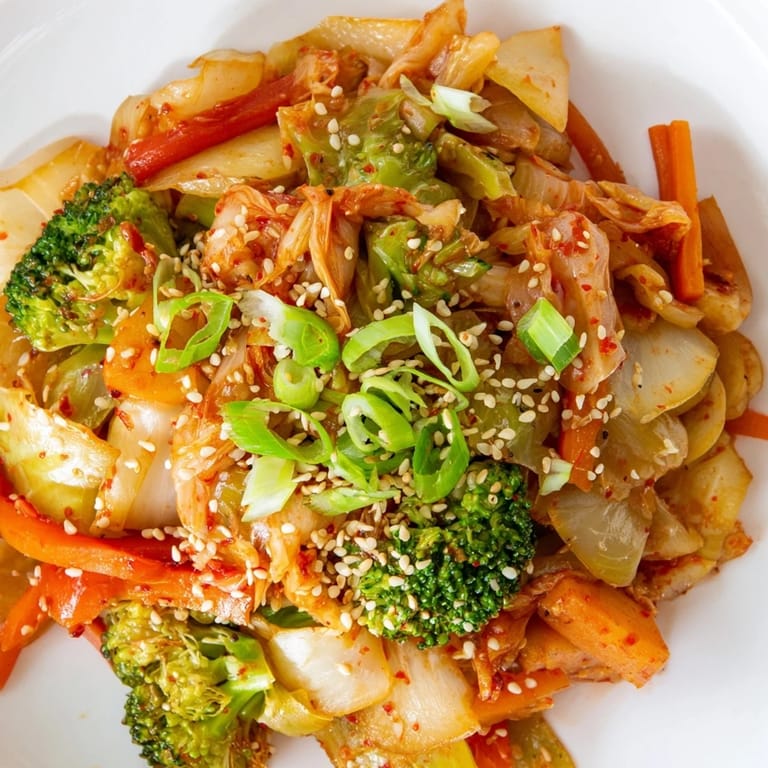
Save Last January, when snow was piling up against the kitchen window and everything felt frozen solid, I found myself craving something that would wake up my tired winter palate. I started tossing whatever root vegetables I had into a hot pan with sesame oil, then remembered the jar of kimchi hiding in the back of my fridge. That first bite was electric, the kind of meal that makes you sit up straighter and feel alive again.
My sister was visiting during a particularly gray week and we ate this standing at the counter, still in our coats, watching steam rise off our bowls. She called me the next day asking exactly what I had put in it because her family had been talking about it all morning.
Ingredients
- 1 small head broccoli: Cut into bite sized florets, they hold up beautifully and soak up the sauce
- 2 medium carrots: Slice them on the diagonal for more surface area and better caramelization
- 1 small parsnip: This adds a subtle sweetness that balances the tangy kimchi perfectly
- 1 small sweet potato: Keep the matchsticks thin so they cook through without getting mushy
- 1 cup shredded green cabbage: Adds a fresh crunch and texture contrast to the softer root vegetables
- 1 red bell pepper: Brings color and a mild sweetness that plays well with the fermented heat
- 1 tablespoon fresh ginger: Grate it right into the pan for maximum aromatic impact
- 2 cloves garlic: Minced finely so it distributes evenly without burning
- 2 tablespoons toasted sesame oil: This is not the place for plain oil, the toasted flavor is essential
- 2 tablespoons soy sauce or tamari: The salty foundation that ties everything together
- 1 tablespoon rice vinegar: Brightens up the heavy vegetables and cuts through the sesame oil
- 1 teaspoon maple syrup or honey: Just enough to mellow the vinegar and round out the flavors
- 1 cup kimchi: Chopped into bite sized pieces, this is what makes the dish sing
- 2 green onions: Sliced thin for a fresh pop of color and oniony bite
- 1 tablespoon toasted sesame seeds: Sprinkle them on right before serving for crunch and nuttiness
Tired of Takeout? 🥡
Get 10 meals you can make faster than delivery arrives. Seriously.
One email. No spam. Unsubscribe anytime.
Instructions
- Get everything ready before the heat goes on:
- Stir frying moves fast and there is no time to chop once that pan is hot, so prep all your vegetables and whisk your sauce together first
- Warm the oil and wake up the aromatics:
- Heat the sesame oil in a large wok over medium high heat until it shimmers, then add the ginger and garlic and let them sizzle for just 30 seconds until fragrant
- Start with the hard vegetables:
- Add the carrots, parsnip, sweet potato, and broccoli to the hot pan and stir fry for 4 to 5 minutes, watching them start to soften and take on golden edges
- Add the quicker cooking vegetables:
- Toss in the cabbage and bell pepper and keep everything moving for another 3 to 4 minutes until all the vegetables are crisp tender but still have some bite
- Build the sauce right in the pan:
- Whisk together the soy sauce, rice vinegar, and maple syrup in a small bowl, then pour it over the vegetables and toss everything until it is glossy and coated
- Finish with the fermented magic:
- Pull the pan off the heat entirely, add the chopped kimchi, and gently fold it in so you preserve all those beneficial probiotics while the vegetables are still hot
- Finish with your garnishes:
- Serve immediately and scatter green onions and sesame seeds over each bowl for that final touch of freshness
 Save
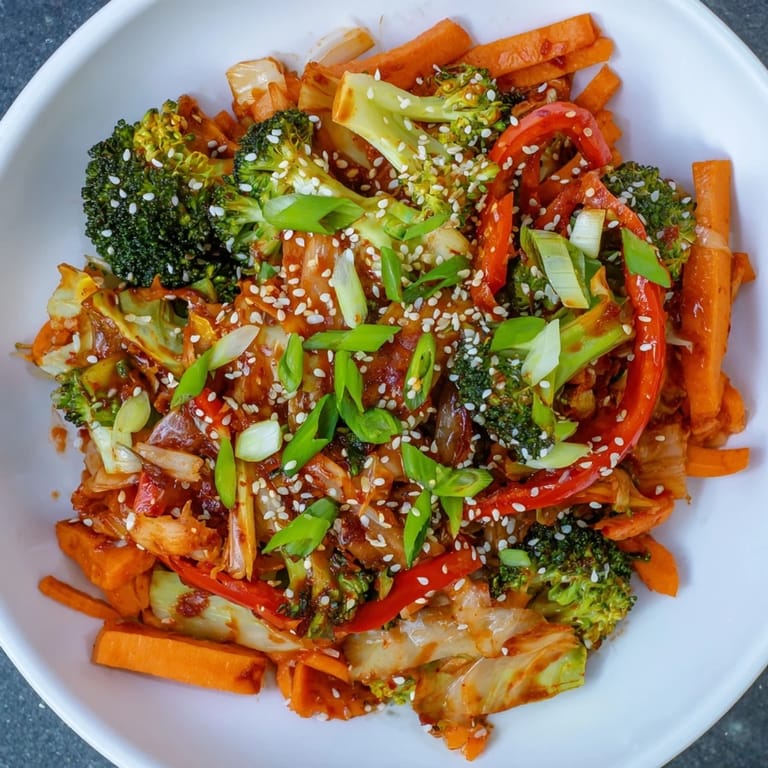
Save This recipe saved me during a week when I had zero energy for cooking but still wanted something that felt nourishing and alive. It has become my go to when winter feels like it will never end.
Making It Your Own
I have experimented with adding cubed winter squash or even some diced turnips when they are in season. The beauty is that you can use whatever hearty vegetables you have on hand as long as you keep the kimchi as the star.
Perfect Pairings
While this is substantial enough to stand alone as a light meal, I love serving it over steamed brown rice or tucked into warm soba noodles. The sauce clings beautifully to both and makes the dish feel even more satisfying.
Storing And Prepping Ahead
The vegetables stay surprisingly crisp in the refrigerator for up to three days, though the kimchi will continue to ferment and get tangier over time. I actually think the flavors improve after a night in the fridge.
- Cut all your vegetables the night before and store them in separate containers
- Whisk the sauce ahead and keep it in a small jar in the refrigerator
- Never reheat the kimchi, add it fresh to any leftovers you are warming up
 Save
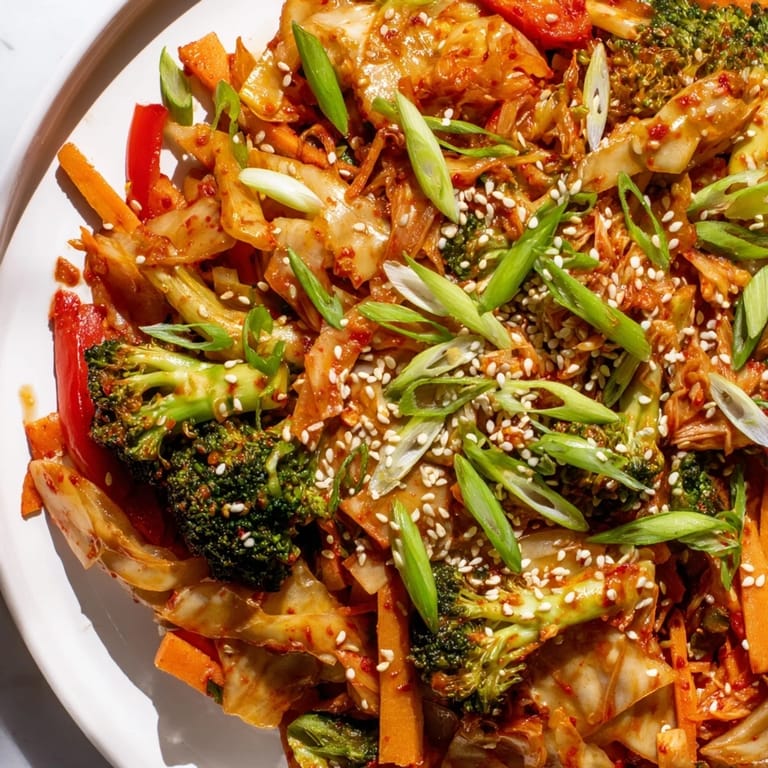
Save There is something deeply satisfying about a dish that tastes this vibrant while being built on humble winter vegetables. Enjoy every bright, spicy bite.
Common recipe questions
- → Can I make this dish gluten-free?
Yes, simply substitute tamari for the soy sauce. Most kimchi brands are naturally gluten-free, but always check labels as some varieties contain wheat-based ingredients.
- → What other winter vegetables work well?
Turnips, rutabaga, kale, Brussels sprouts, and daikon radish all make excellent additions. Keep pieces uniform for even cooking.
- → Does heating kimchi kill the probiotics?
The recipe adds kimchi at the very end after removing the pan from heat, which preserves the beneficial probiotics while allowing the flavors to meld.
- → How spicy is this dish?
Kimchi varies in heat level depending on the brand. Start with a smaller amount if you're sensitive to spice, then adjust to taste.
- → Can I prepare vegetables ahead of time?
Absolutely. Cut all vegetables up to a day in advance and store in airtight containers in the refrigerator. This makes the actual cooking process much faster.