 Save
Save The steam rising from that street vendor's cart in Seoul still haunts me sometimes, that perfect red sauce bubbling away while snowflakes swirled around us. My Korean friend pulled me toward the small stall, insisting this was the antidote to winter's bite, and she was absolutely right. When I finally recreated that magic in my tiny apartment kitchen years later, the smell alone transported me back to that crowded street corner.
Last winter during a particularly brutal cold snap, my roommate walked through the door with red cheeks and announced she needed something that would burn in the best way possible. I pulled out the gochujang and rice cakes I'd stashed in the pantry, watching her eyes widen as that familiar red sauce started bubbling on the stove. We ate standing up at the counter, steam fogging up the windows, neither of us speaking until our bowls were completely empty.
Ingredients
- Korean rice cakes: These chewy, cylindrical rice cakes are absolutely nonnegotiable, and I learned the hard way that fresh ones from a Korean market make all the difference in texture
- Gochujang: This fermented chili paste forms the soul of the dish, bringing depth that plain hot sauce can never replicate
- Gochugaru: Korean chili flakes add that beautiful red color and an extra layer of heat that builds slowly
- Dashi broth: Whether you use anchovies or keep it vegetarian with kelp, this savory foundation transforms the sauce from good to extraordinary
- Honey or corn syrup: The secret ingredient that tames the fire and gives the sauce that glossy, restaurantquality shine
Tired of Takeout? 🥡
Get 10 meals you can make faster than delivery arrives. Seriously.
One email. No spam. Unsubscribe anytime.
Instructions
- Prep your rice cakes:
- If they've been sitting in your fridge or came frozen, drop them into a bowl of warm water for ten minutes while you get everything else ready. Trust me, nobody wants tough, rubbery rice cakes.
- Build your broth base:
- Combine water, kelp, and anchovies in a medium pot and let it gently simmer for about ten minutes. Fish out the kelp and anchovies with a slotted spoon or strainer, leaving behind that golden, savory liquid.
- Create the sauce:
- Whisk in the gochujang, gochugaru, soy sauce, sugar, honey, and minced garlic until the paste completely dissolves into the broth. The mixture should turn a gorgeous, deep red.
- Add the stars of the show:
- Drop in your rice cakes along with the sliced onion and any cabbage you're using. Bring everything to a gentle boil, stirring frequently because rice cakes love to cling to the bottom of the pot.
- Let it work its magic:
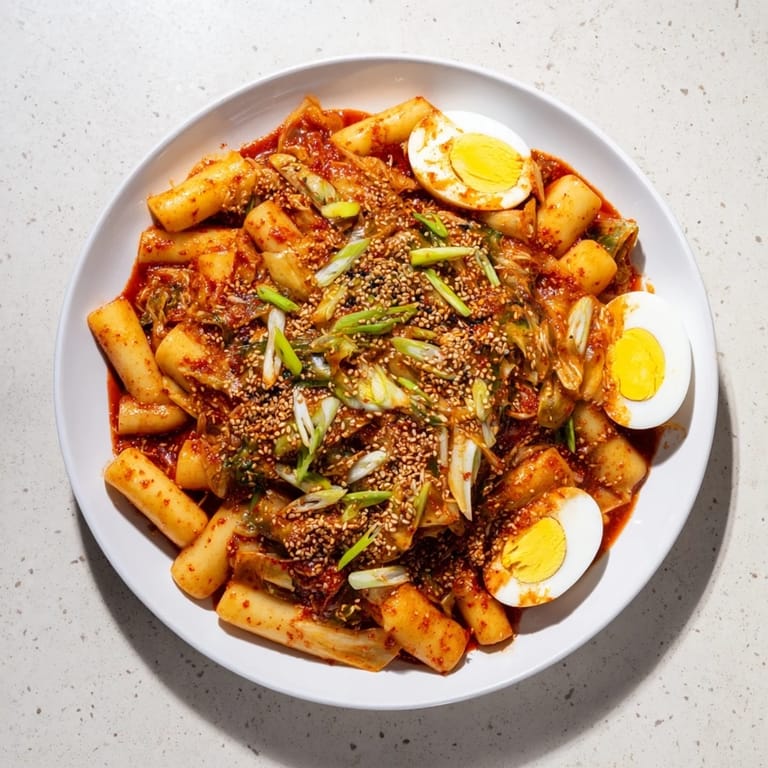
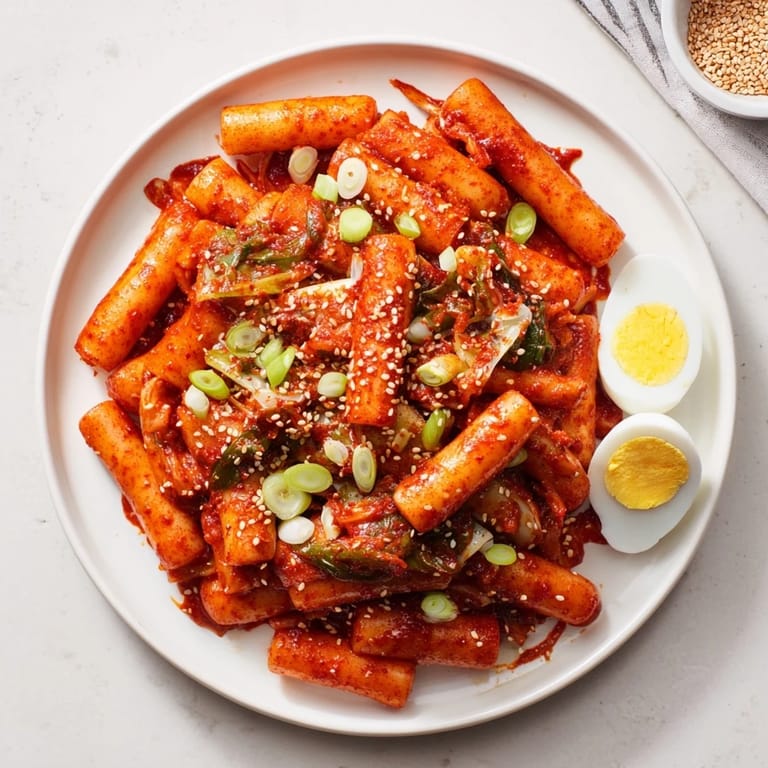
- Reduce heat and simmer for ten to fifteen minutes, watching as the sauce thickens and coats the rice cakes like a glossy red blanket. You'll know it's ready when the rice cakes feel soft and yielding when you press them with your spoon.
- Finish with freshness:
- Toss in those green onions and boiled eggs during the last two minutes of cooking. Scatter sesame seeds over everything right before serving.
 Save
Save Something about this dish brings people together in the most unexpected ways. I've watched strangers become friends over a shared pot of tteokbokki, passing around tissues when the heat gets too intense and daring each other to take just one more bite.
Making It Your Own
While the classic version is perfect as is, I've discovered that adding sliced fish cakes turns this into a complete meal that feels even more authentic to those street vendor experiences. Sometimes I'll throw in ramen noodles during the last few minutes of cooking, letting them soak up that incredible sauce.
The Art of Rice Cake Selection
Fresh rice cakes should feel slightly soft and pliable, not rock hard or cracking when you bend them. If you can only find frozen ones, that extra soaking step becomes absolutely crucial, and I've found that adding them to the sauce while it's still relatively cold helps them cook more evenly.
Perfecting The Sauce Balance
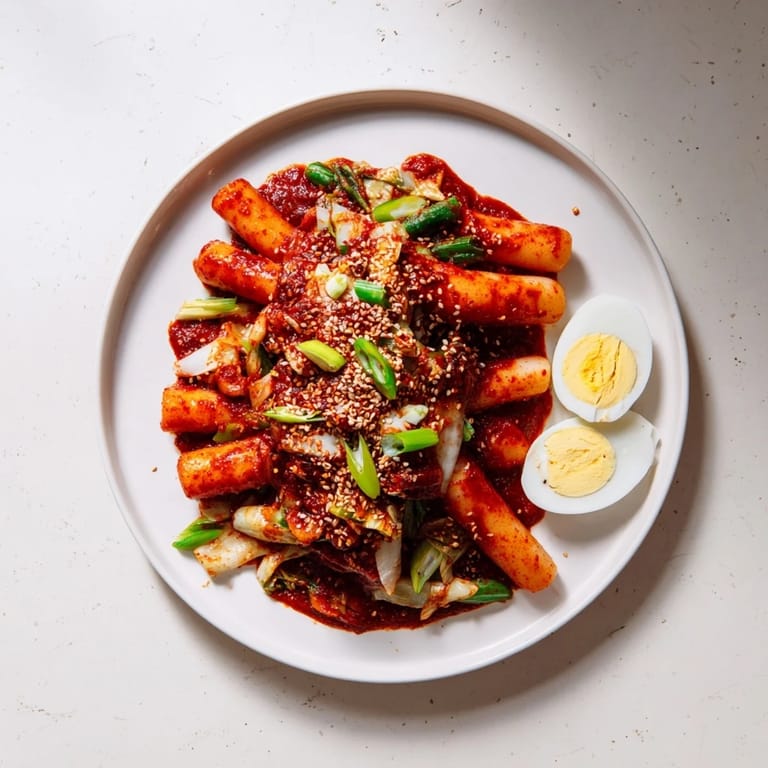
The first time I made this, I went too heavy on the gochugaru and ended up with something that tasted like liquid fire. Now I always start with less chili flakes and taste as I go, remembering that the flavors will concentrate as the sauce reduces. The honey should balance the heat without making it taste like dessert.
- Keep some extra water nearby in case the sauce gets too thick
- Taste your gochujang first since brands vary wildly in heat and sweetness
- The sauce should be bold enough that a little goes a long way
 Save
Save There's something deeply satisfying about watching those plain white rice cakes transform into something so vibrant and compelling. It's comfort food that wakes you up instead of putting you to sleep.
Common recipe questions
- → What makes tteokbokki sauce thick and sticky?
The sauce naturally thickens as the rice cakes release starch into the liquid during cooking. The combination of gochujang and honey also creates a glossy, coating consistency that clings beautifully to each rice cake.
- → Can I make tteokbokki vegetarian?
Absolutely. Simply omit the dried anchovies from the broth and use only kelp (kombu) for the base. The result remains deeply flavorful and satisfying while being completely vegetarian-friendly.
- → How do I prevent rice cakes from sticking?
Stir frequently while simmering, especially as the sauce thickens. Use a wooden spoon and scrape the bottom of the pot gently. If needed, add a splash of water to loosen the mixture.
- → What's the best way to store leftovers?
The sauce continues to thicken as it cools. Reheat gently with a splash of water, stirring constantly to restore the creamy consistency. The rice cakes will firm up slightly but soften again when heated through.
- → Can I add other ingredients to tteokbokki?
Yes. Fish cakes, ramen noodles, cabbage, carrots, and boiled eggs are popular additions. Add harder vegetables early with the rice cakes, and delicate items like green onions in the final minutes.